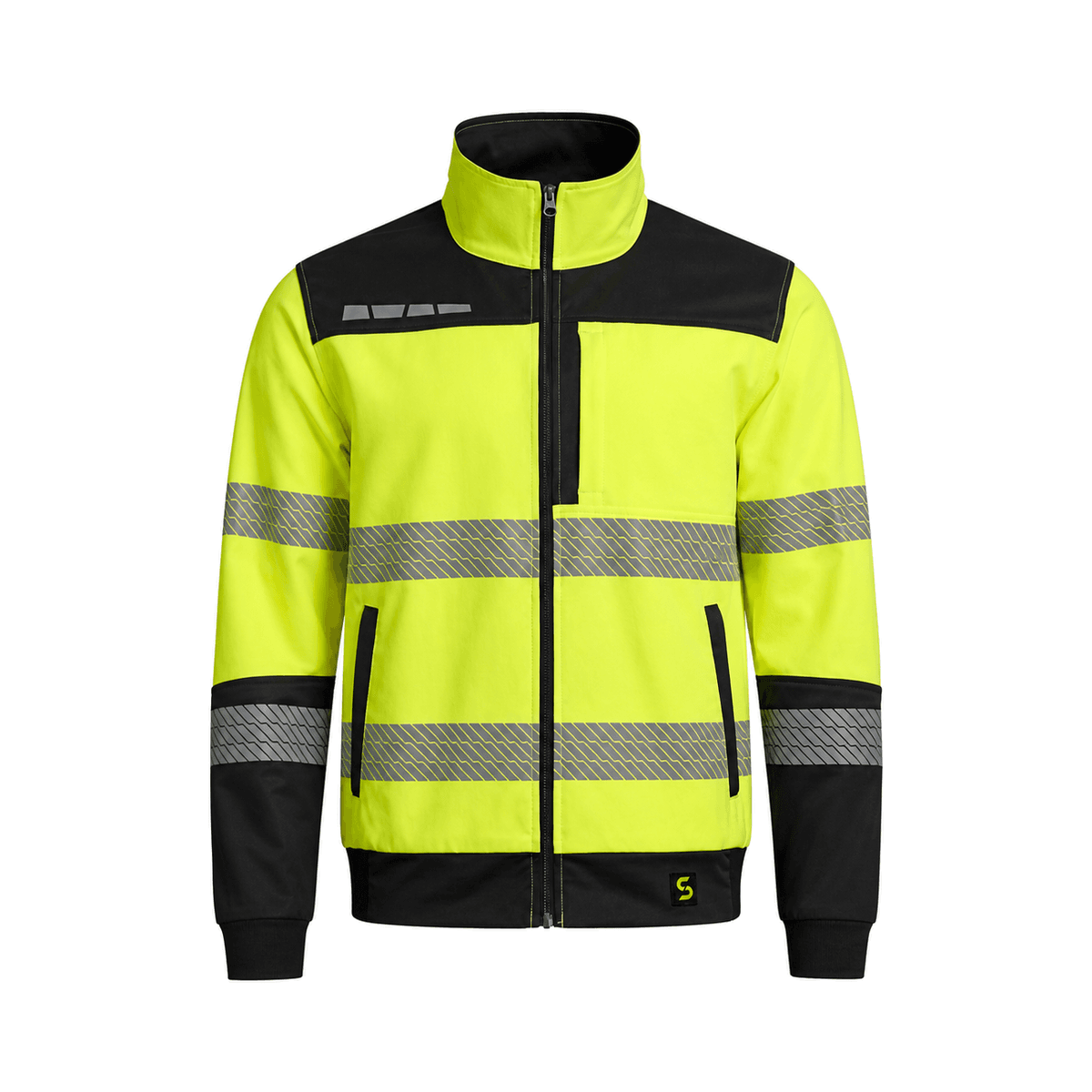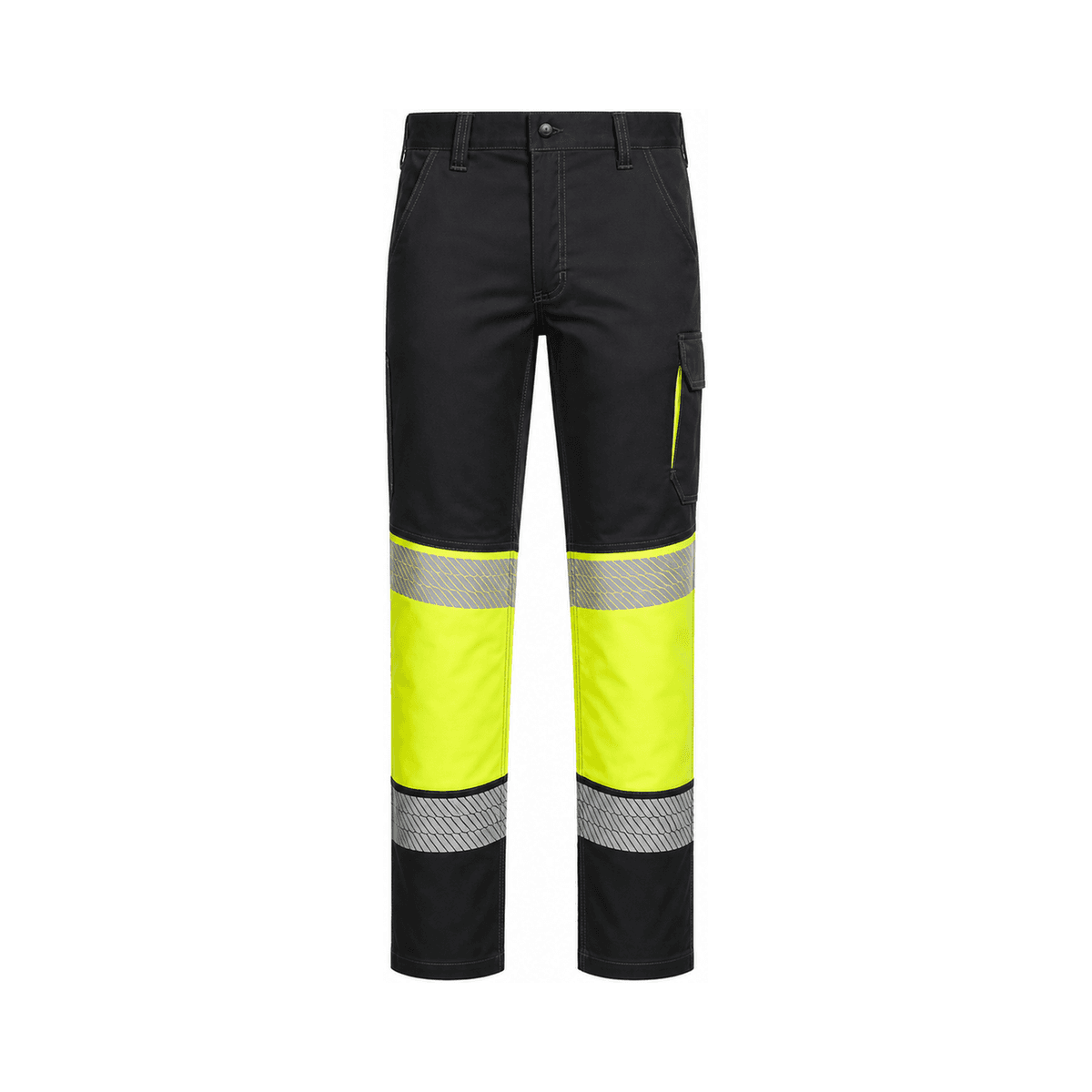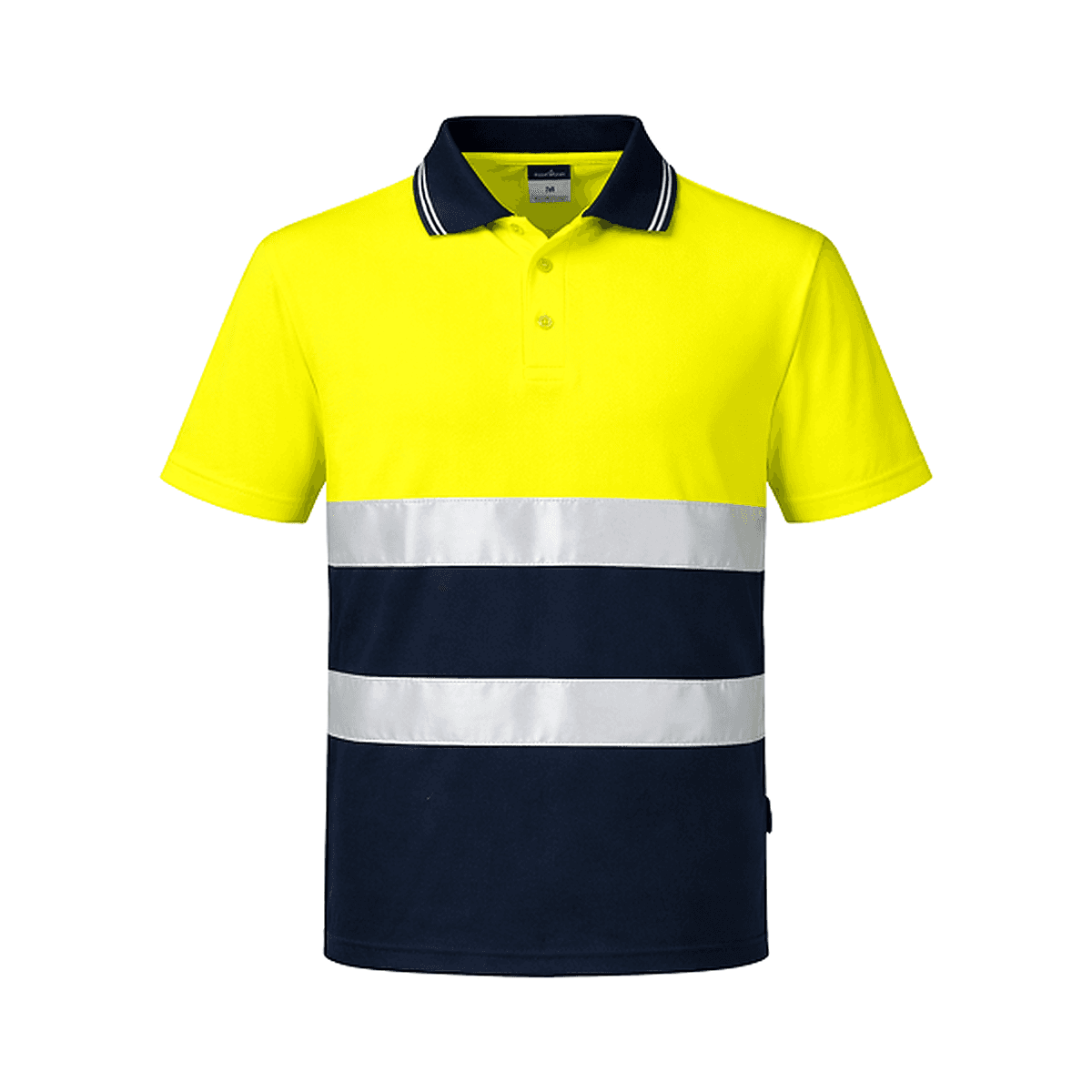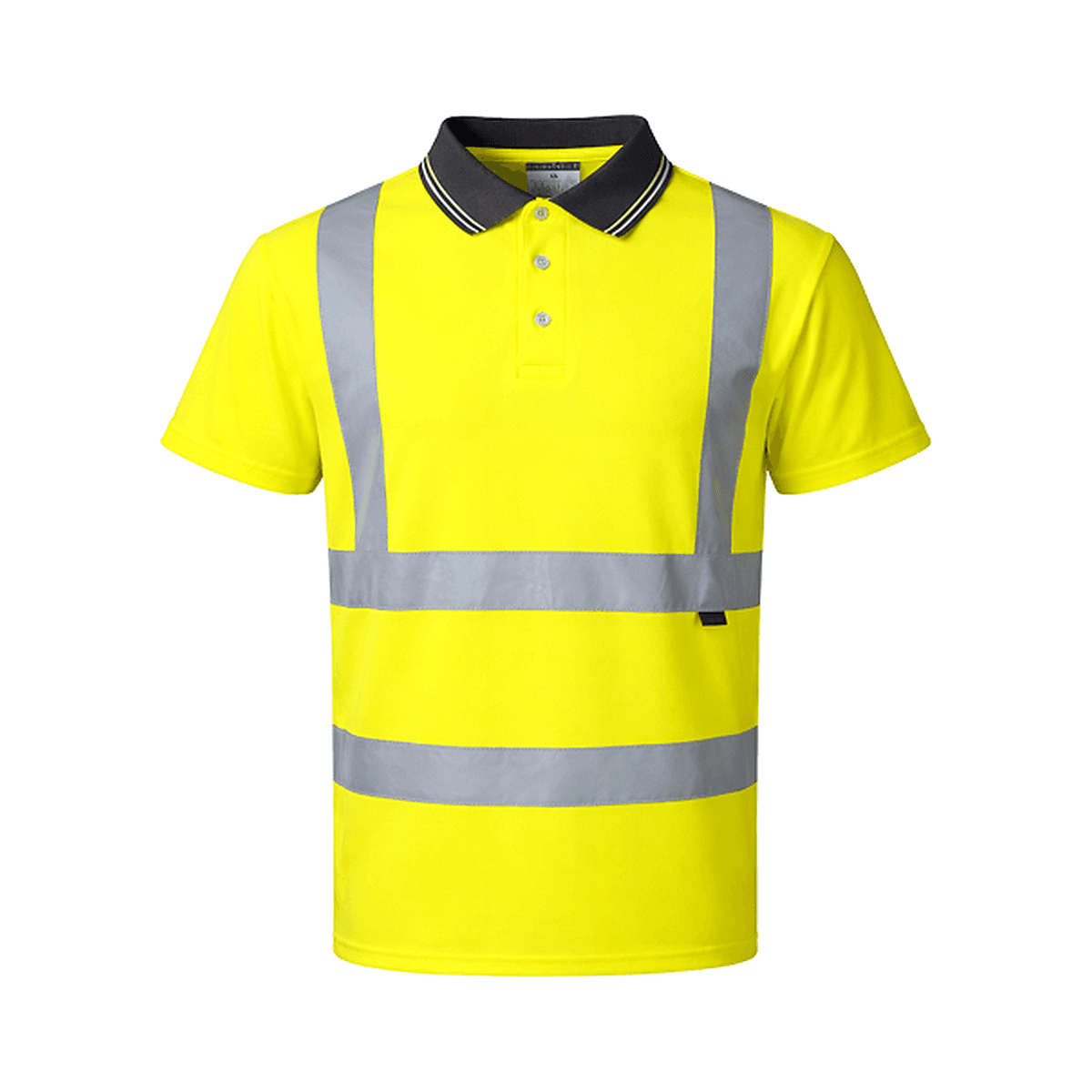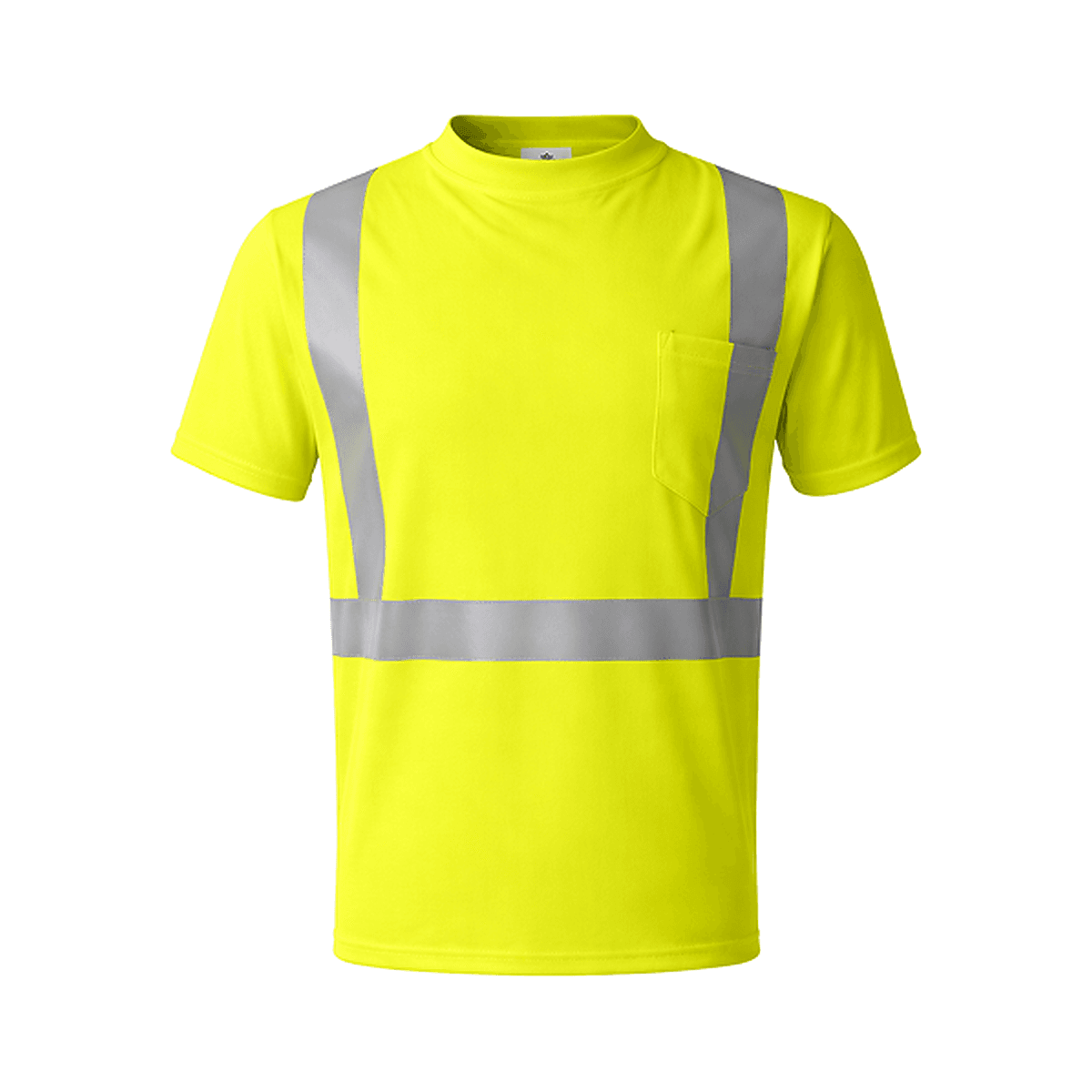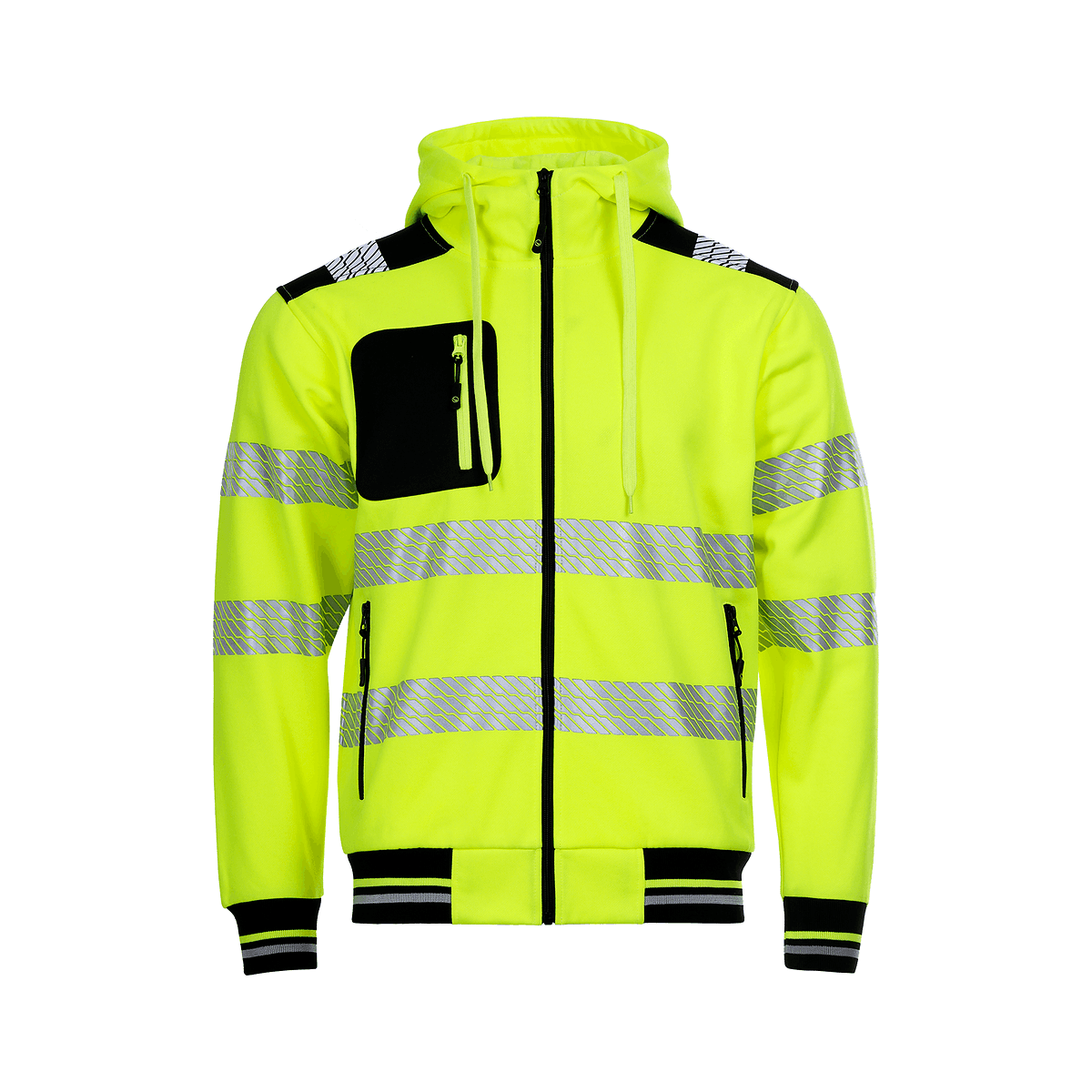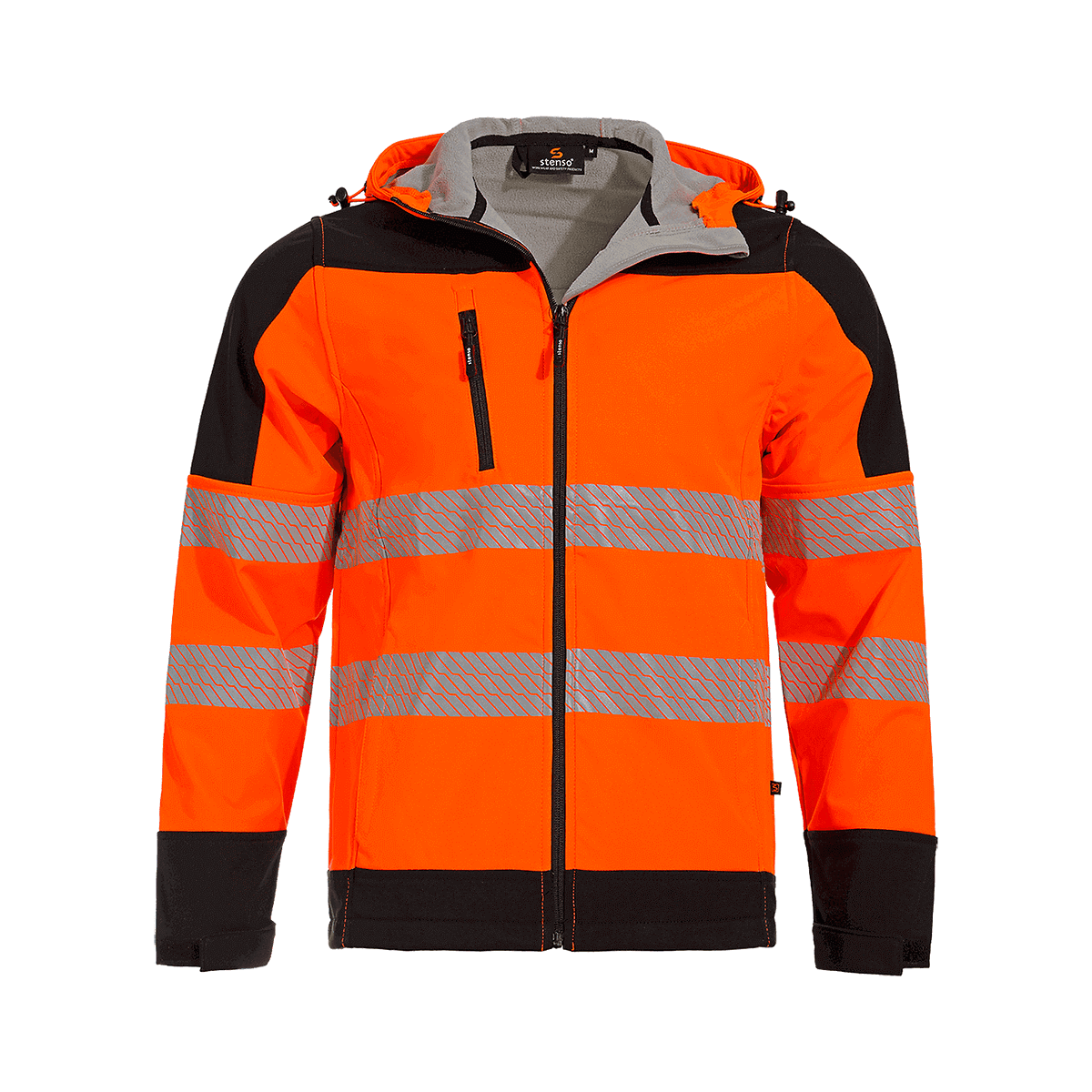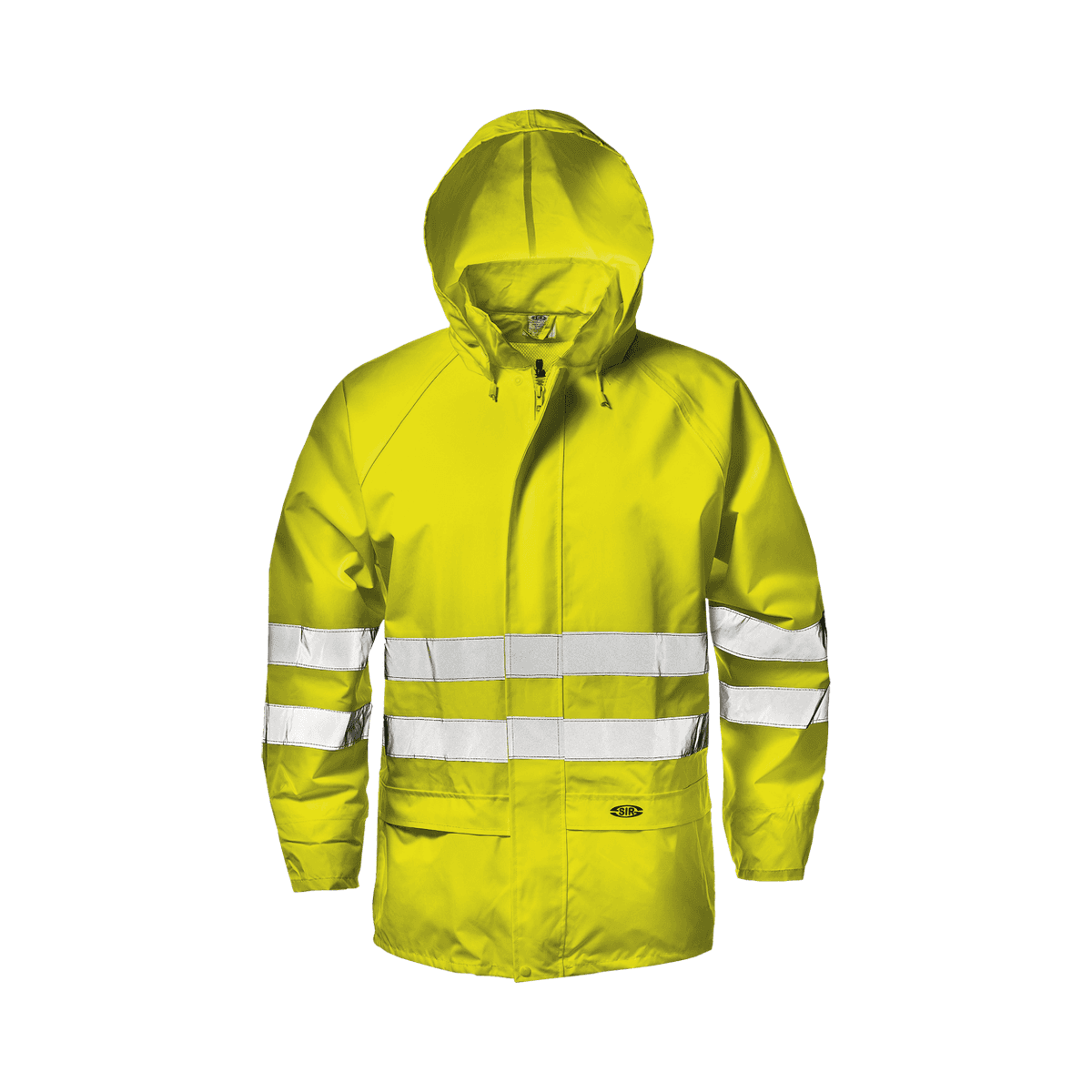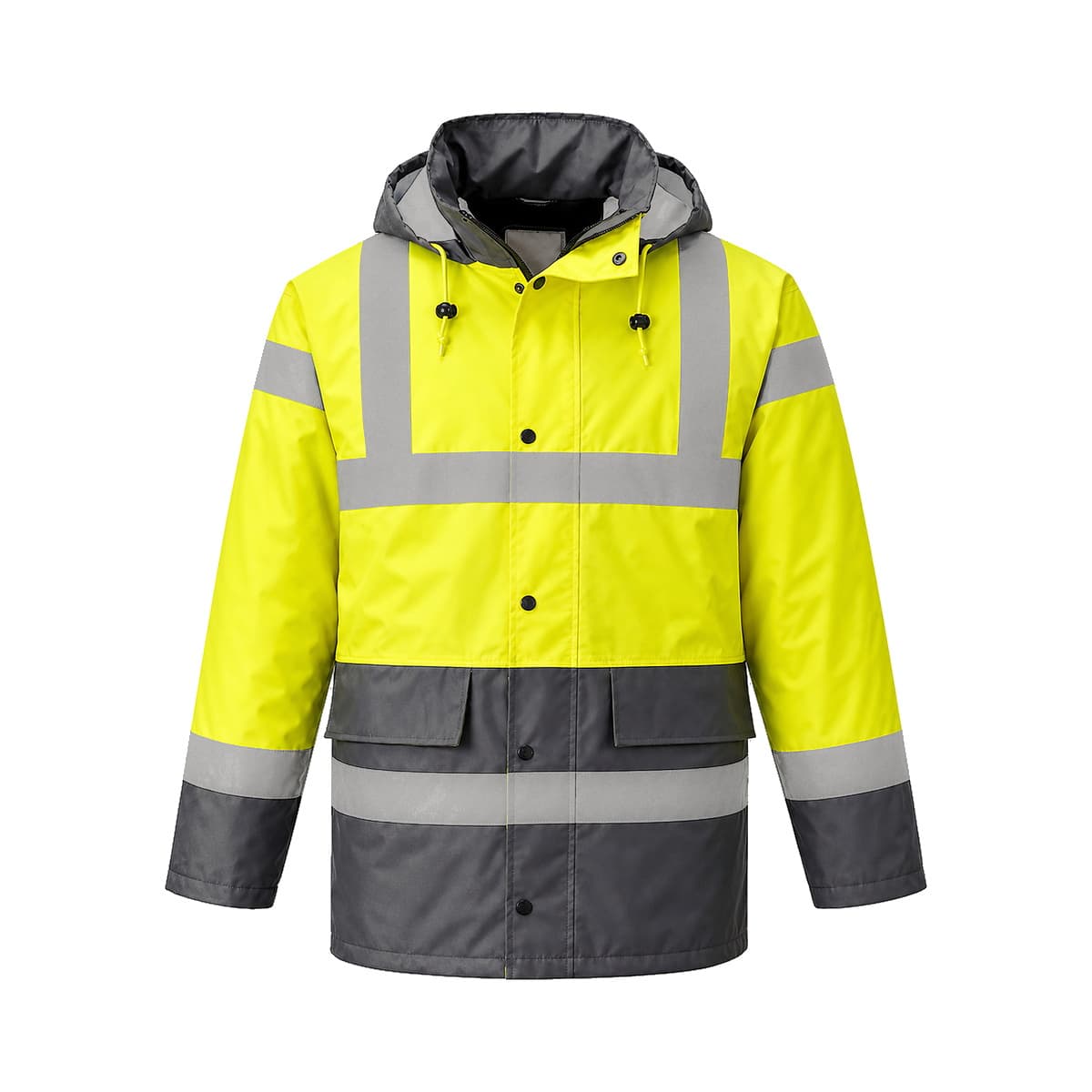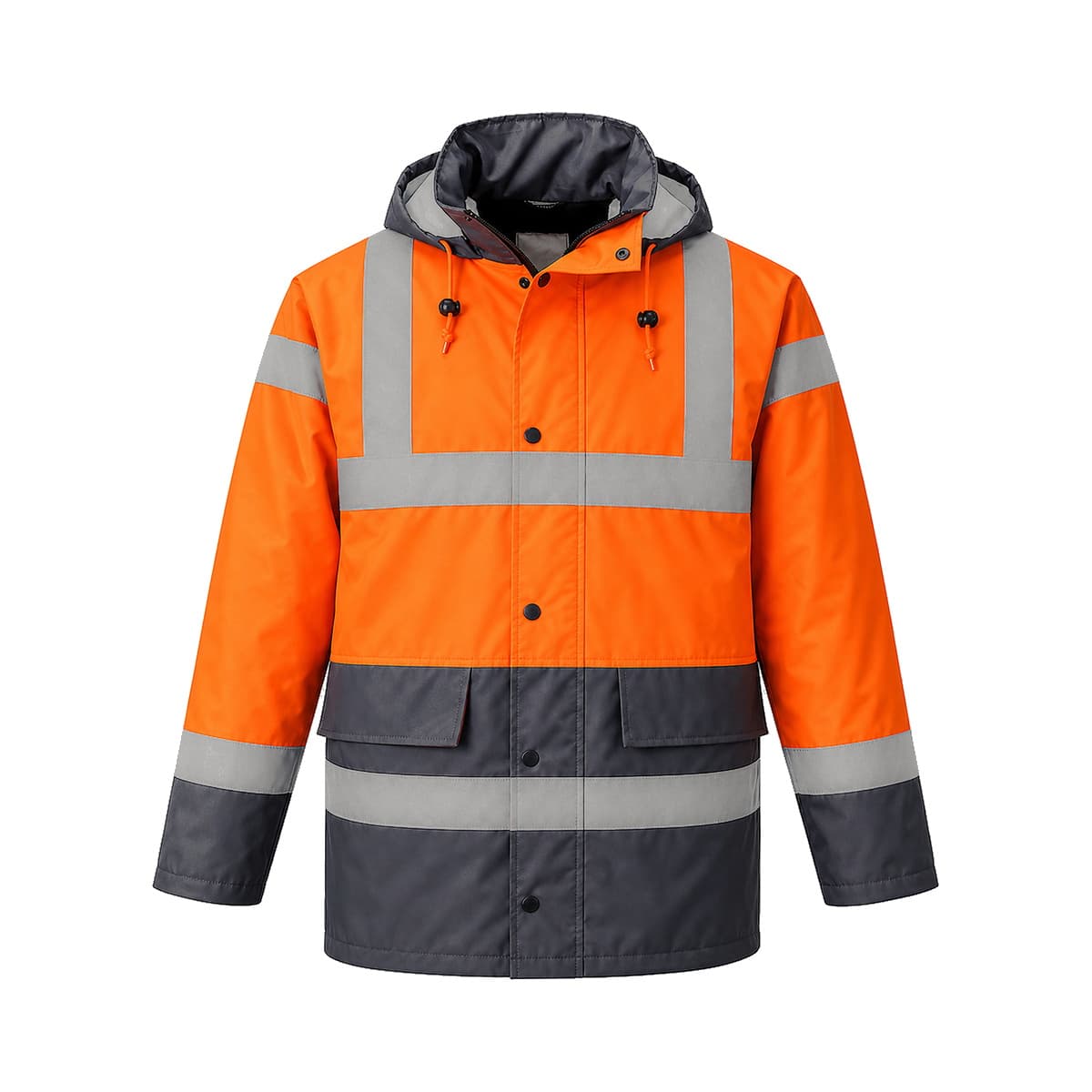
EN ISO 20471 sets the requirements for high-visibility clothing in professional use. It works through two mechanisms: fluorescent background material is seen in daylight, while retroreflective tape returns headlight beams straight back to the driver at night.
The three classes
| Class | Background material | Retroreflective | Typical use |
|---|---|---|---|
| Class 1 | 0.14 m² | 0.10 m² | Low risk, private premises, up to 30 km/h |
| Class 2 | 0.50 m² | 0.13 m² | Medium risk, urban roads, up to 60 km/h |
| Class 3 | 0.80 m² | 0.20 m² | High risk, motorways and trunk roads, over 60 km/h |
Reaching class 3
A waistcoat alone cannot reach class 3 — sleeves are needed. Class 3 is therefore normally a long-sleeved jacket, or a combination: a class 2 waistcoat plus class 1 trousers gives class 3 when worn together and where the label declares that combination.
Colours
Three fluorescent colours are permitted: yellow, orange-red and red. The choice depends on the background — orange stands out better against green (fields, forest), yellow in urban and industrial settings.
Why washing matters
The label states a maximum number of wash cycles (25 or 50, typically). Beyond that the fluorescent colour fades and the retroreflective tape loses efficiency — the garment no longer meets the standard even if it still looks acceptable. A dirty or oil-soaked waistcoat also loses visibility sharply.