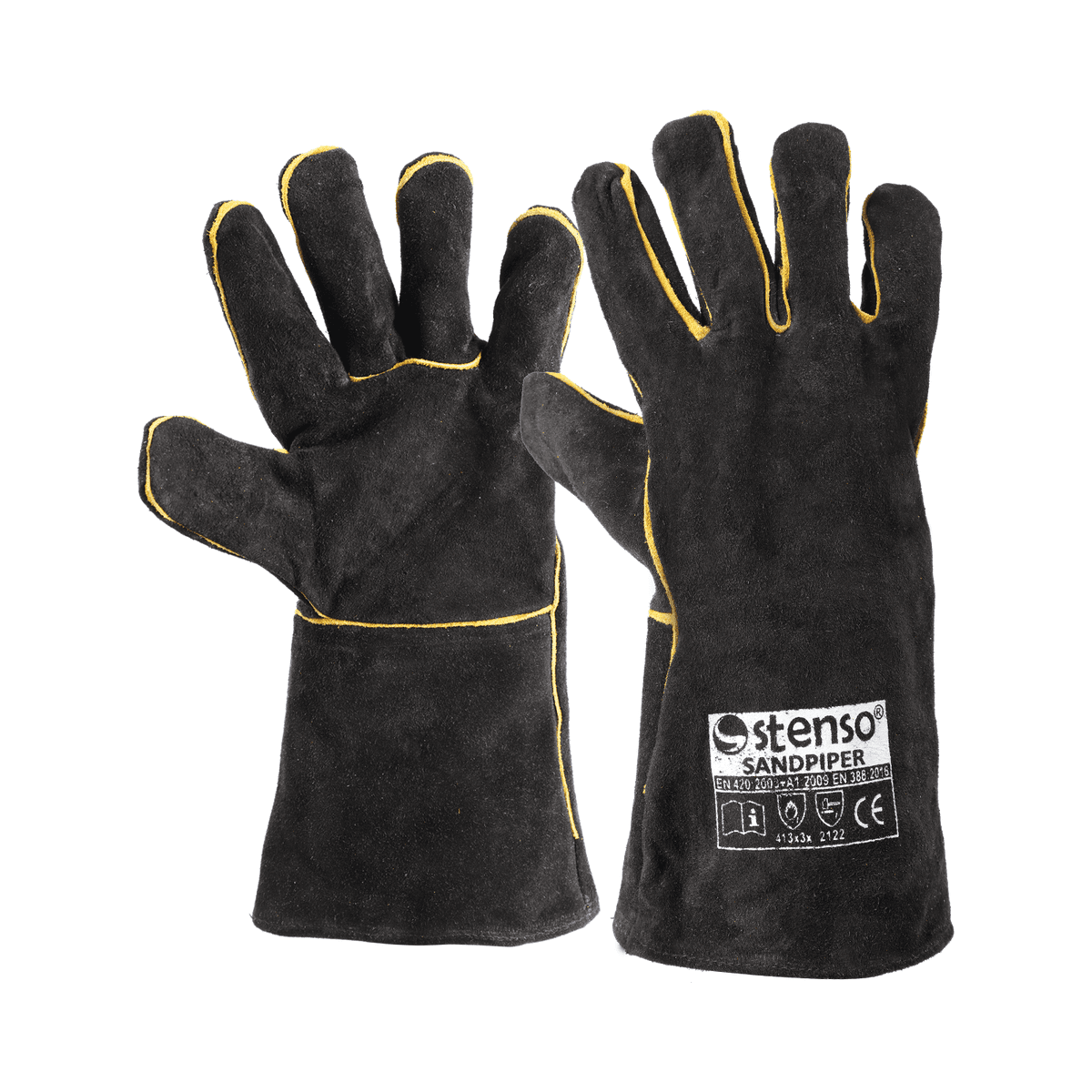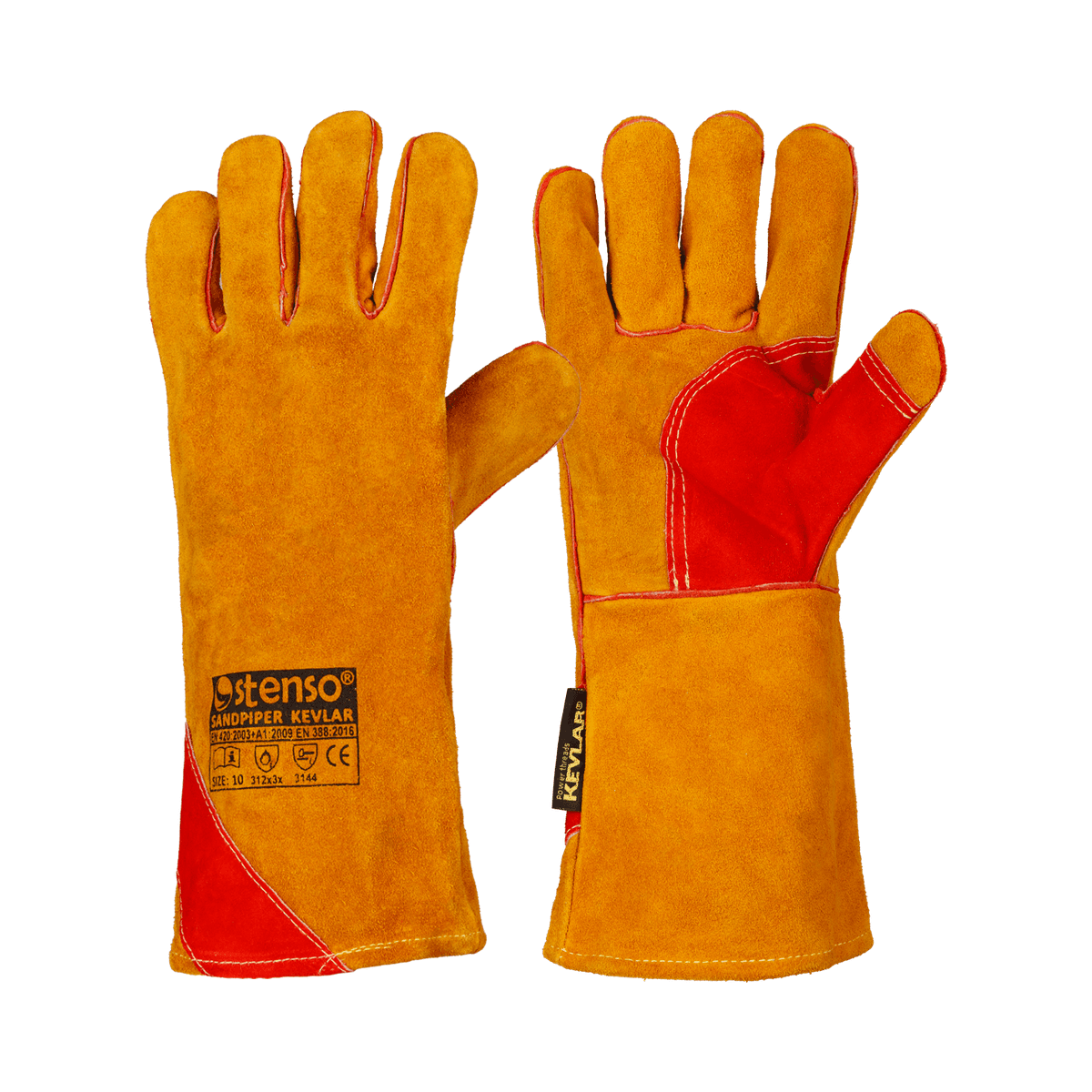
EN 12477 brings the mechanical (EN 388) and thermal (EN 407) requirements together into one standard tuned to the specific risks of welding: sparks, molten metal splash, radiant heat, contact with hot metal and UV radiation.
The two types
| Type | Intended for | Dexterity | Thermal protection |
|---|---|---|---|
| Type A | MMA, MIG/MAG, cutting — high current, heavy spatter | Lower | Higher |
| Type B | TIG and precision work, where feel for the filler rod matters | Higher (level 4) | Lower |
Minimum requirements
- To EN 388: abrasion ≥2 (Type A) / ≥1 (Type B), cut ≥1, tear ≥2 / ≥1, puncture ≥2 / ≥1.
- To EN 407: burning behaviour ≥3, contact heat ≥1, convective heat ≥2 / ≥1, small molten metal splashes ≥3 / ≥2.
- A minimum cuff length ensures the wrist is covered; a shorter cuff is permitted for TIG work.
A practical note: a welding glove must be dry. Wet leather conducts, creating a shock risk — particularly in MMA welding with a high open-circuit voltage.