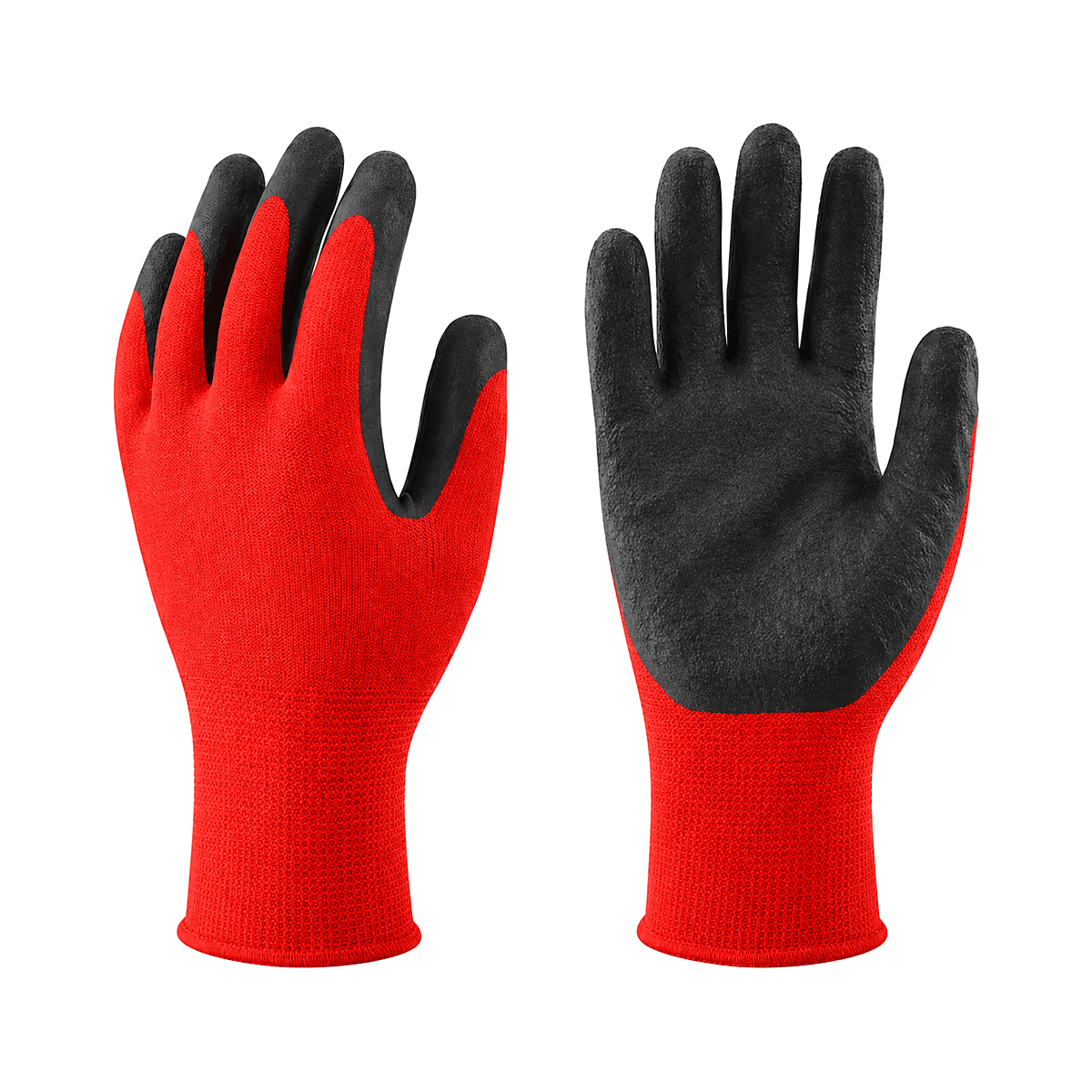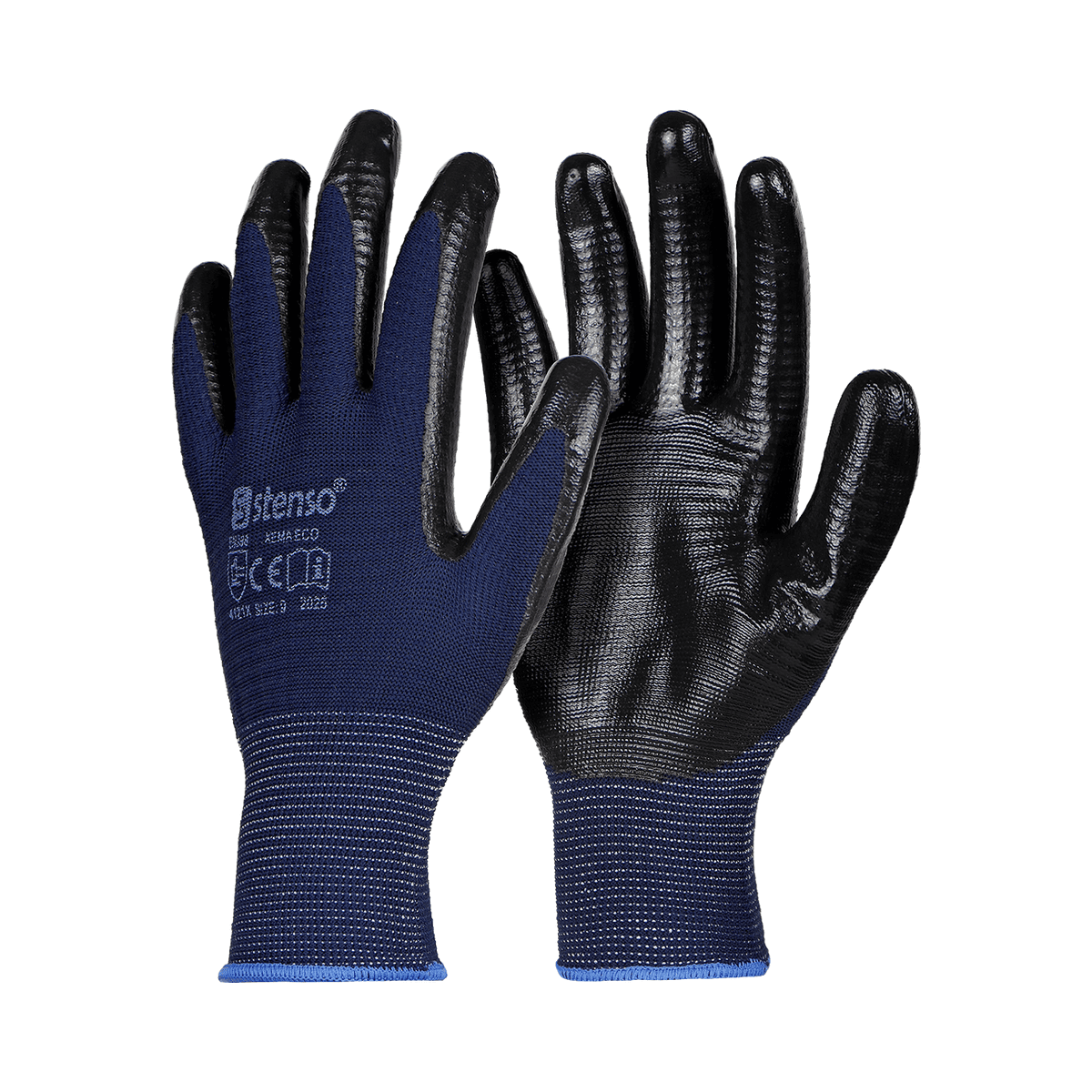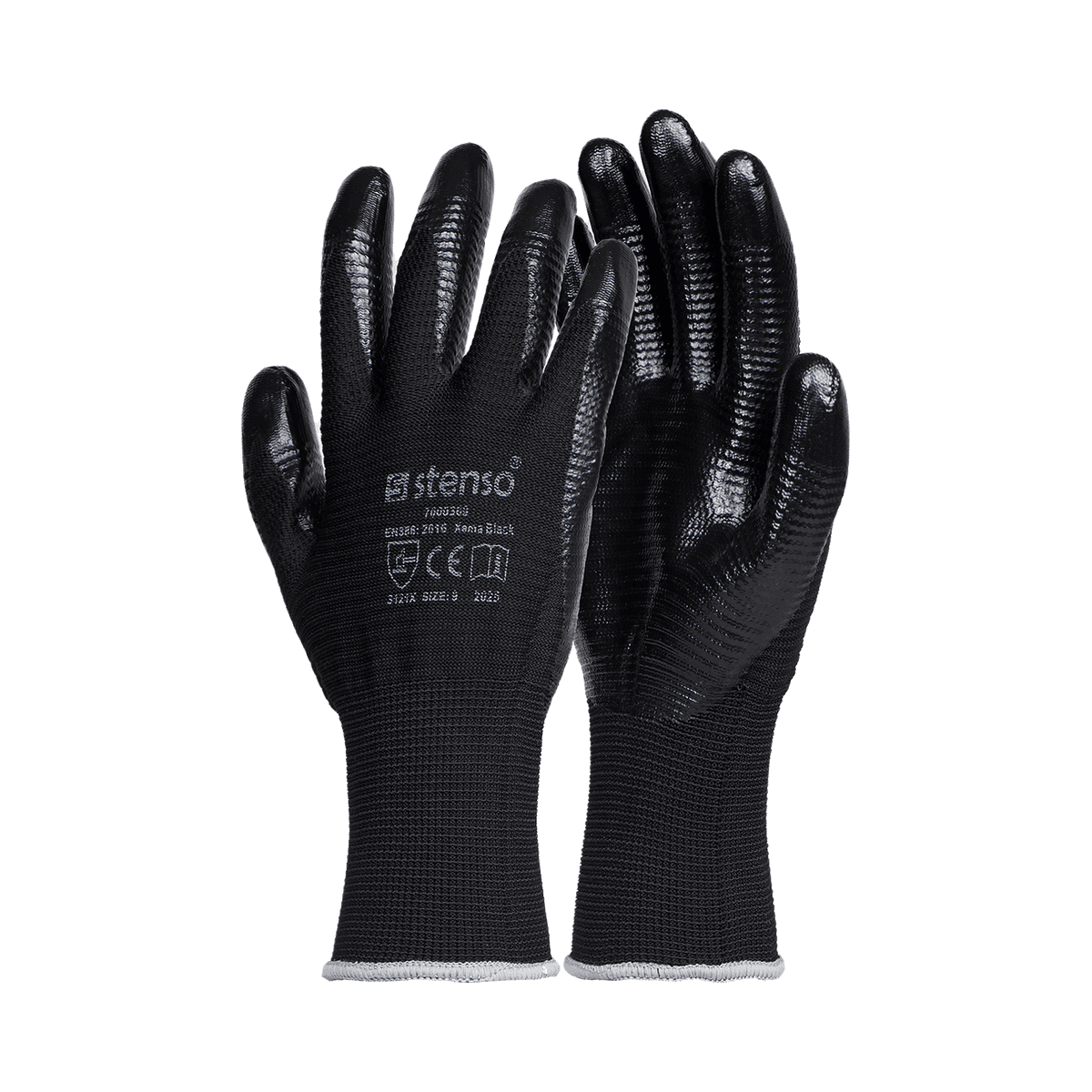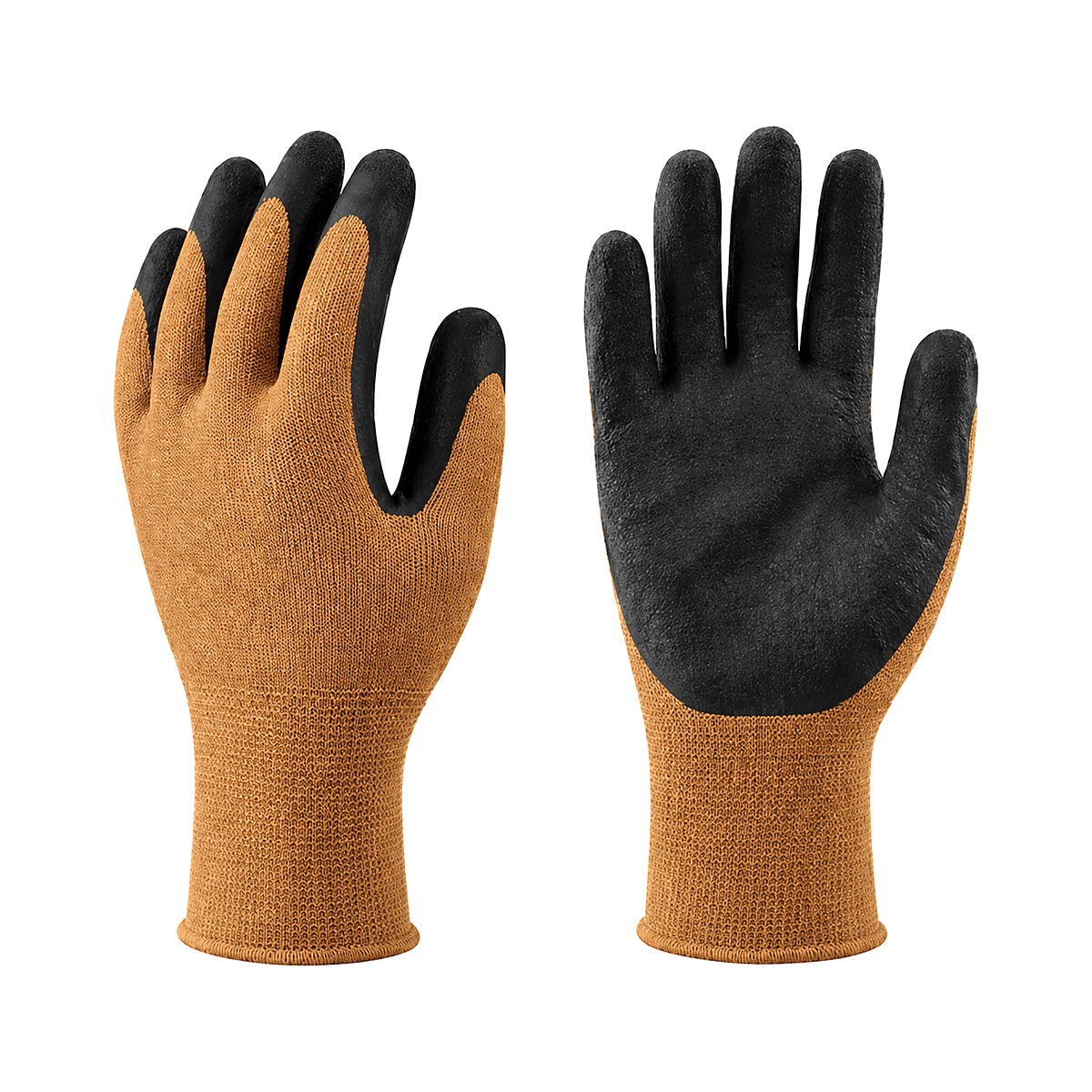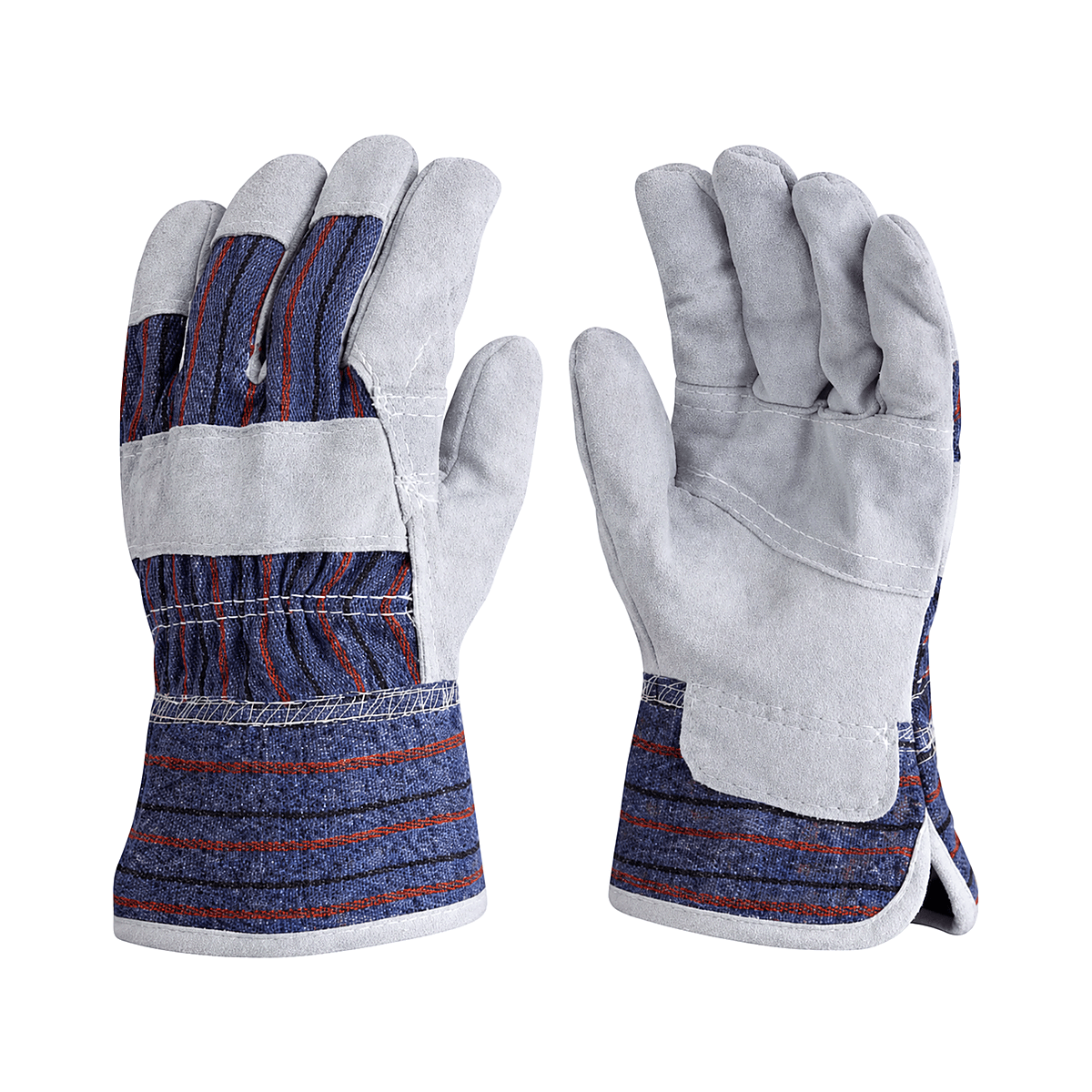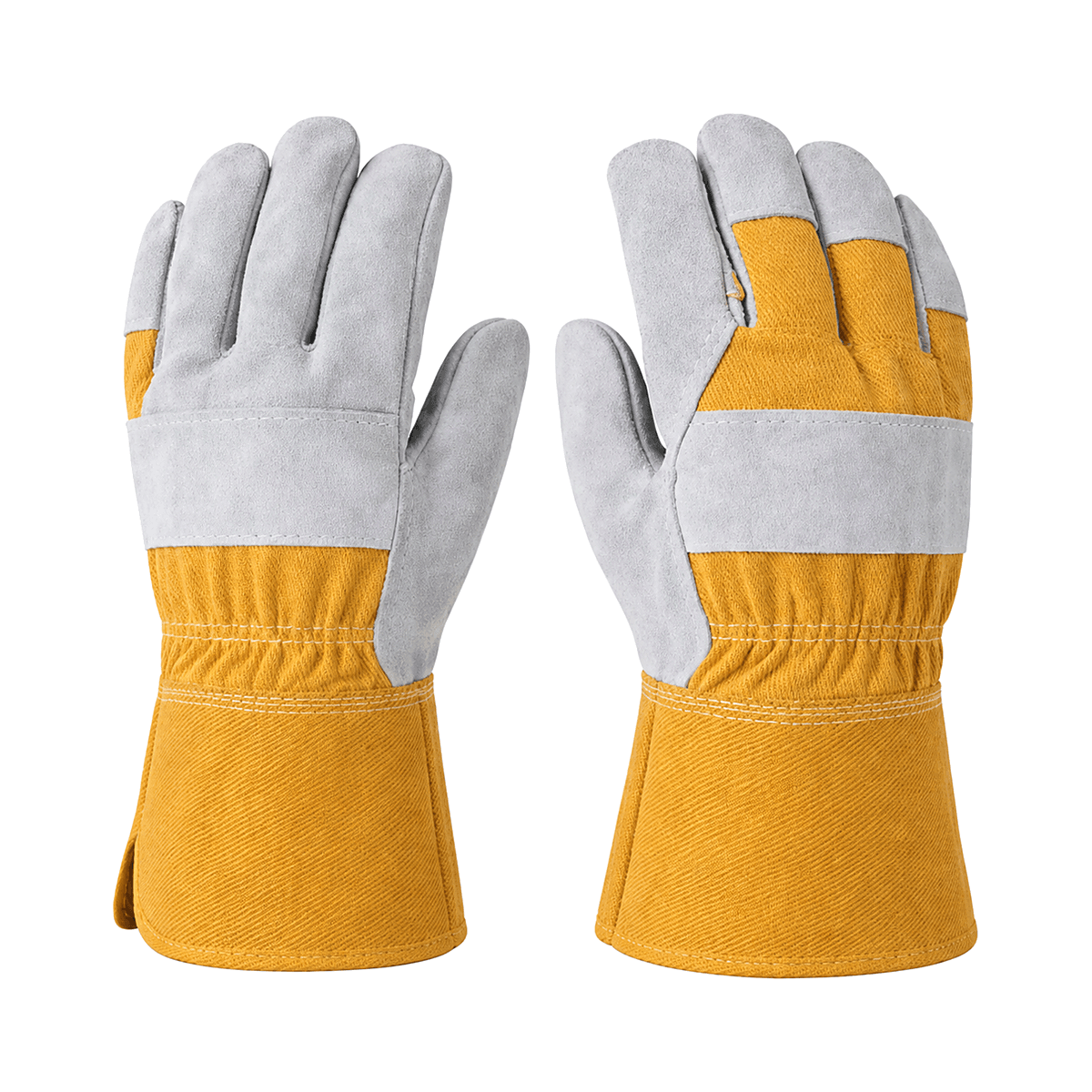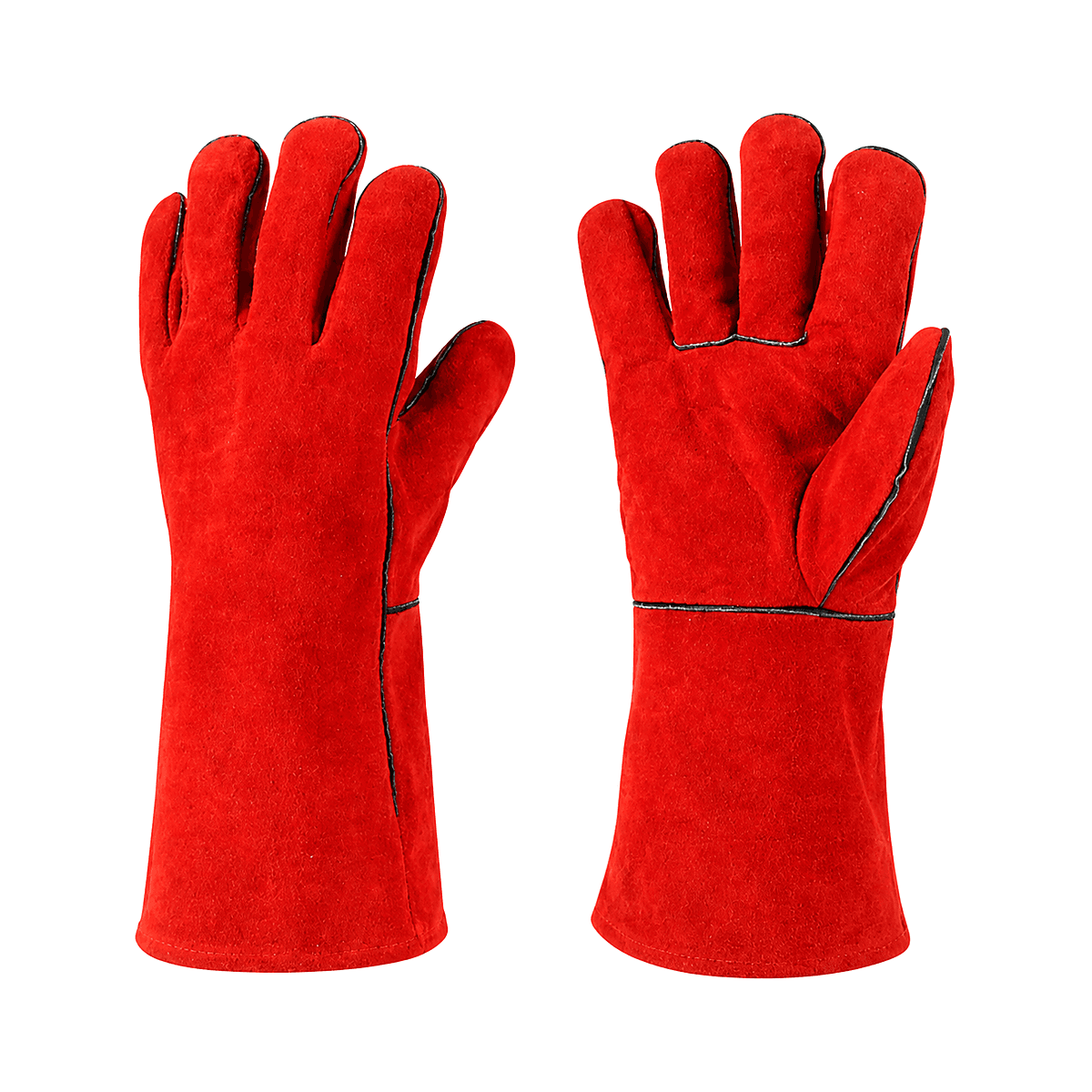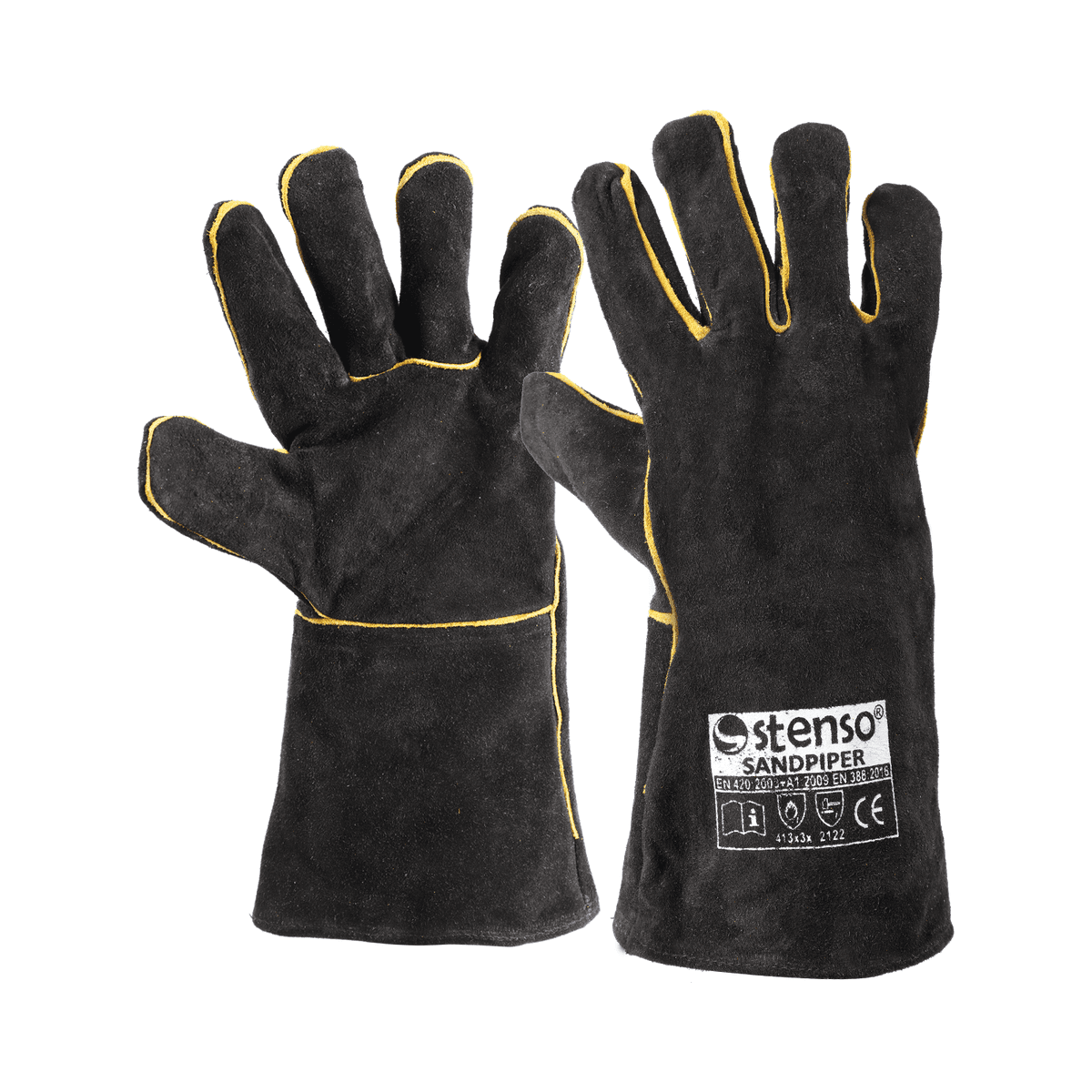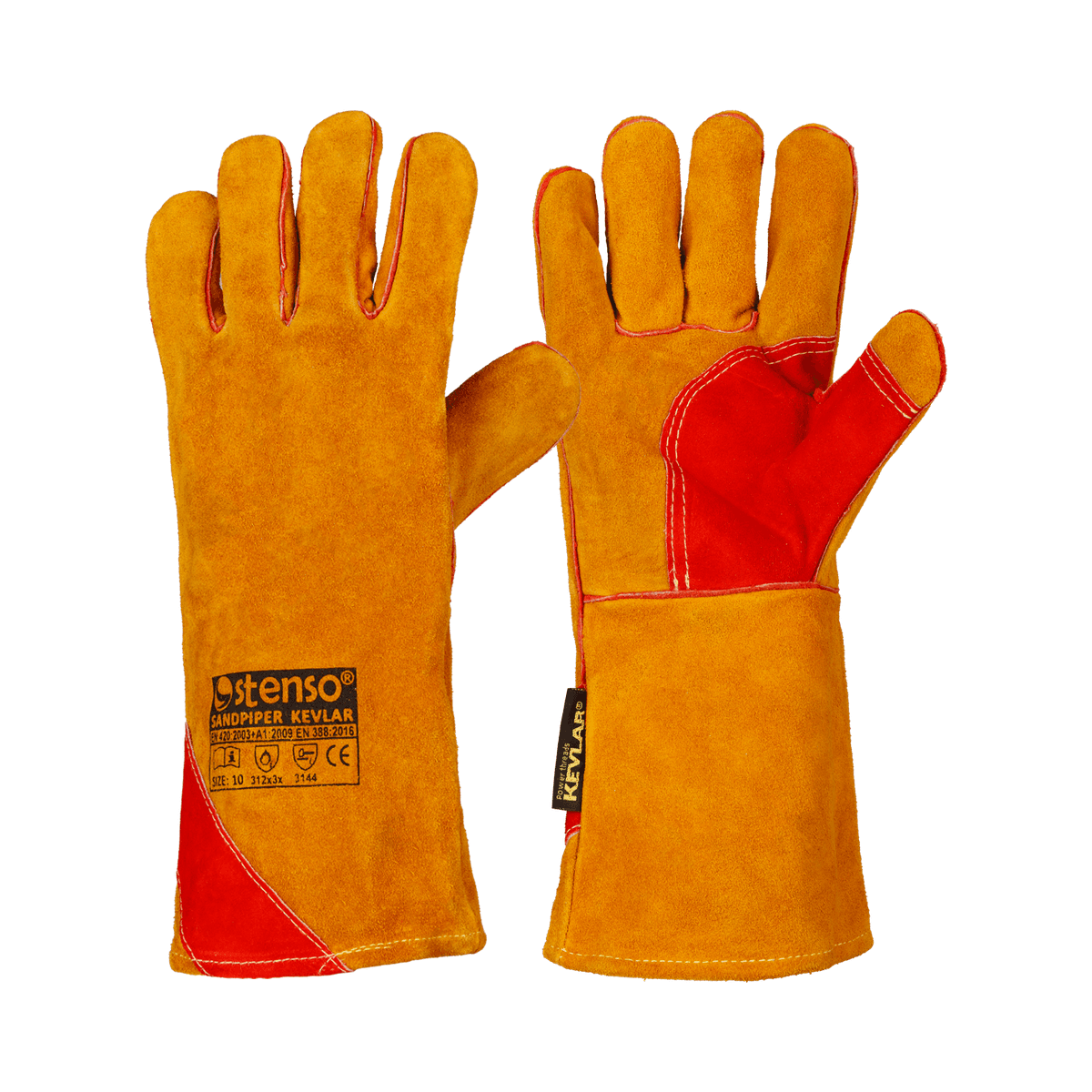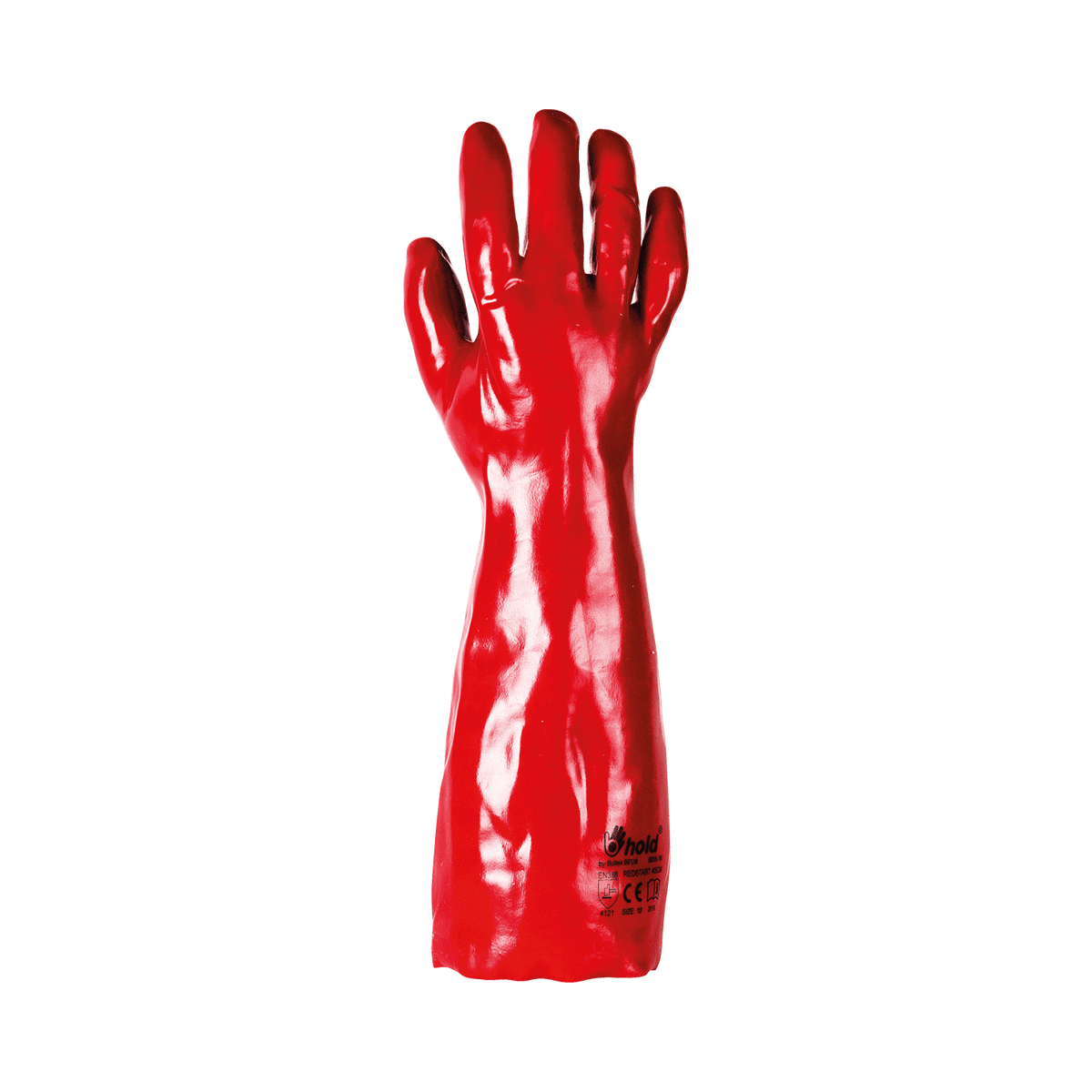
EN 388 specifies the requirements, test methods and marking for gloves protecting against mechanical risks. It is the standard whose hammer pictogram appears on almost every work glove.
How to read the code
Below the pictogram sit four digits and, since the 2016 revision, two further letters — 4X42CP, for example. Each position corresponds to a separate test.
| Position | Test | Range | What it measures |
|---|---|---|---|
| 1 | Abrasion | 0–4 | Cycles of abrasive paper before a hole appears |
| 2 | Cut (Coup) | 0–5 | Rotations of a circular blade before cut-through |
| 3 | Tear | 0–4 | Force needed to tear an already-notched sample |
| 4 | Puncture | 0–4 | Force needed to push a standard stylus through |
| 5 | Cut (TDM, ISO 13997) | A–F | Cut resistance in newtons using a straight blade |
| 6 | Impact | P or blank | Impact absorption over the back of the hand |
Two cut tests, and why there are two
The original Coup test uses a rotating blade, but modern high cut-resistant materials (glass fibre, HPPE) blunt that blade and distort the result. Since 2016 the TDM test (ISO 13997) has been added, using a fresh straight blade and reporting a letter from A to F. That letter is the reliable figure for high cut-resistance gloves.
| Letter | Cut resistance |
|---|---|
| A | ≥2 N |
| B | ≥5 N |
| C | ≥10 N |
| D | ≥15 N |
| E | ≥22 N |
| F | ≥30 N |
What X and 0 mean
- X — the test was not carried out because the method is unsuitable for this glove. It is not a defect.
- 0 — the glove was tested and failed to reach even the minimum level.
Note that EN 388 is not measured uniformly across the glove — the test is run on the palm material. Fingertips, seams and the cuff area may be weaker.