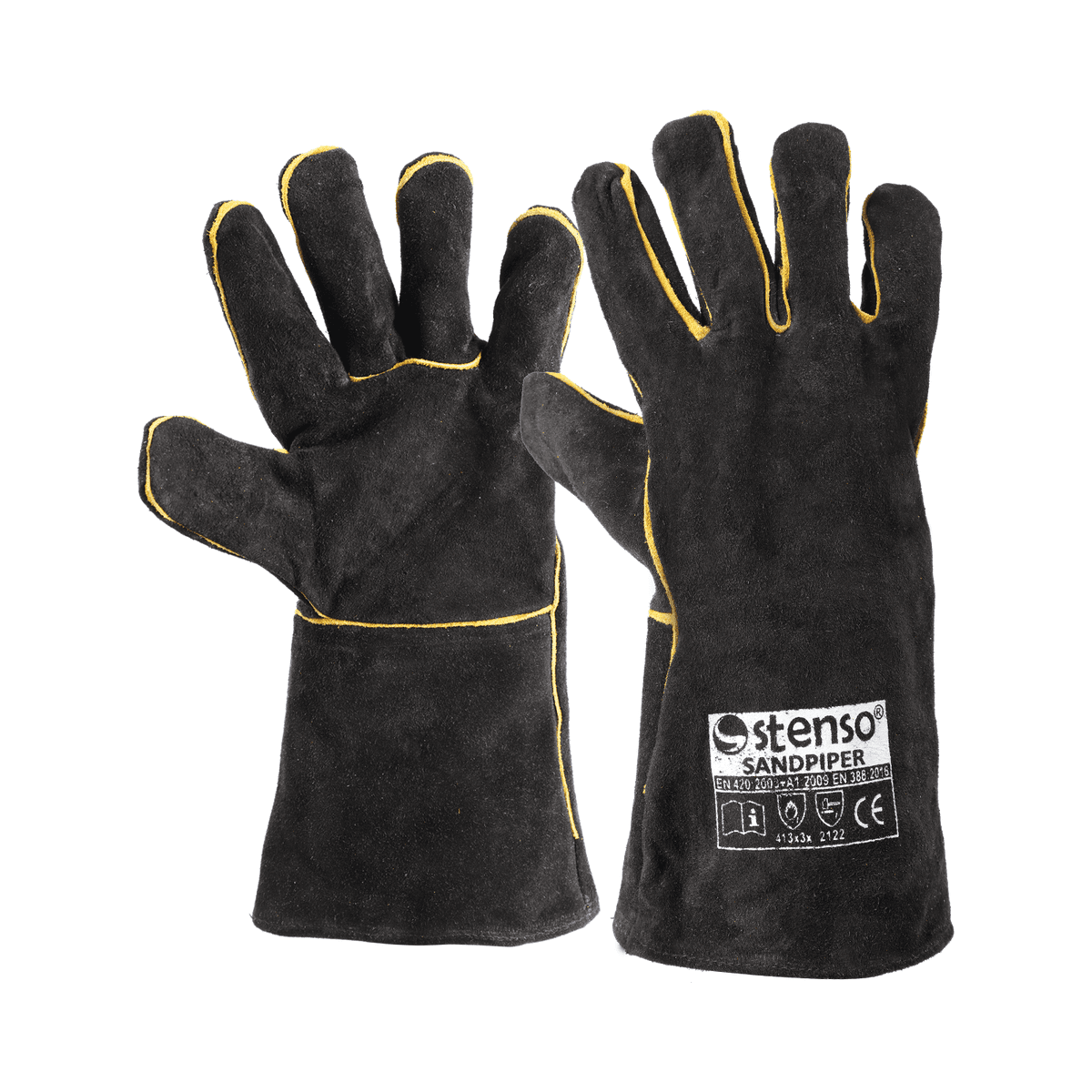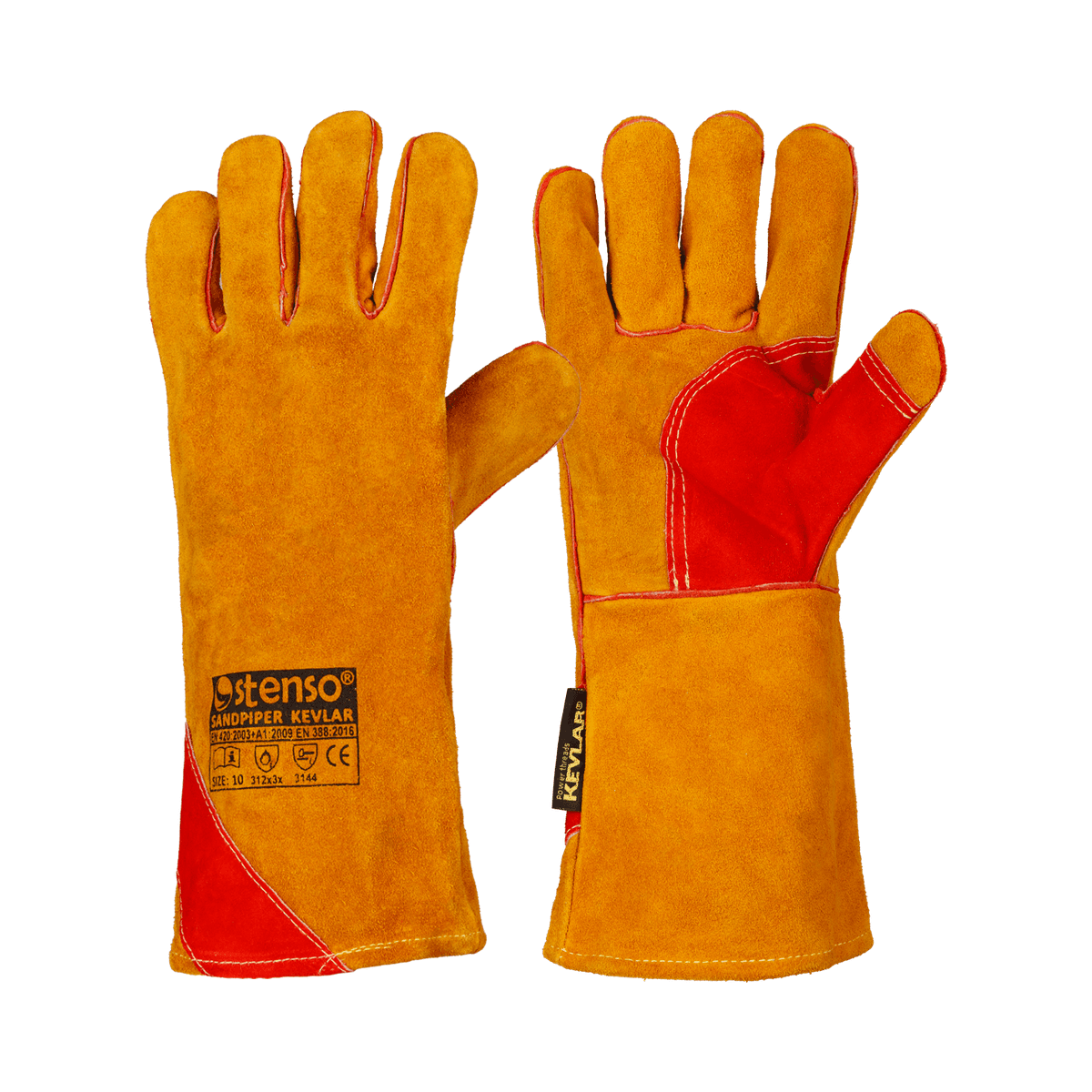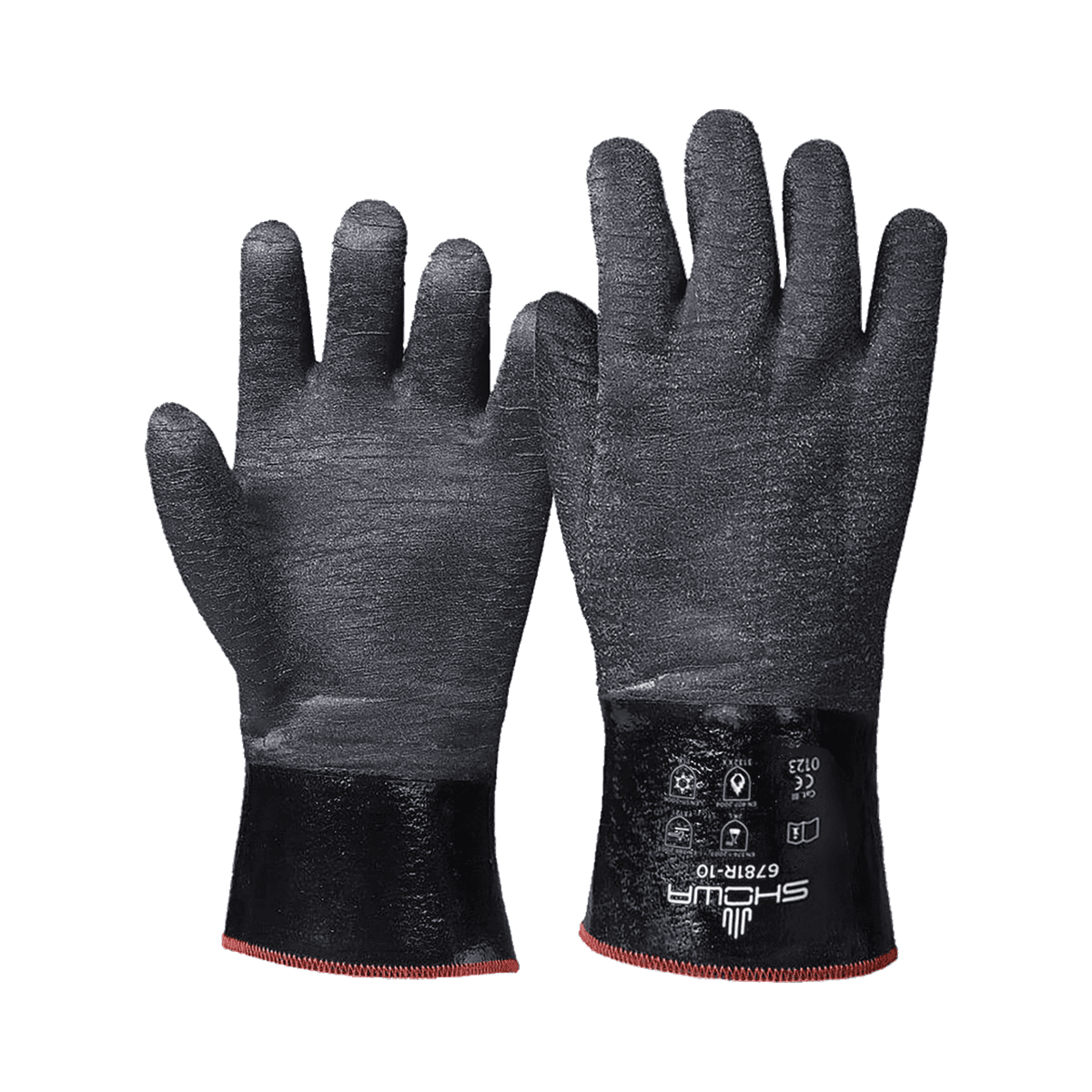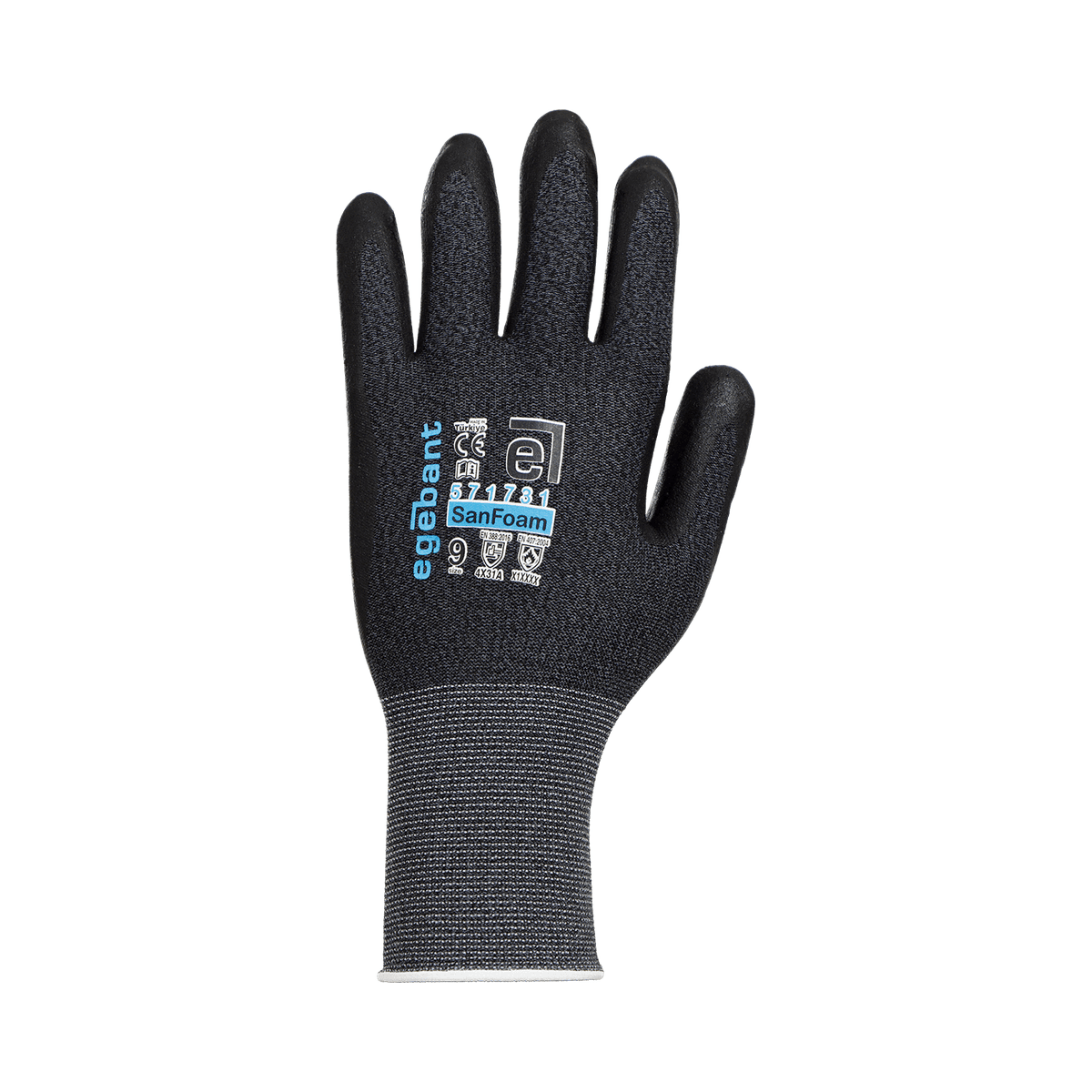
EN 407 sets the requirements for gloves protecting against heat and fire. Six digits sit under the pictogram, each for a separate thermal risk, on a scale from 1 to 4.
The six positions
| Position | Risk | What is measured |
|---|---|---|
| 1 | Burning behaviour | Afterflame and afterglow time once the flame is removed |
| 2 | Contact heat | The temperature (100–500 °C) at which the inside rises less than 10 °C in 15 s |
| 3 | Convective heat | The time the glove delays heat transfer from a flame |
| 4 | Radiant heat | The time before a set heat level is reached from a radiant source |
| 5 | Small splashes of molten metal | Number of molten metal droplets to raise the inside by 40 °C |
| 6 | Large quantities of molten metal | Grams of molten metal the glove withstands |
A critical rule
If the first digit (burning behaviour) is below 3, the glove must not be used where there is a risk of open flame, however good the other figures are. A glove that keeps burning on the hand does more damage than no glove at all.
EN 407 usually appears alongside EN 388 — a welder's glove carries both pictograms, since it has to resist heat and mechanical wear at once. For welding specifically, EN 12477 applies.