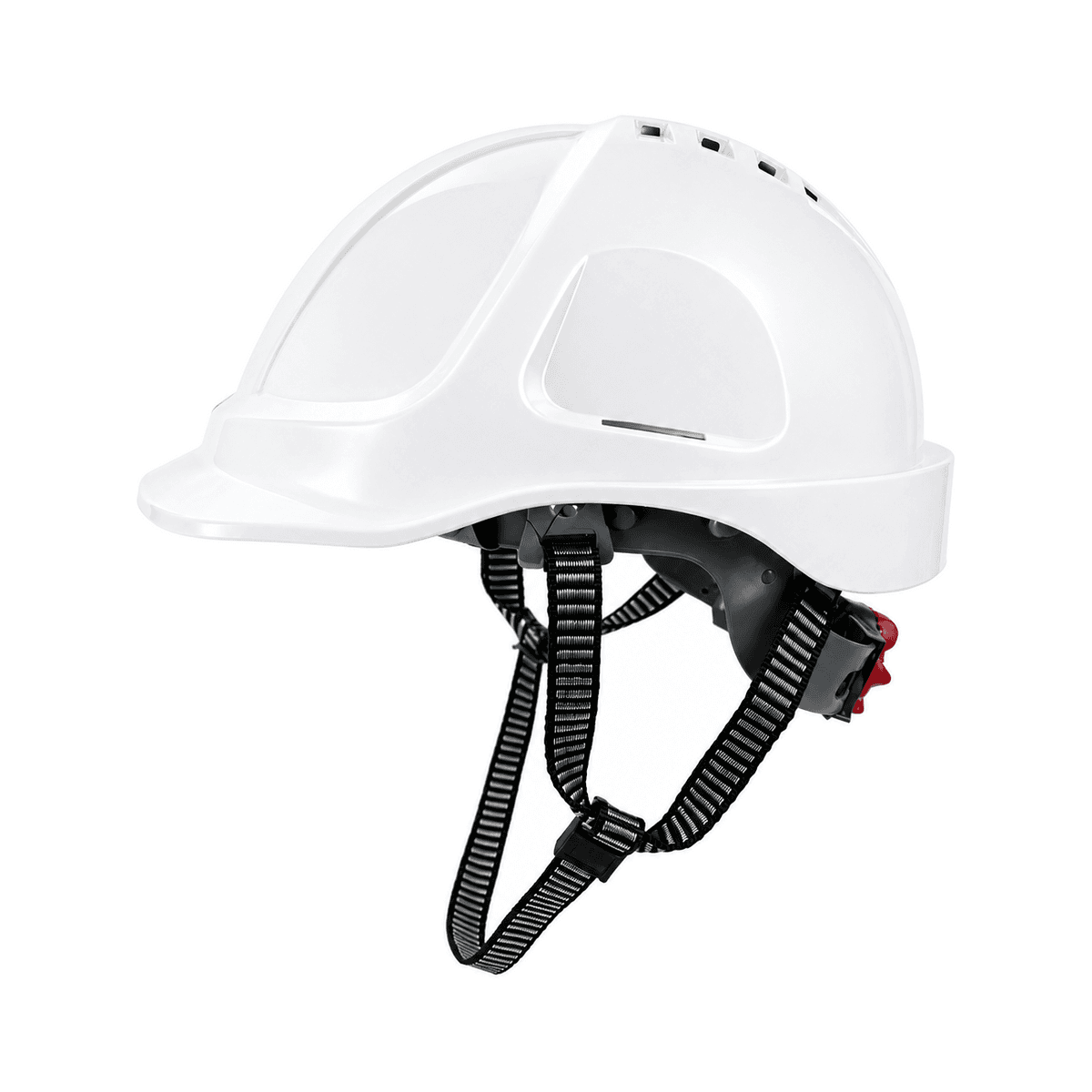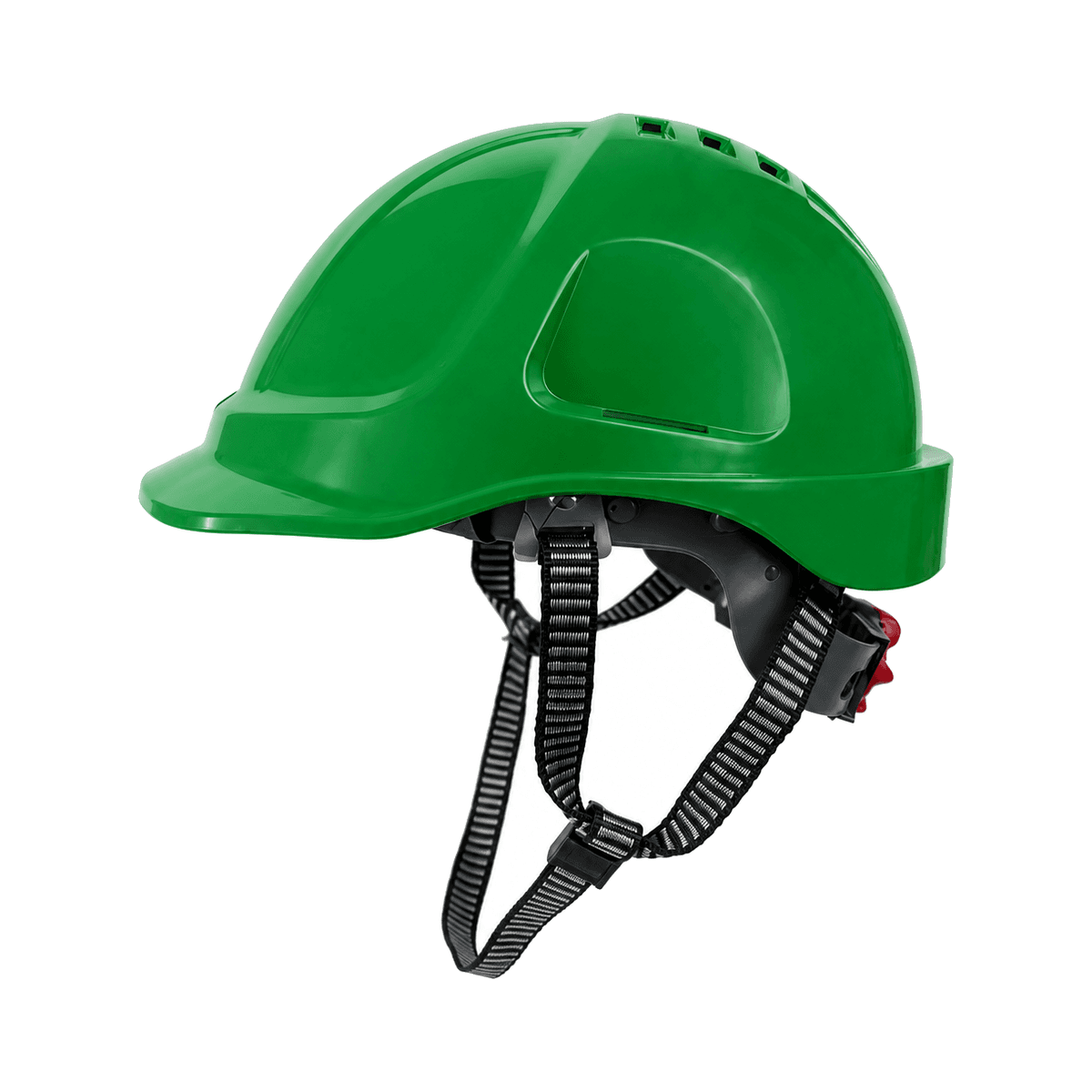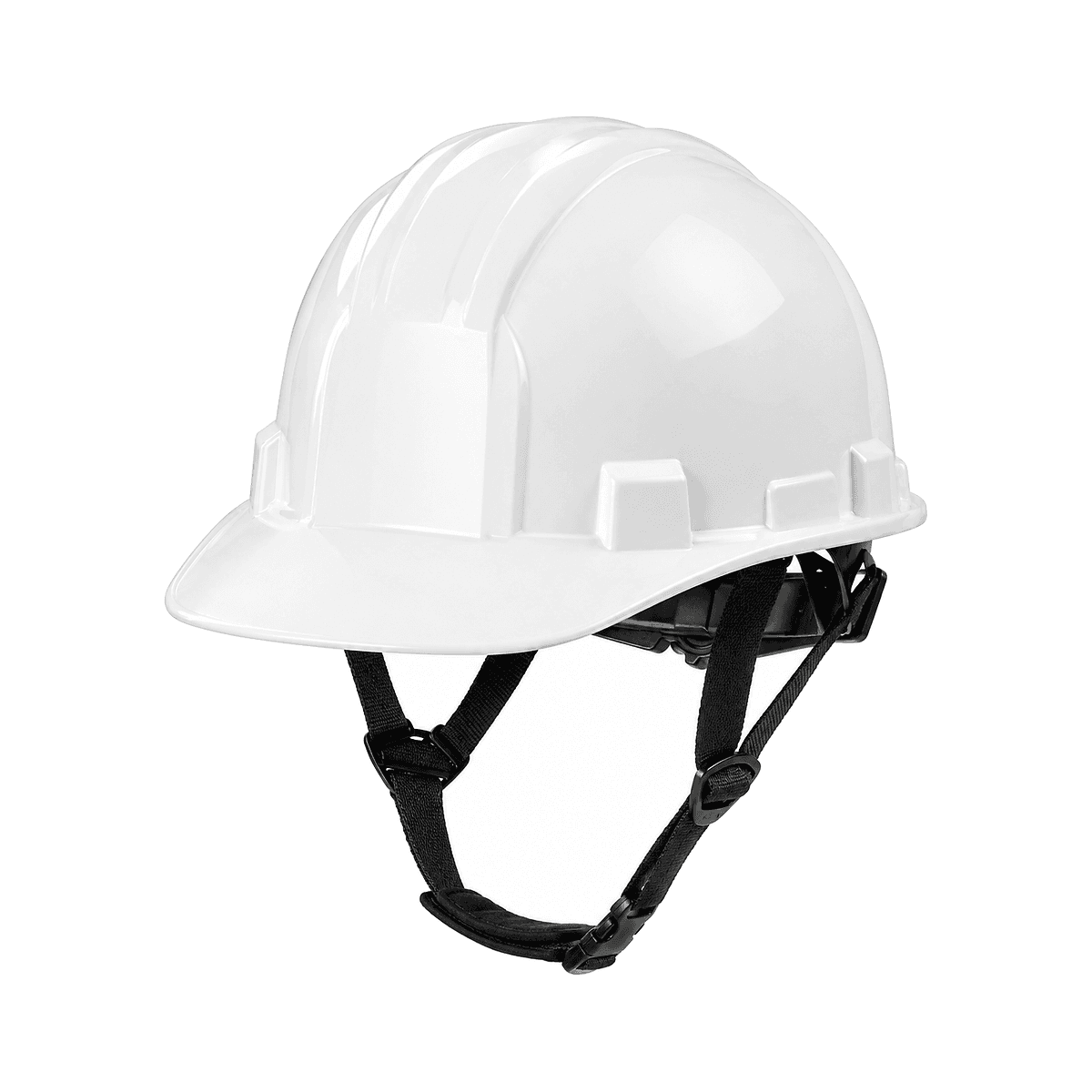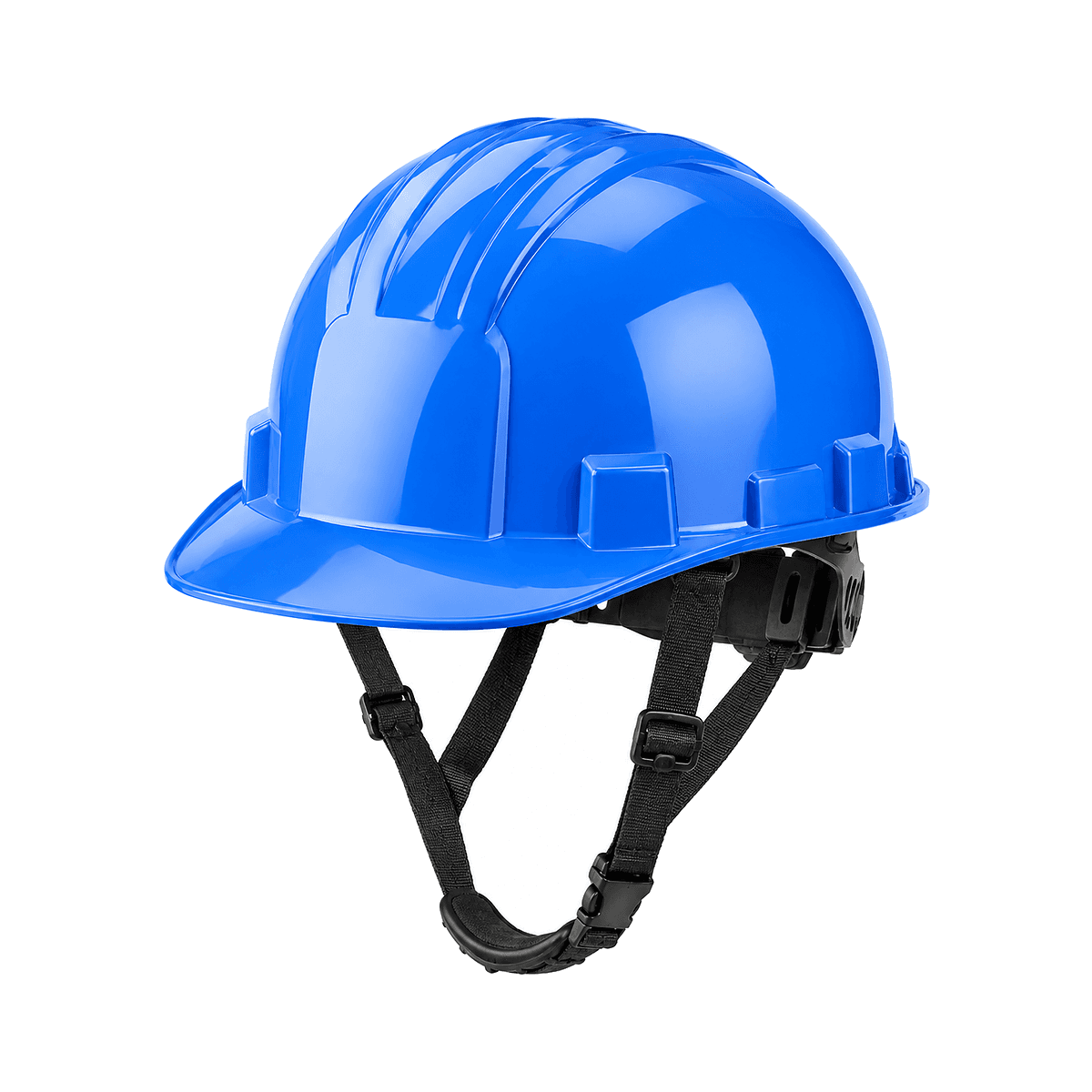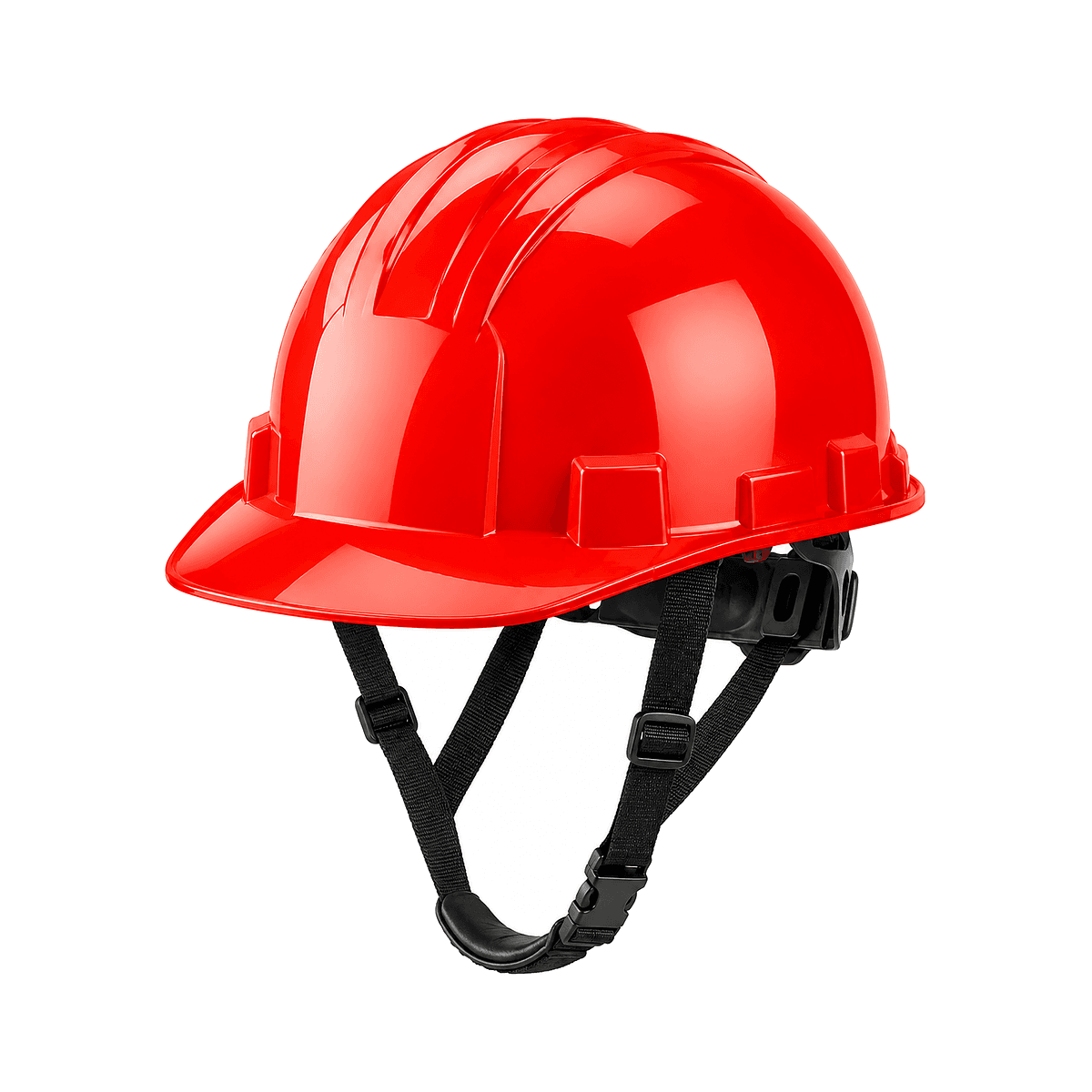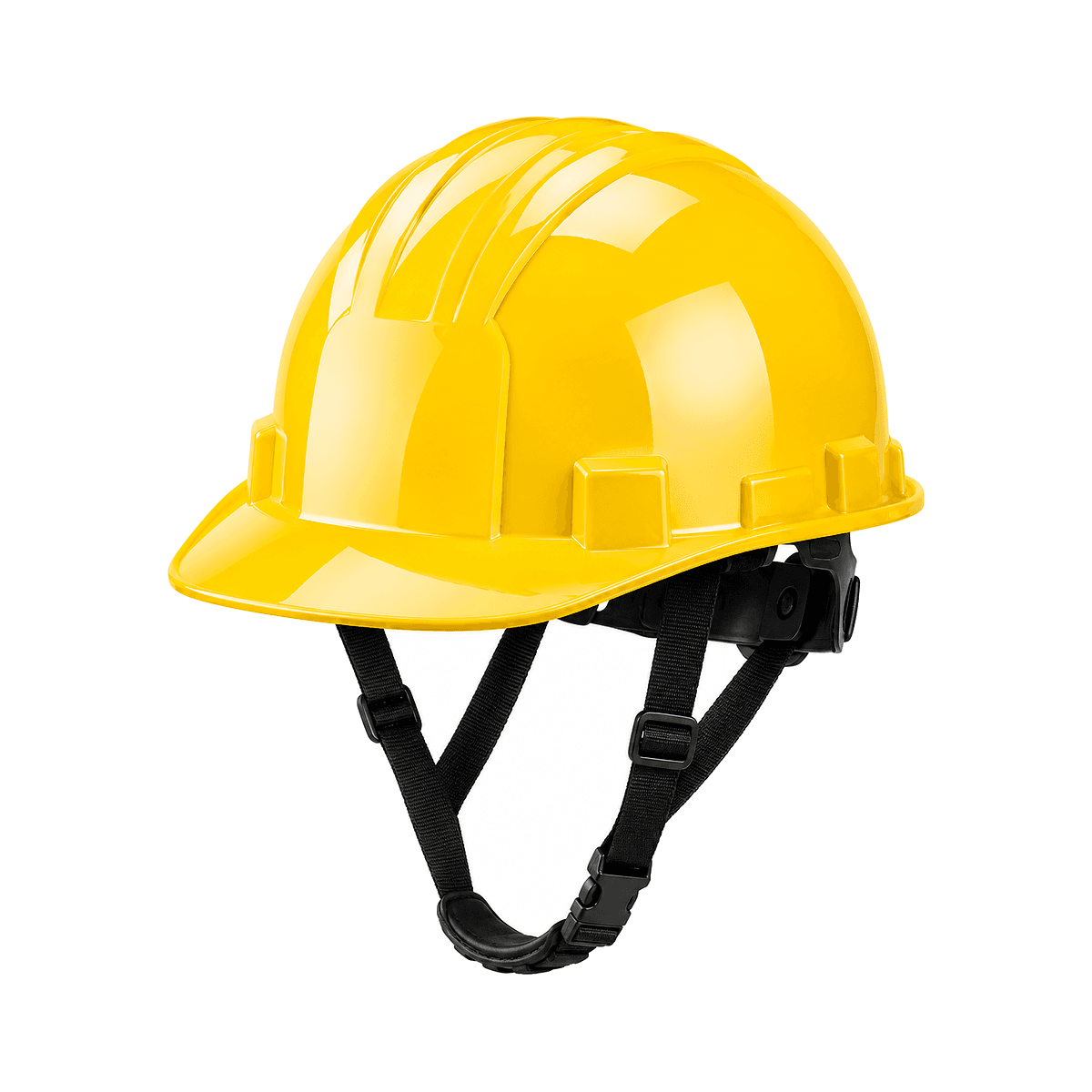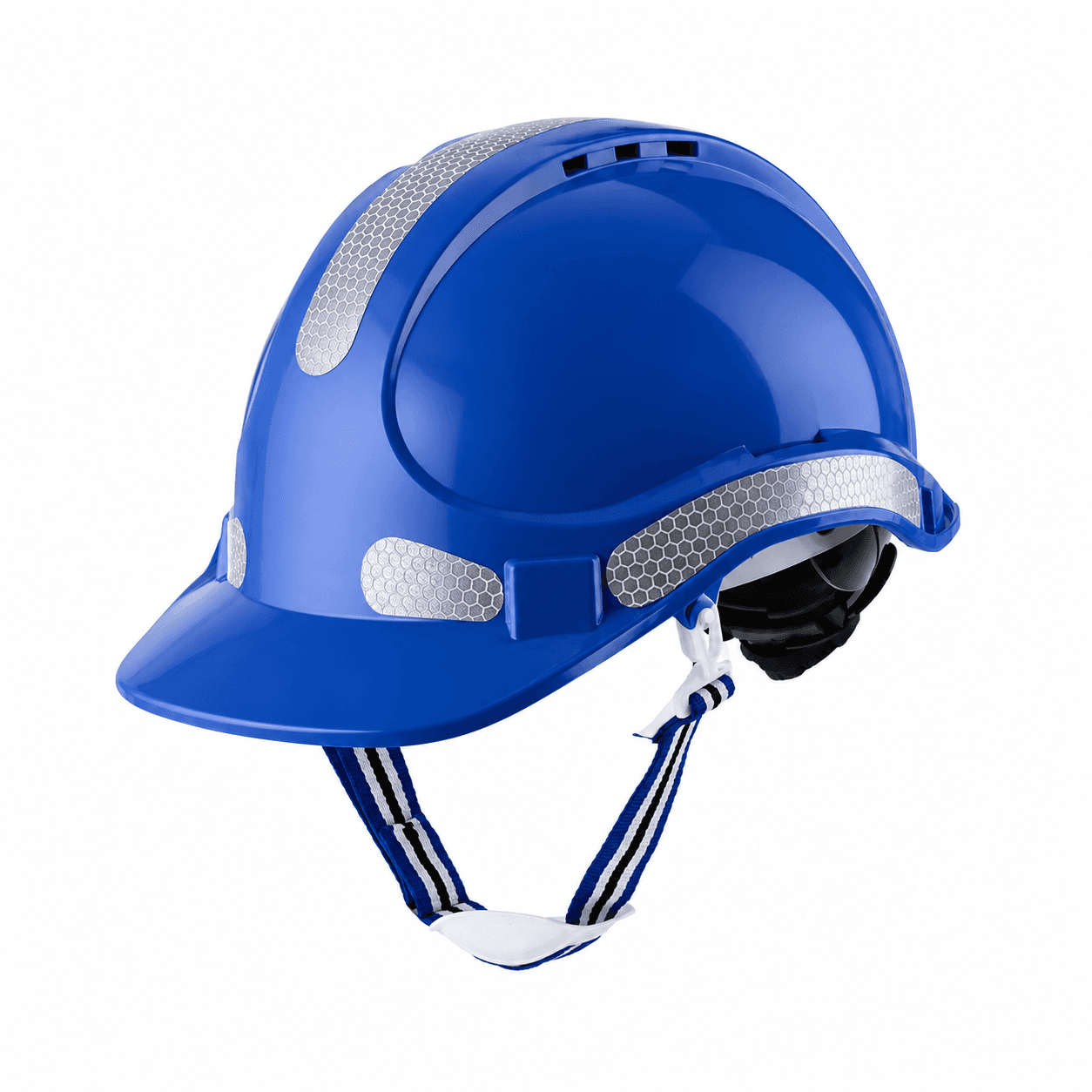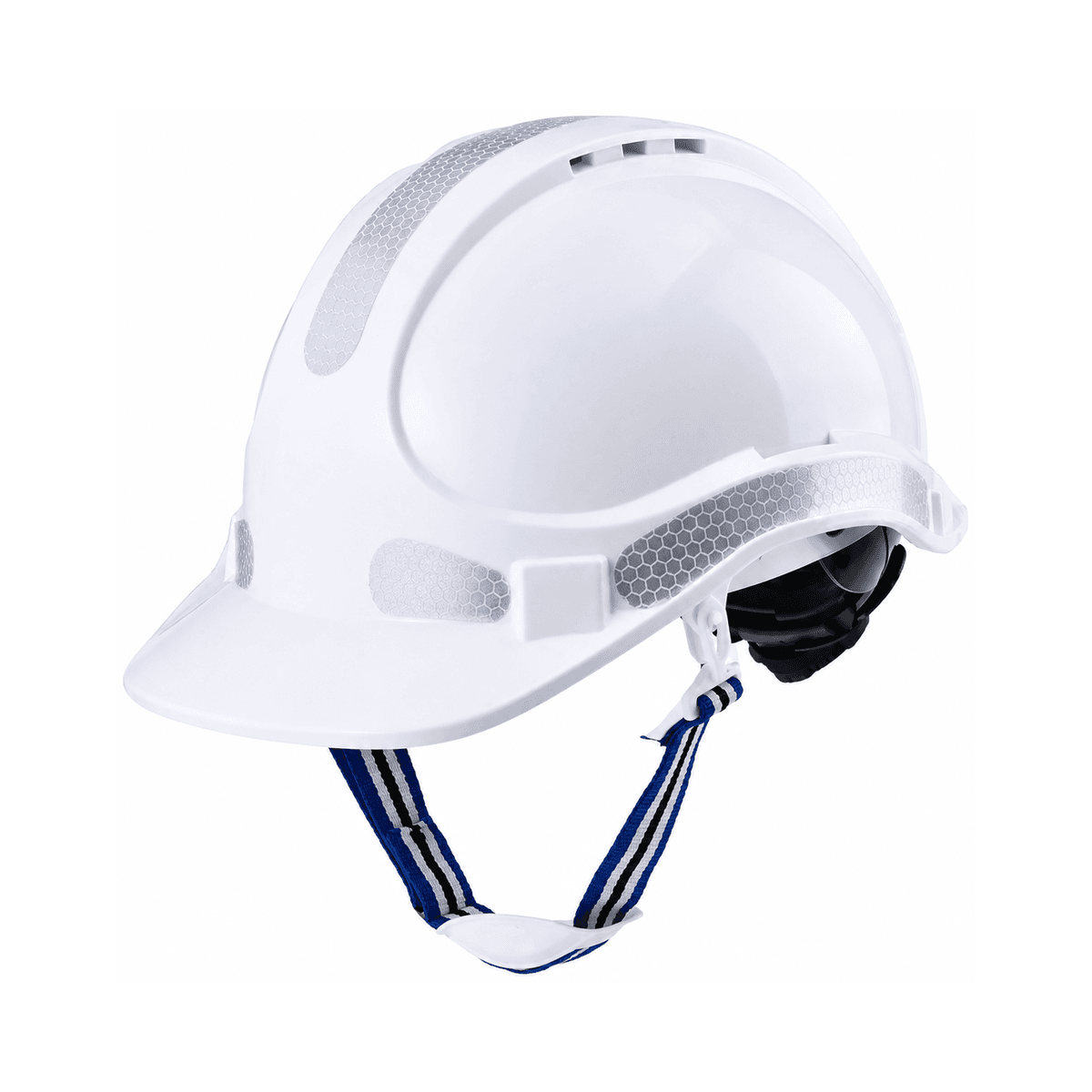
EN 397 sets the requirements for an industrial safety helmet. Its primary job is to absorb the energy of an object falling from above and to stop that object penetrating the shell. It is the standard the vast majority of helmets on a construction site are certified to.
Mandatory requirements
- Shock absorption — a 5 kg striker dropped from 1 m (≈49 J); the force transmitted to the head must not exceed 5 kN.
- Penetration resistance — a 3 kg conical striker dropped from 1 m must not touch the headform.
- Flame resistance — the shell must not burn with flame emission for more than 5 s after the flame is removed.
- Chin-strap anchorage — the strap must release between 150 N and 250 N, so a snagged helmet cannot strangle the wearer.
Optional requirements and marking
Optional requirements are marked on the label inside the shell and should be selected to match the working environment — −30 °C for a cold store, 150 °C around molten metal.
- −20 °C / −30 °C
- Very low temperature resistance
- +150 °C
- Very high temperature resistance
- 440 V a.c.
- Electrical insulation against accidental contact with a low-voltage conductor
- LD
- Lateral deformation resistance
- MM
- Protection against molten metal splash
Service life and storage
The moulding date is stamped on the shell, usually as a clock dial. Thermoplastic shells (ABS, PE) typically last 3–5 years in service, thermoset shells 5–7 years. Any visible crack, chalking or discolouration — and any helmet that has taken a serious impact — must be withdrawn immediately, however minor the damage looks.