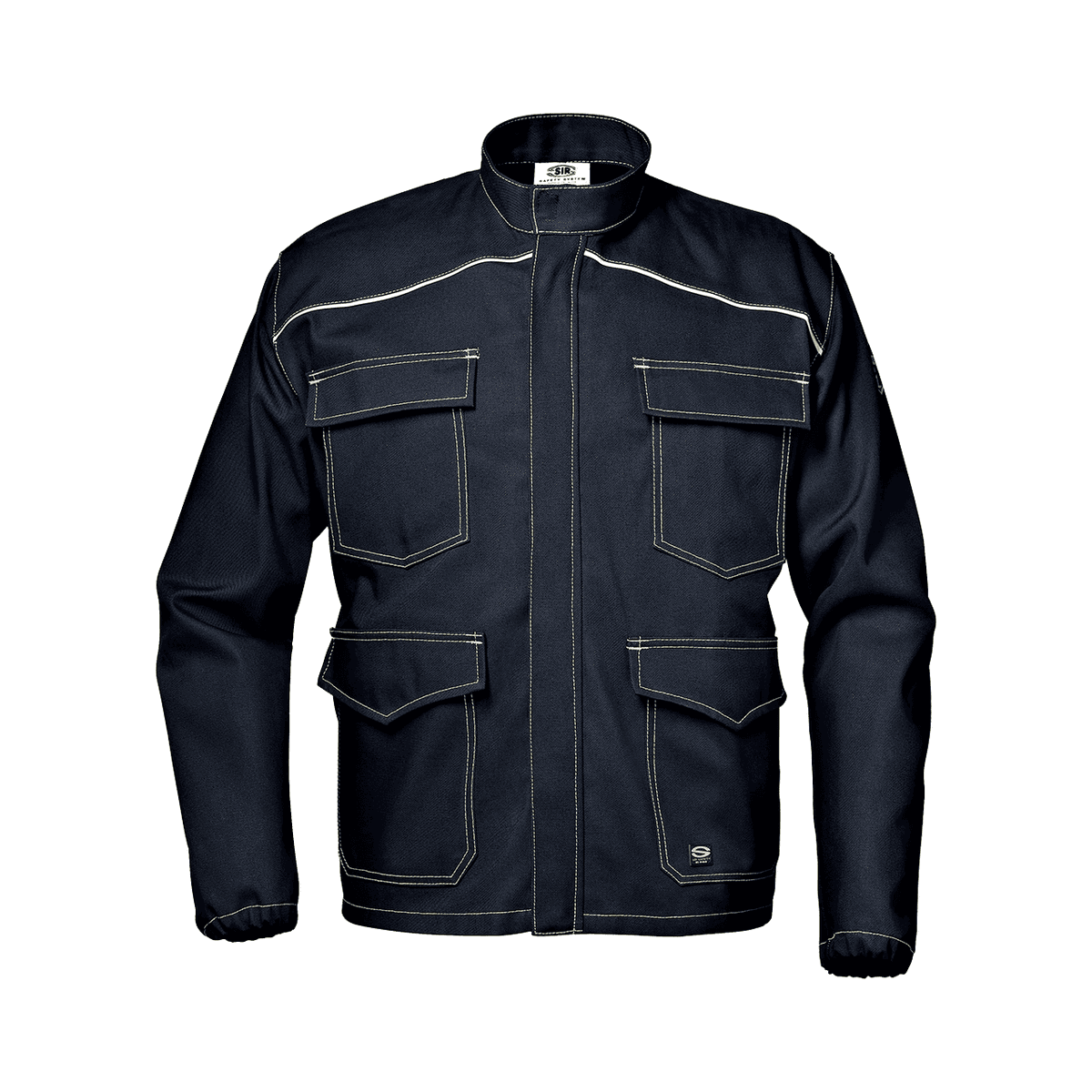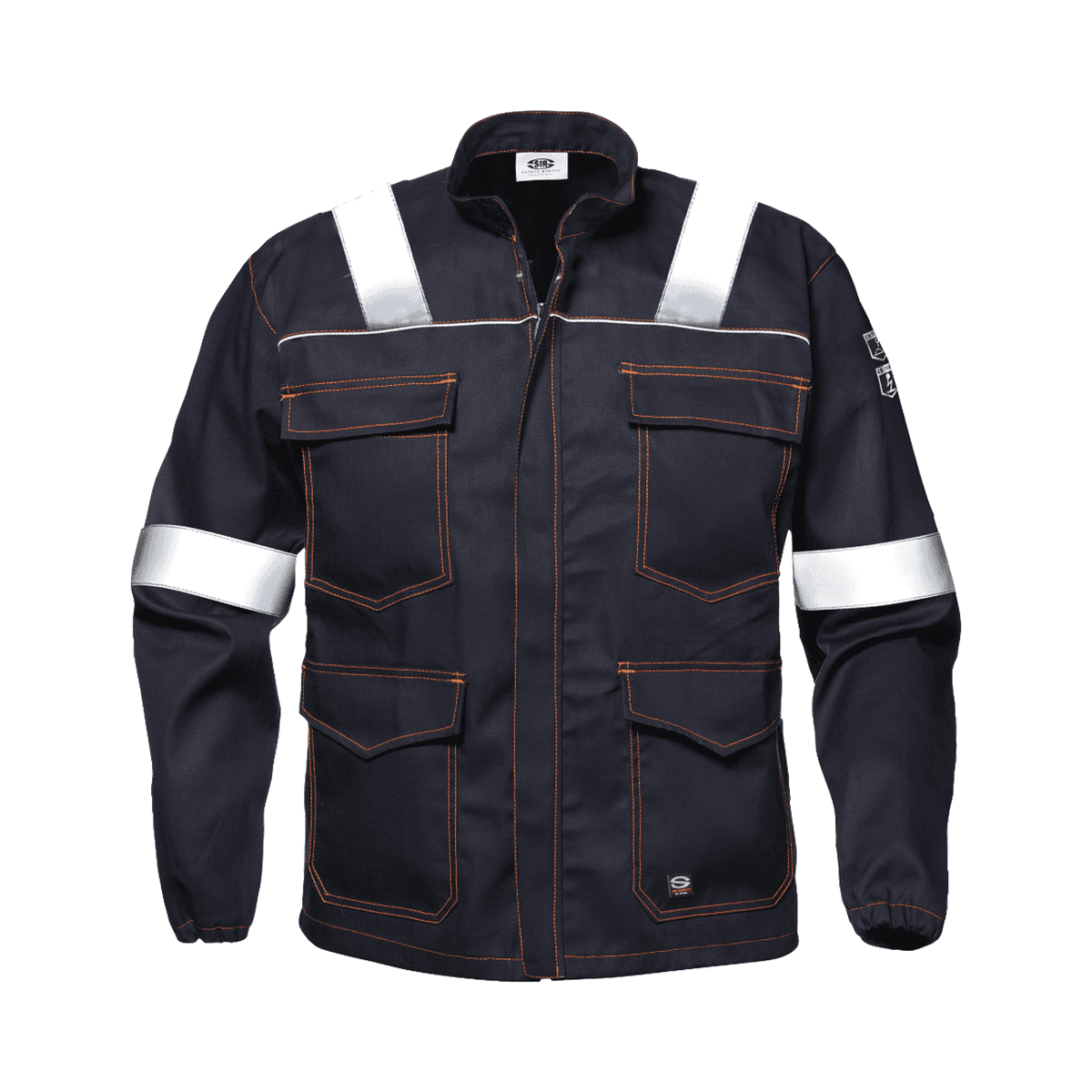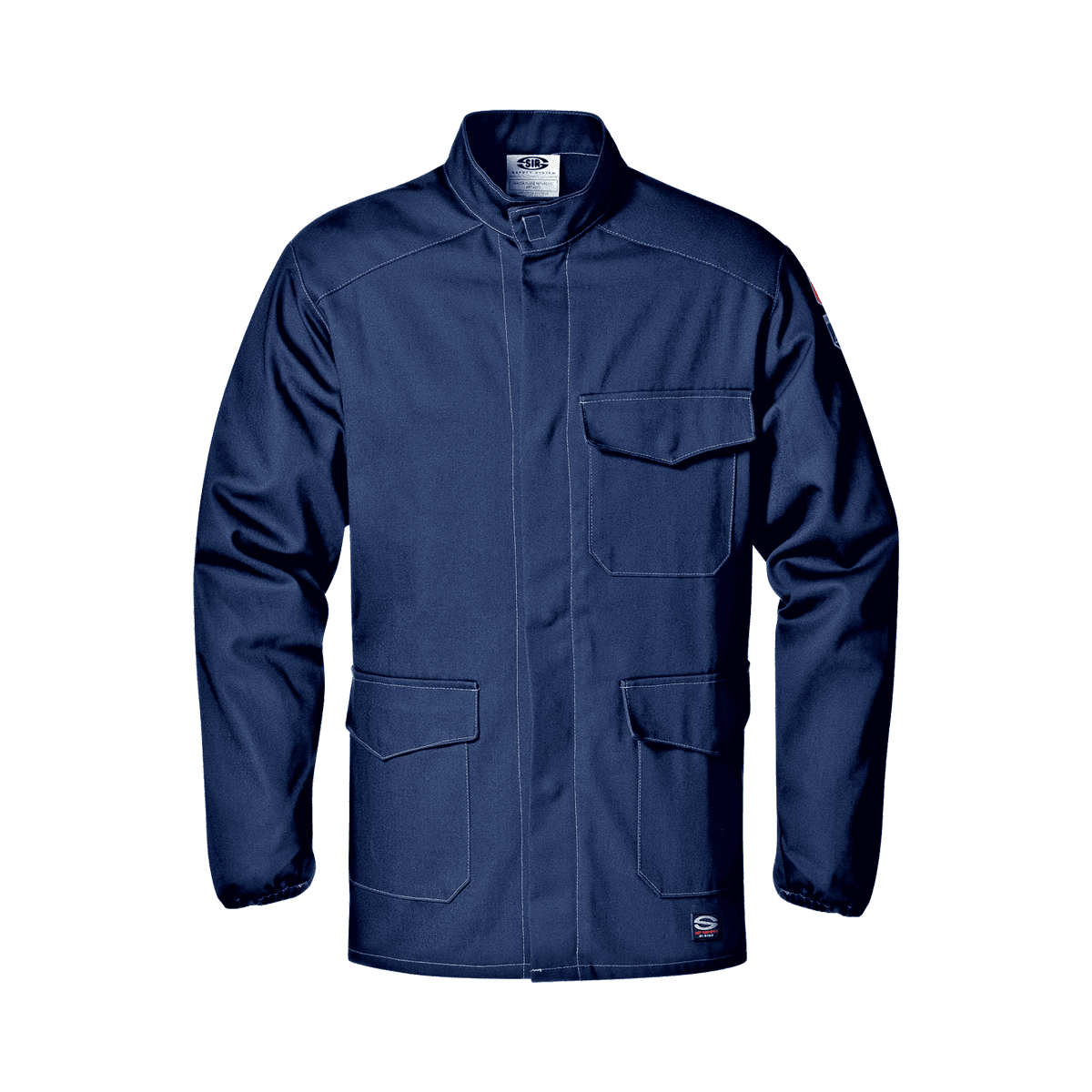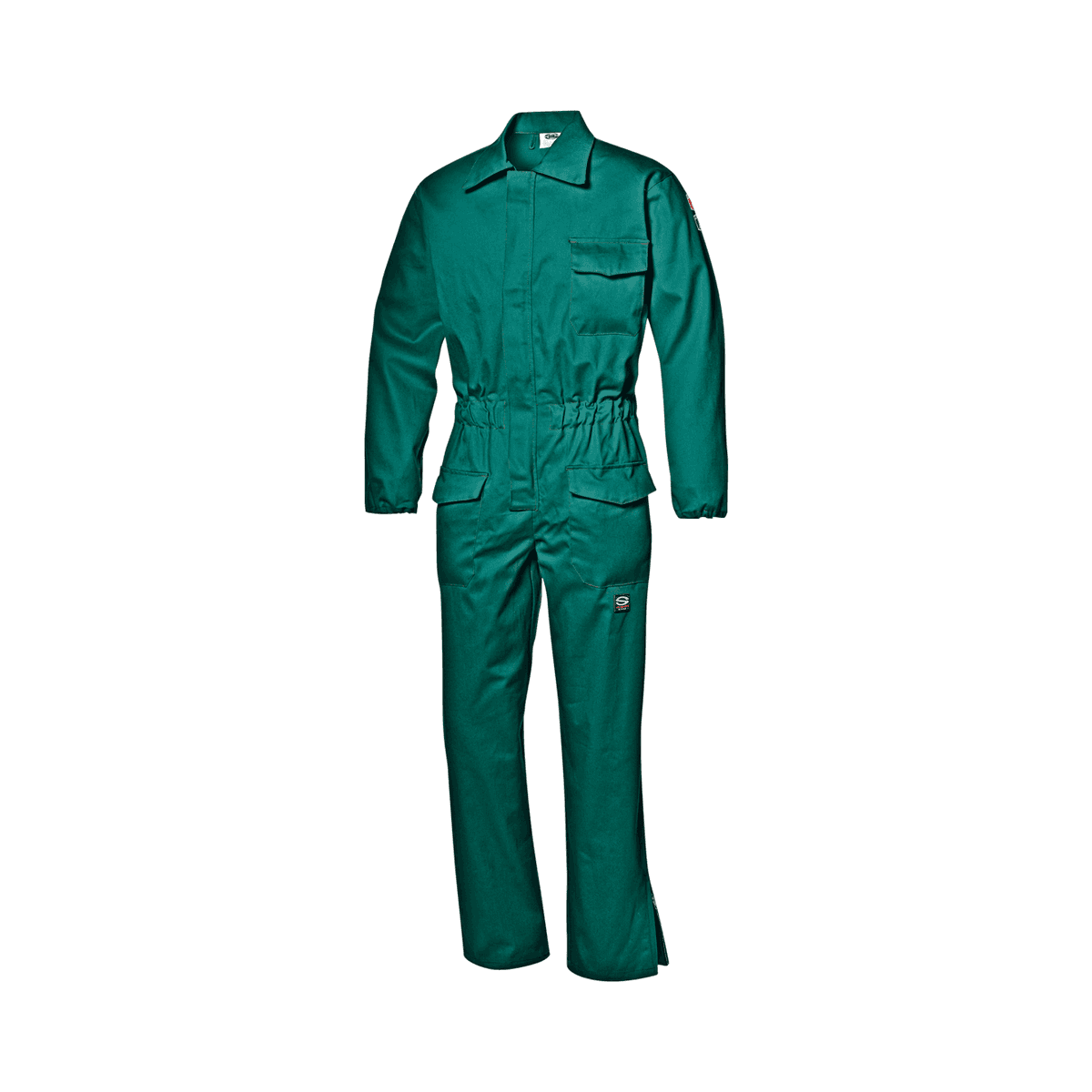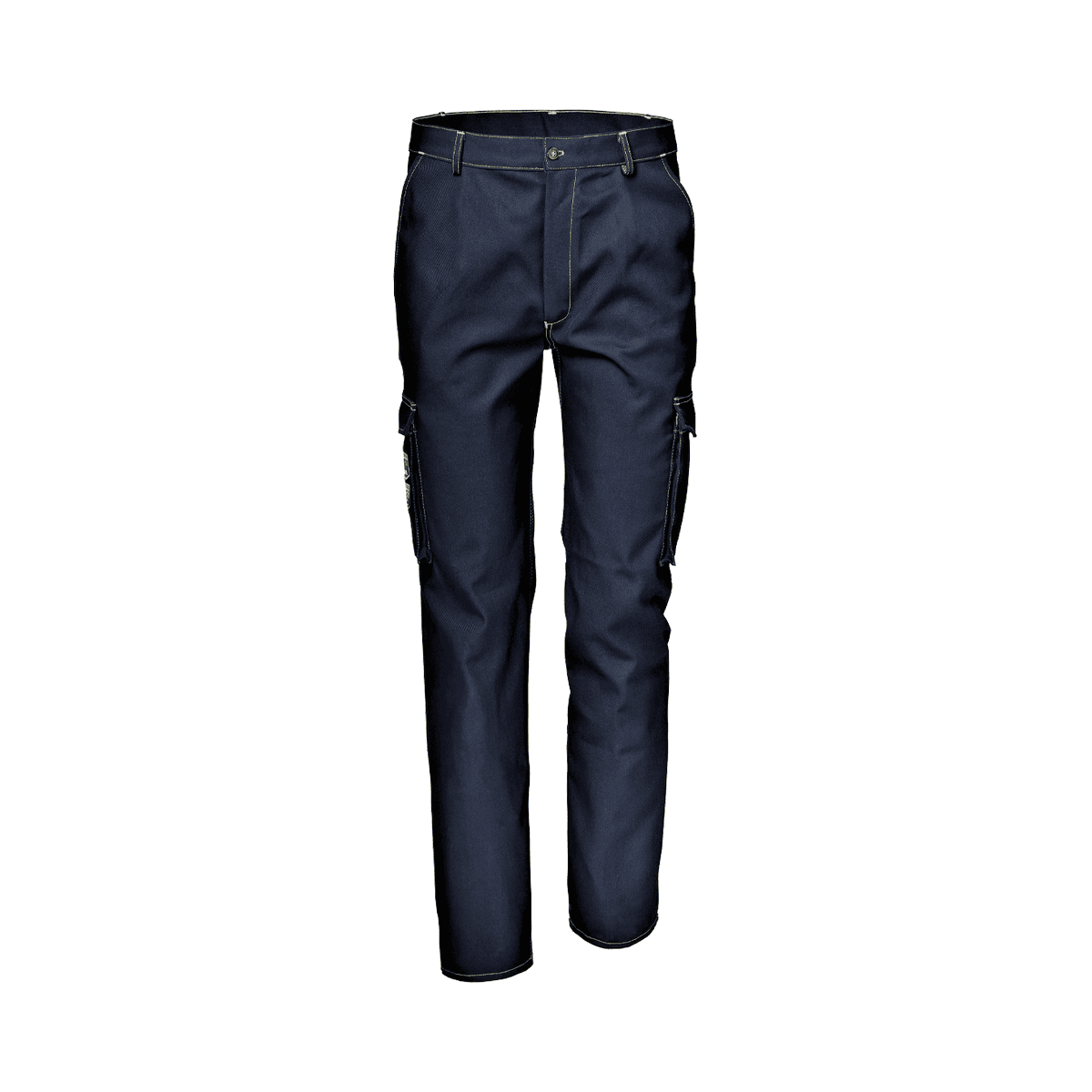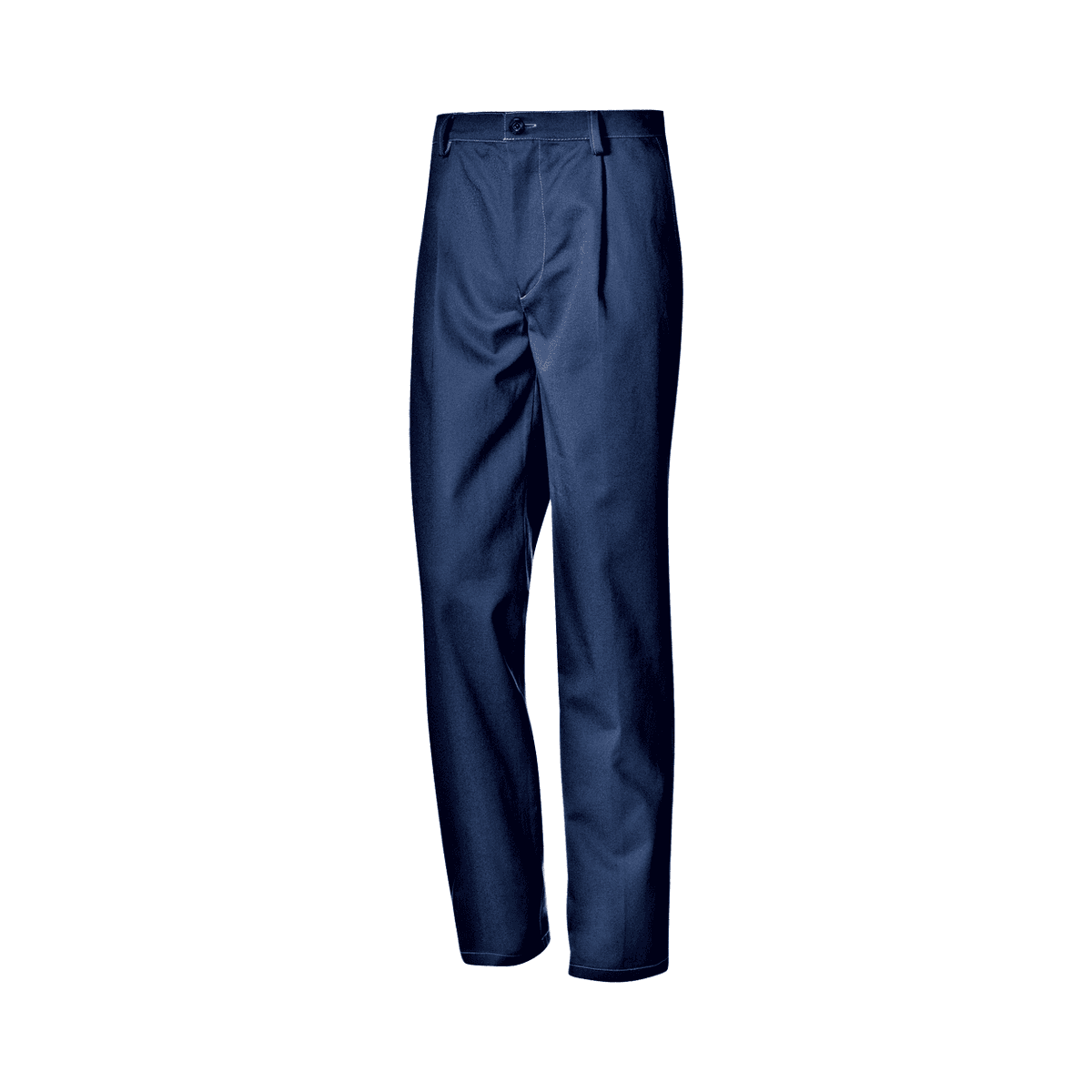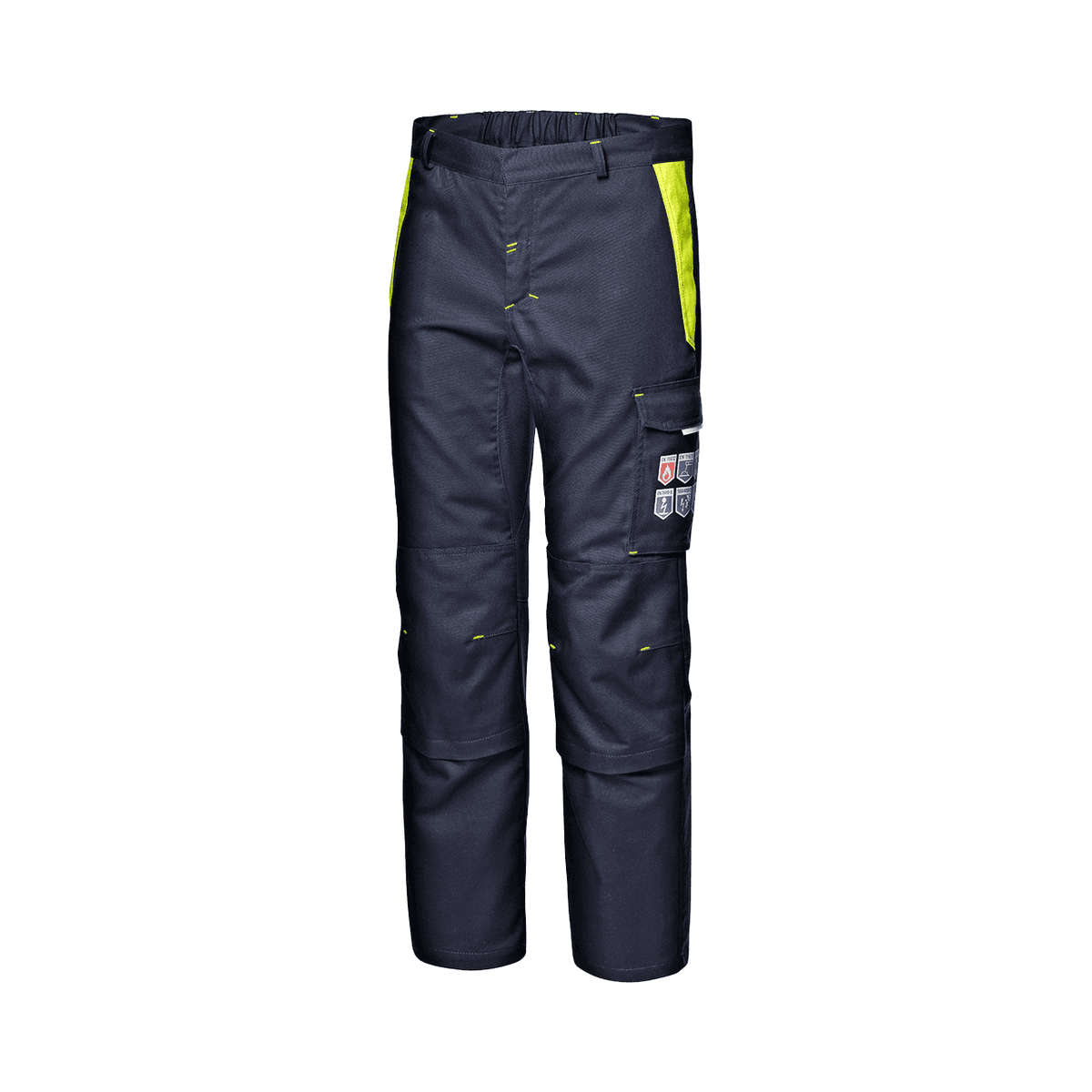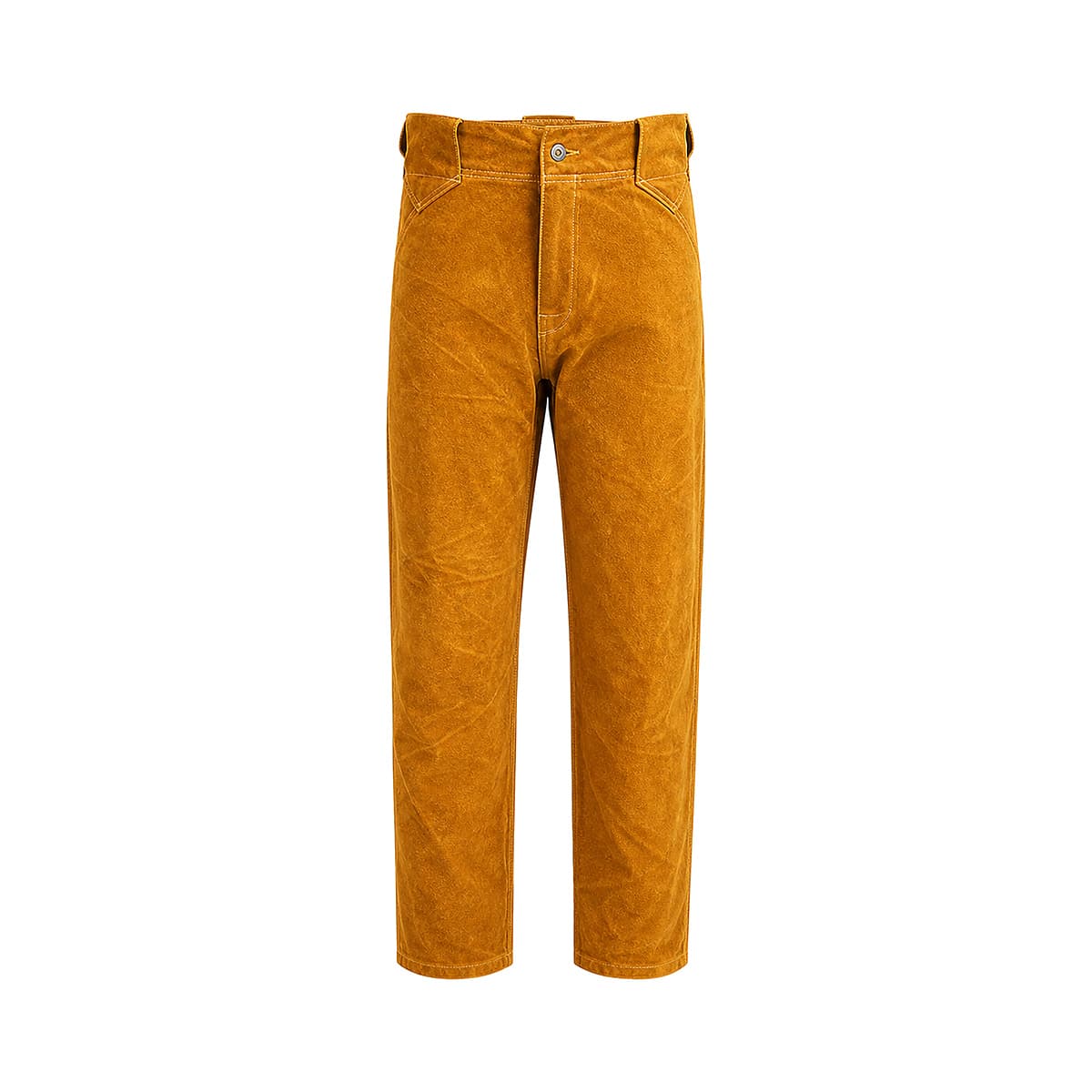
EN ISO 11611 sets the requirements for clothing used in welding, cutting and allied processes. It protects against spatter, small splashes of molten metal, radiant and UV radiation, and provides electrical insulation against brief accidental contact.
The two classes
| Class | Spatter drops | Radiation | Use |
|---|---|---|---|
| Class 1 | ≥ 15 | ≥ 7 s | Light welding with little spatter — TIG, spot welding |
| Class 2 | ≥ 25 | ≥ 16 s | Heavy welding, overhead work, cutting — MMA, MAG |
Electrical safety
The clothing insulates against up to 100 V d.c., but only when dry. Wet or sweat-soaked clothing loses that protection. It is one reason a welder should have more than one set.
Construction details
- External pockets must have flaps — an open pocket catches spatter.
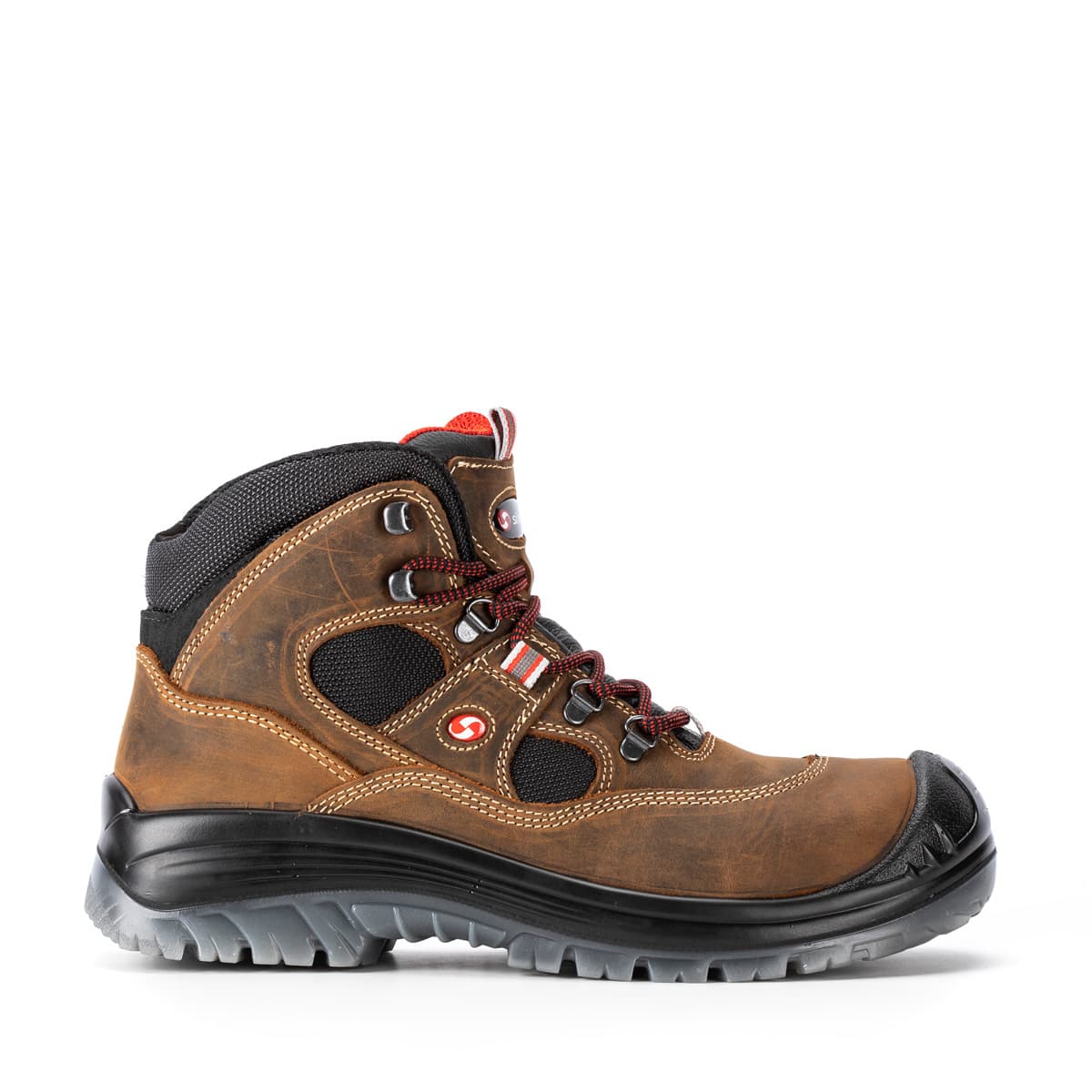
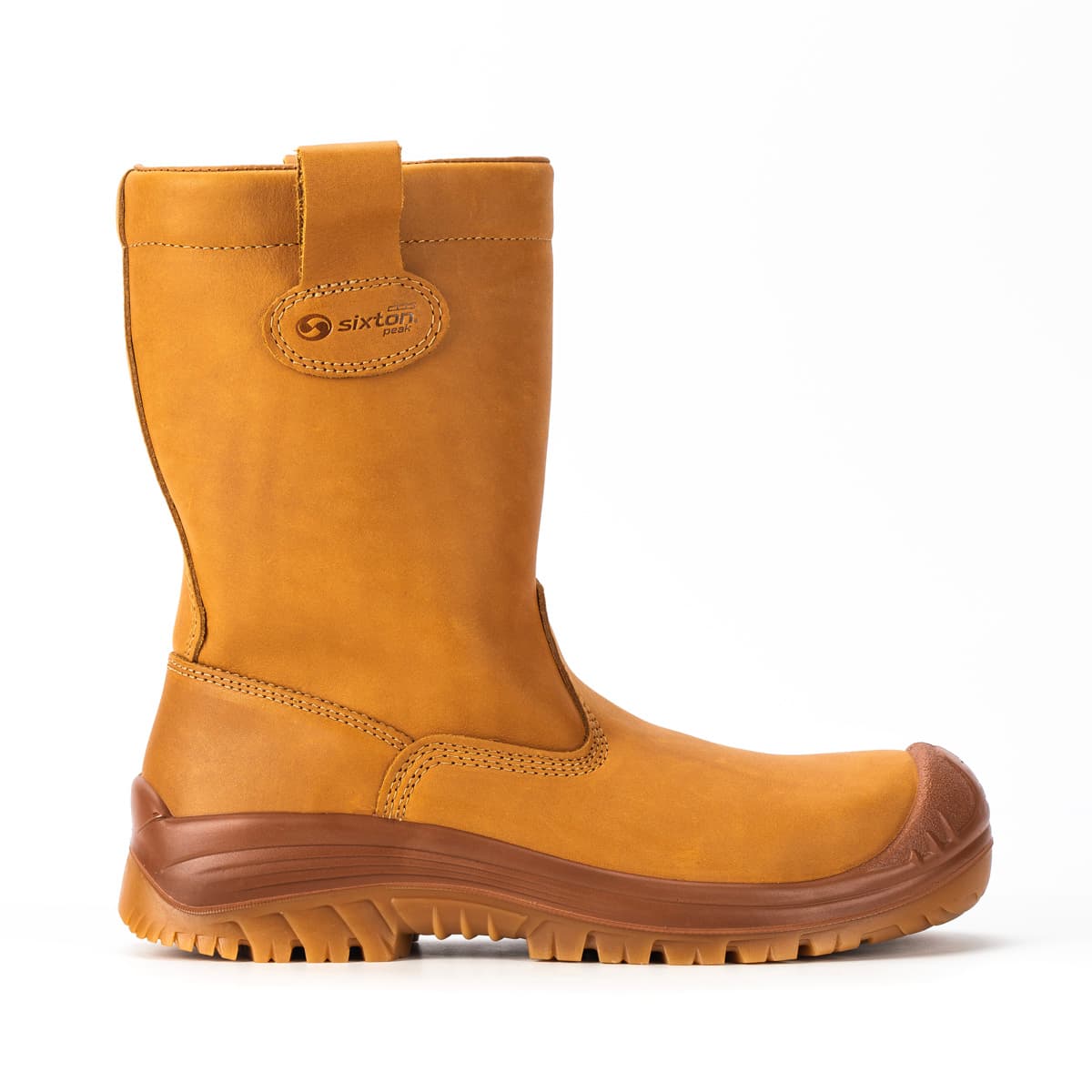
- Trousers without turn-ups, worn outside the boot.
- Buttons and zips covered by a placket so hot metal cannot reach them.
- Sleeves to the wrist, with the glove cuff worn over the sleeve.
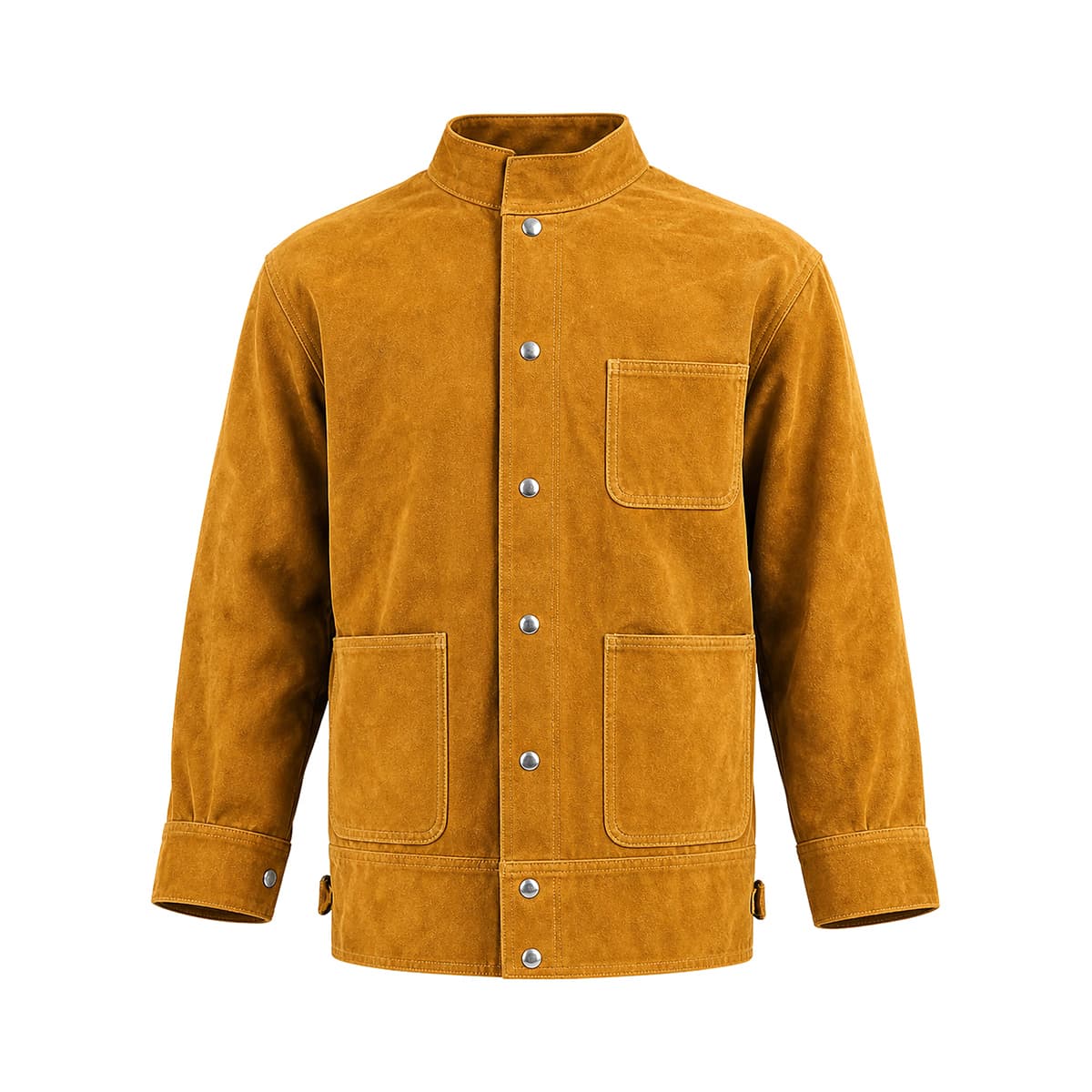
Traditional leather aprons and sleeves are still widely used in heavy welding — they supplement EN ISO 11611 clothing where the spatter load is highest.
Replaces EN 470.