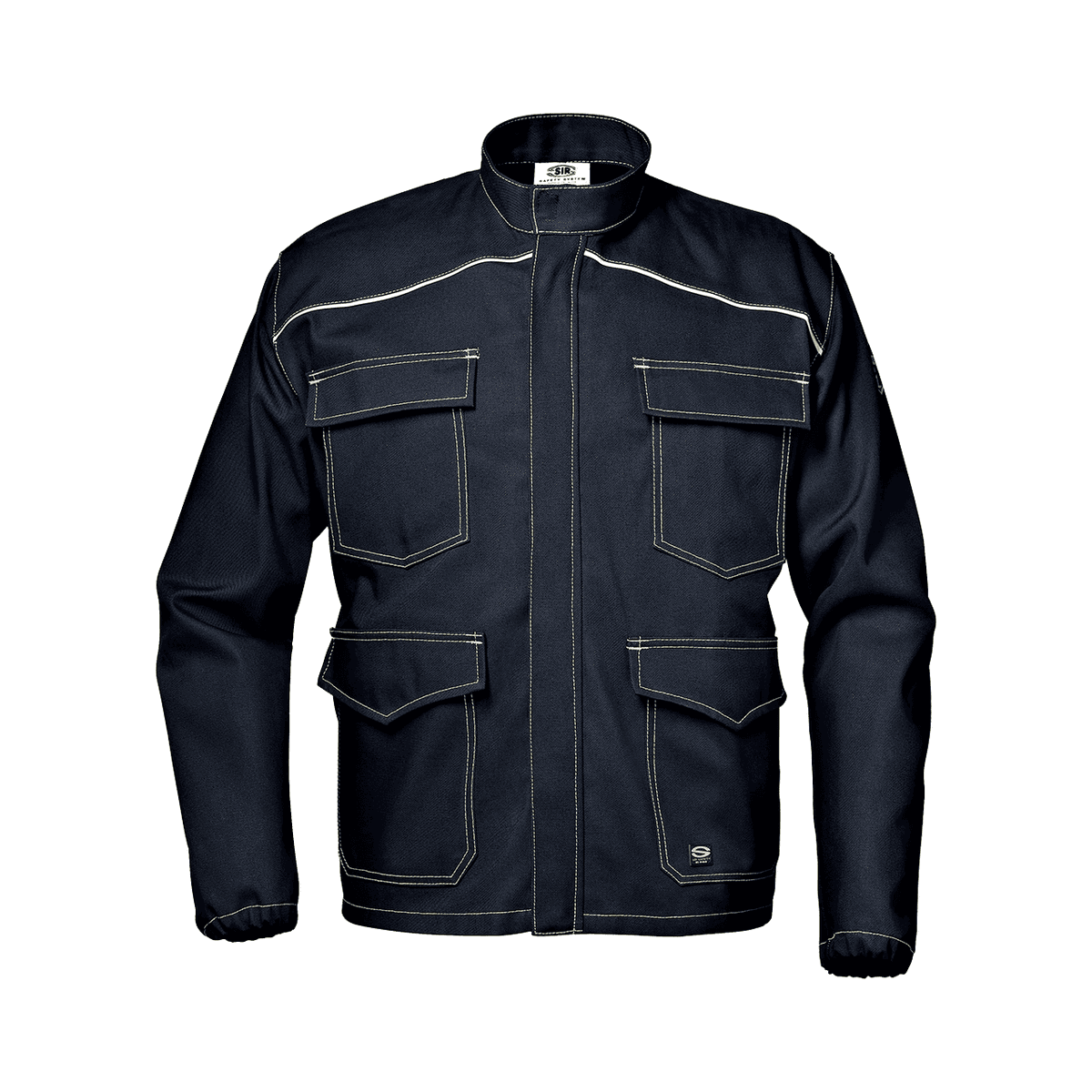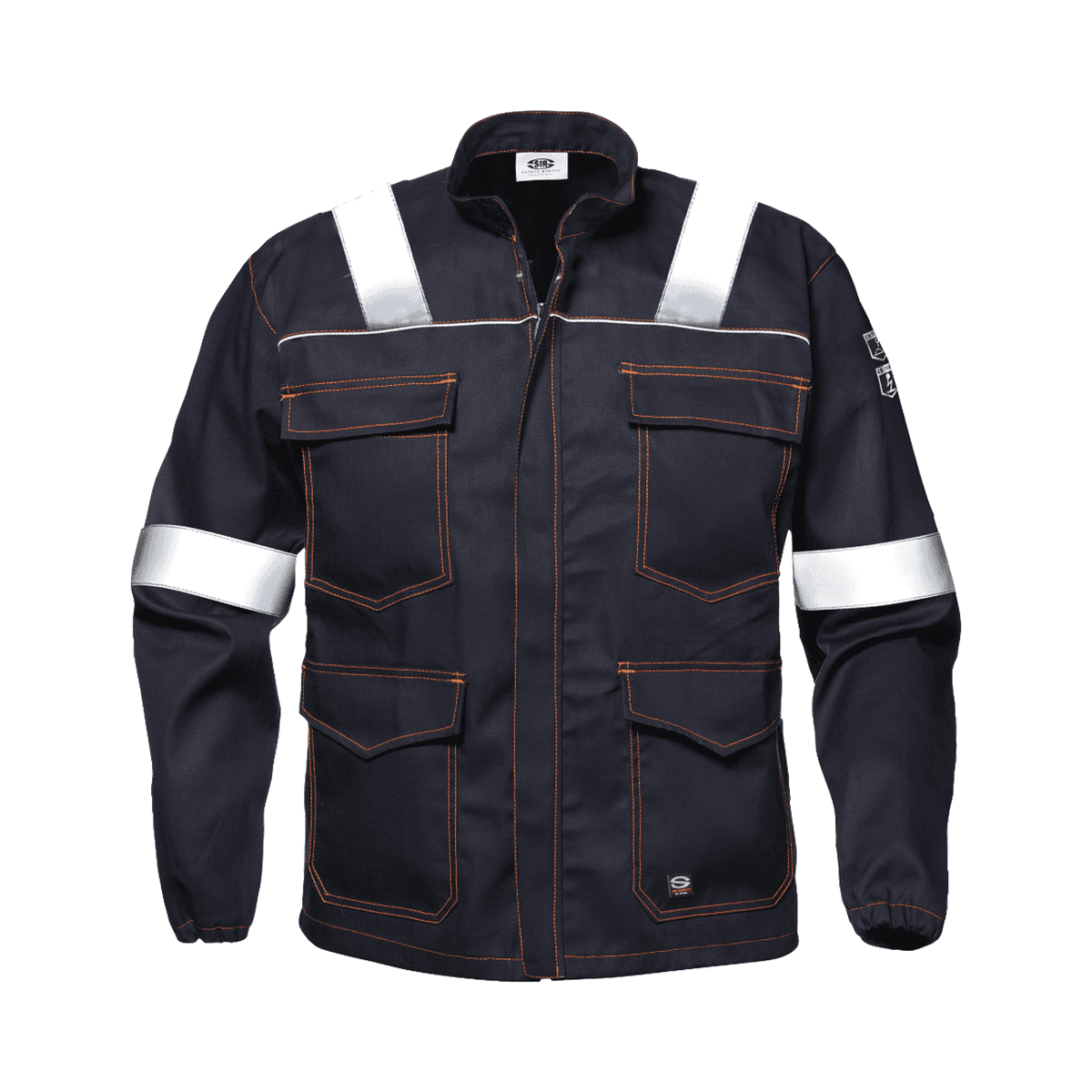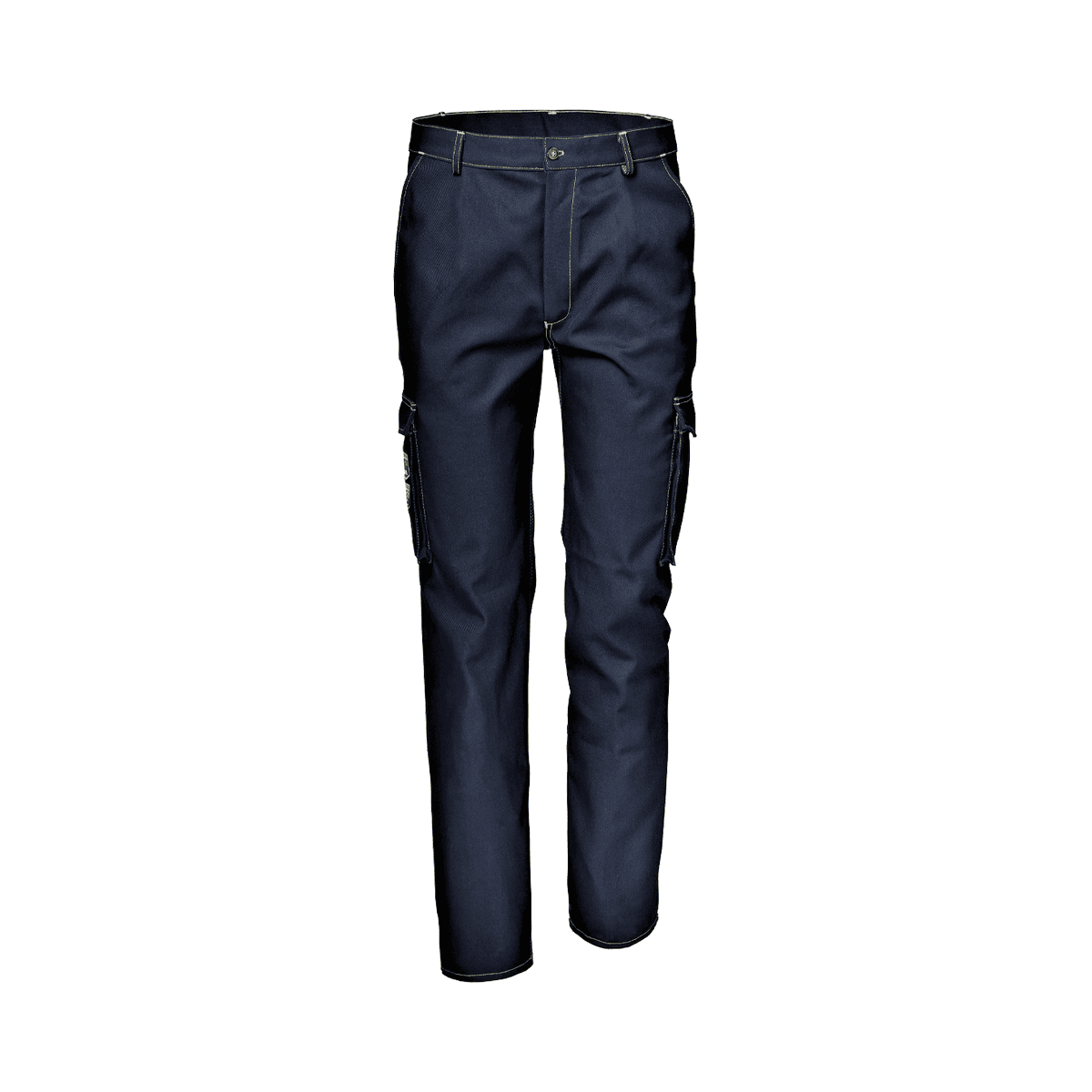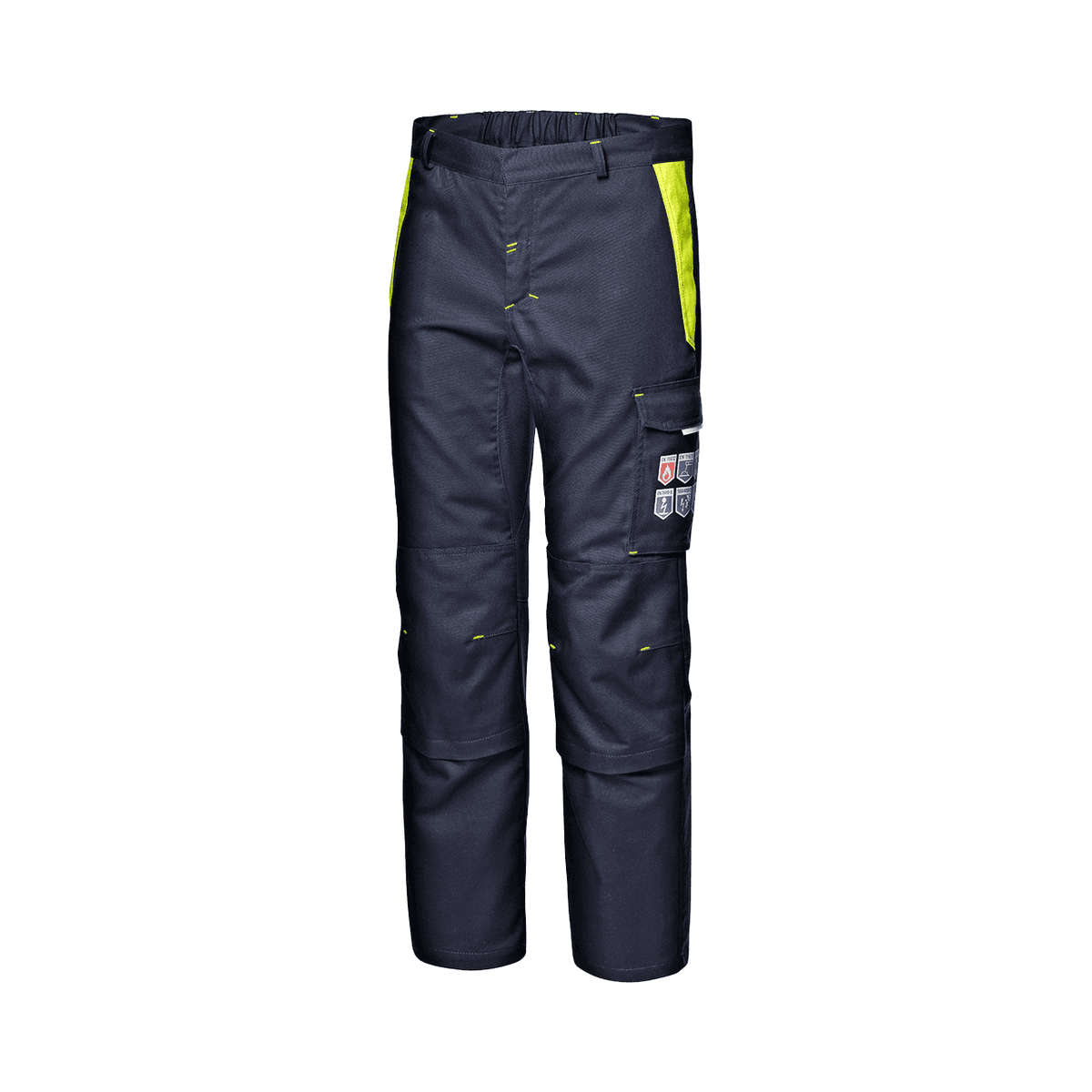
An arc flash is a plasma discharge produced by a short circuit, reaching temperatures of around 19 000 °C. The main hazard is burns — both directly from the heat and from the wearer's own clothing igniting. EN 61482-2 sets the requirements for clothing protecting against it.
The two test methods
| Method | Result | Used |
|---|---|---|
| IEC 61482-1-2 (box test) | Class 1 (4 kA) or Class 2 (7 kA) | The most common approach in Europe |
| IEC 61482-1-1 (open arc) | ATPV or EBT in cal/cm² | Originating in North America, more granular |
ATPV and EBT
- ATPV
- Arc Thermal Performance Value — the energy at which there is a 50% probability of a second-degree burn
- EBT
- Energy Breakopen Threshold — the energy at which the fabric breaks open; reported when it is lower than the ATPV
The lower of the two figures is stated on the garment. Typical values are 8 cal/cm² for a single-layer coverall, 25 cal/cm² for a two-layer system, and above 40 cal/cm² for dedicated arc flash suits.
The system approach
Clothing is one element. Full protection includes an arc-rated face shield or hood, insulating gloves (EN 60903), a flame-resistant base layer and insulating footwear. It is critical that the base layer is not synthetic — under arc heat polyester melts and adheres to the skin.