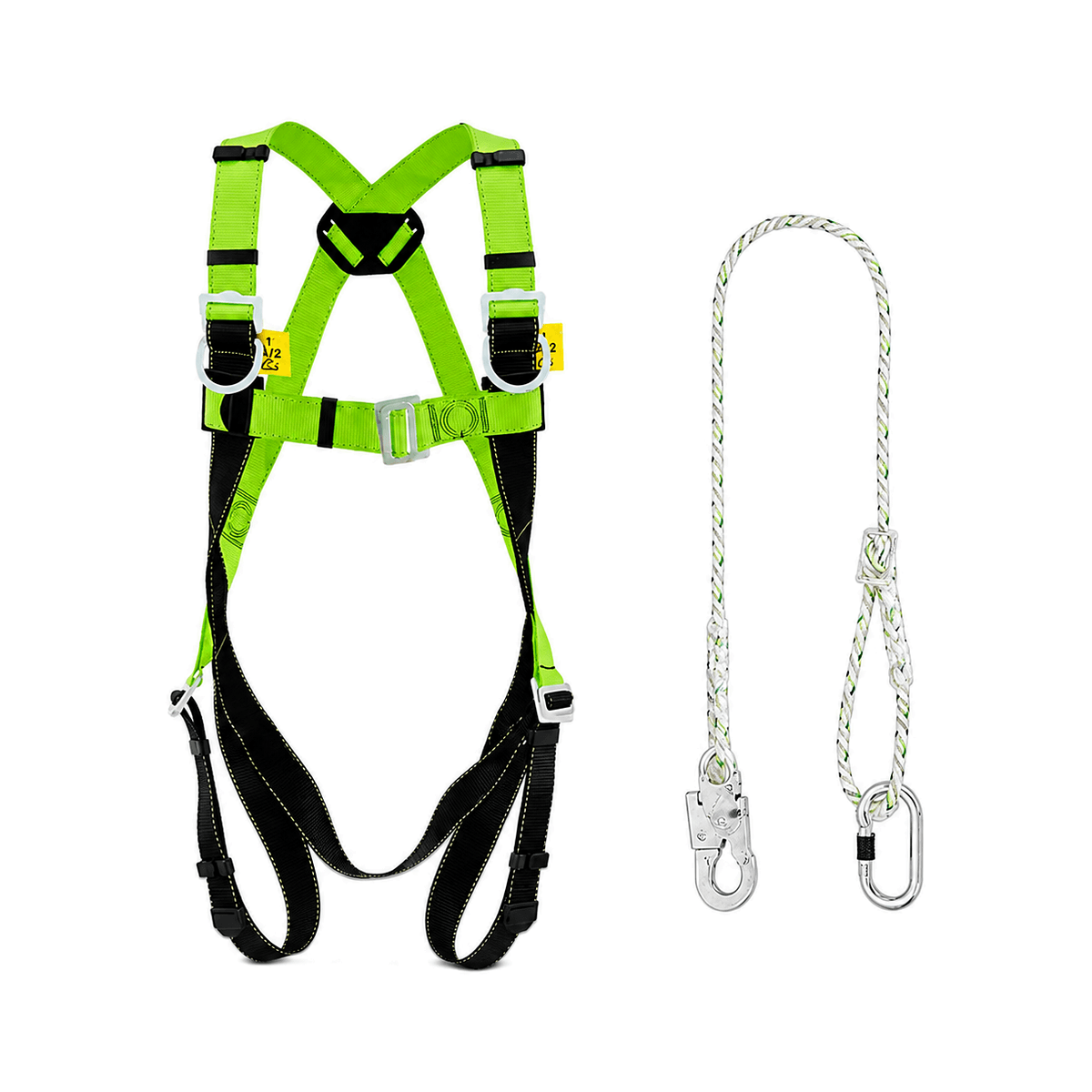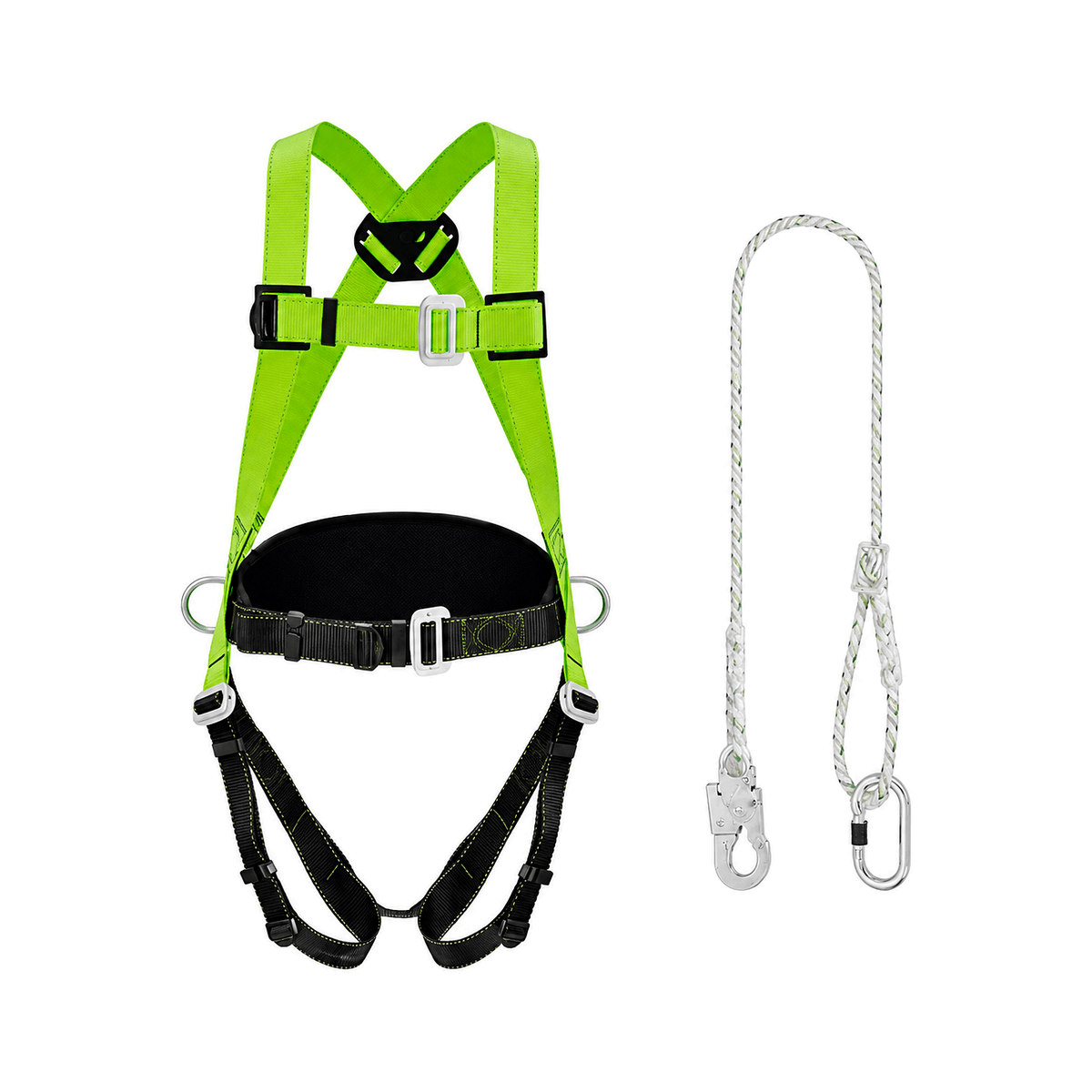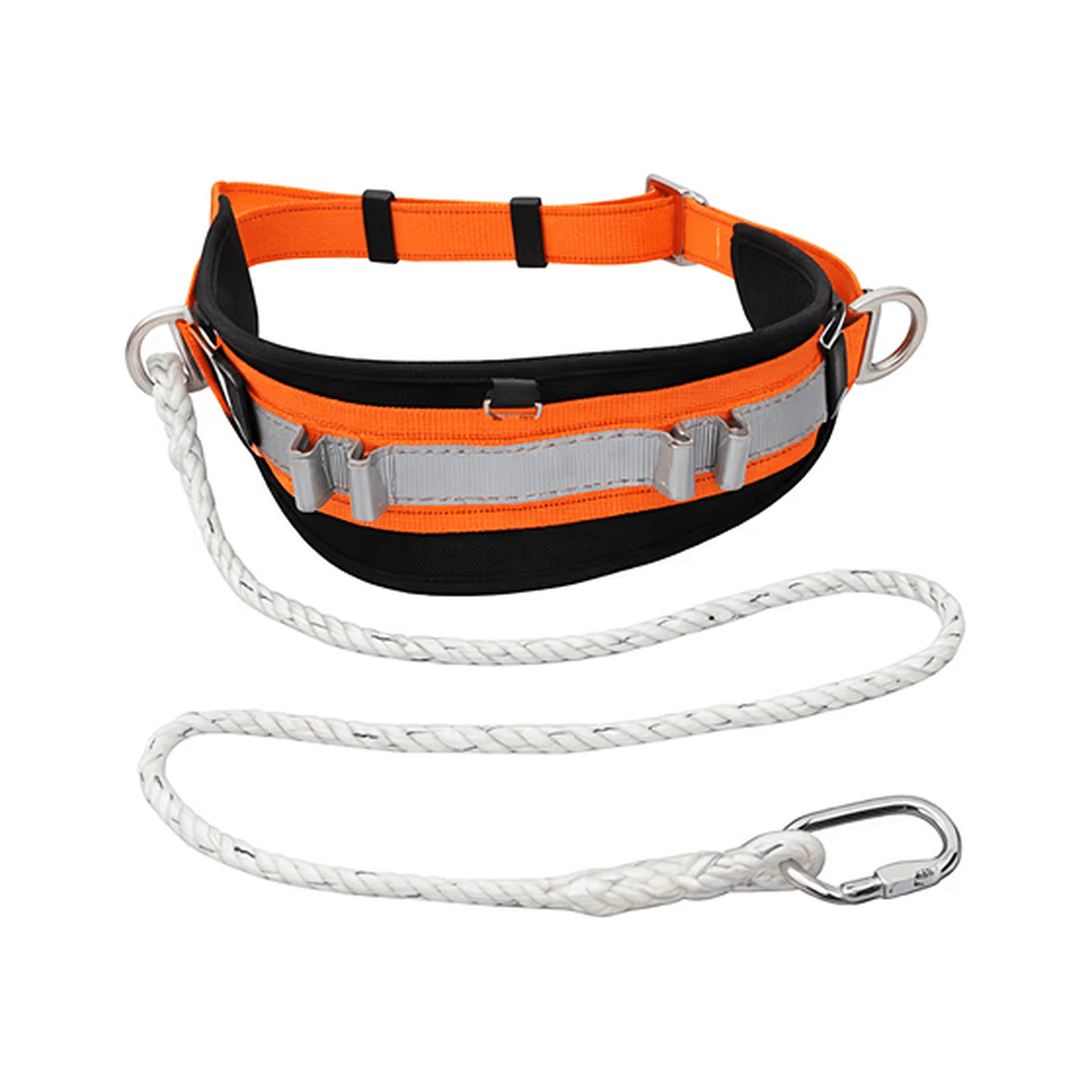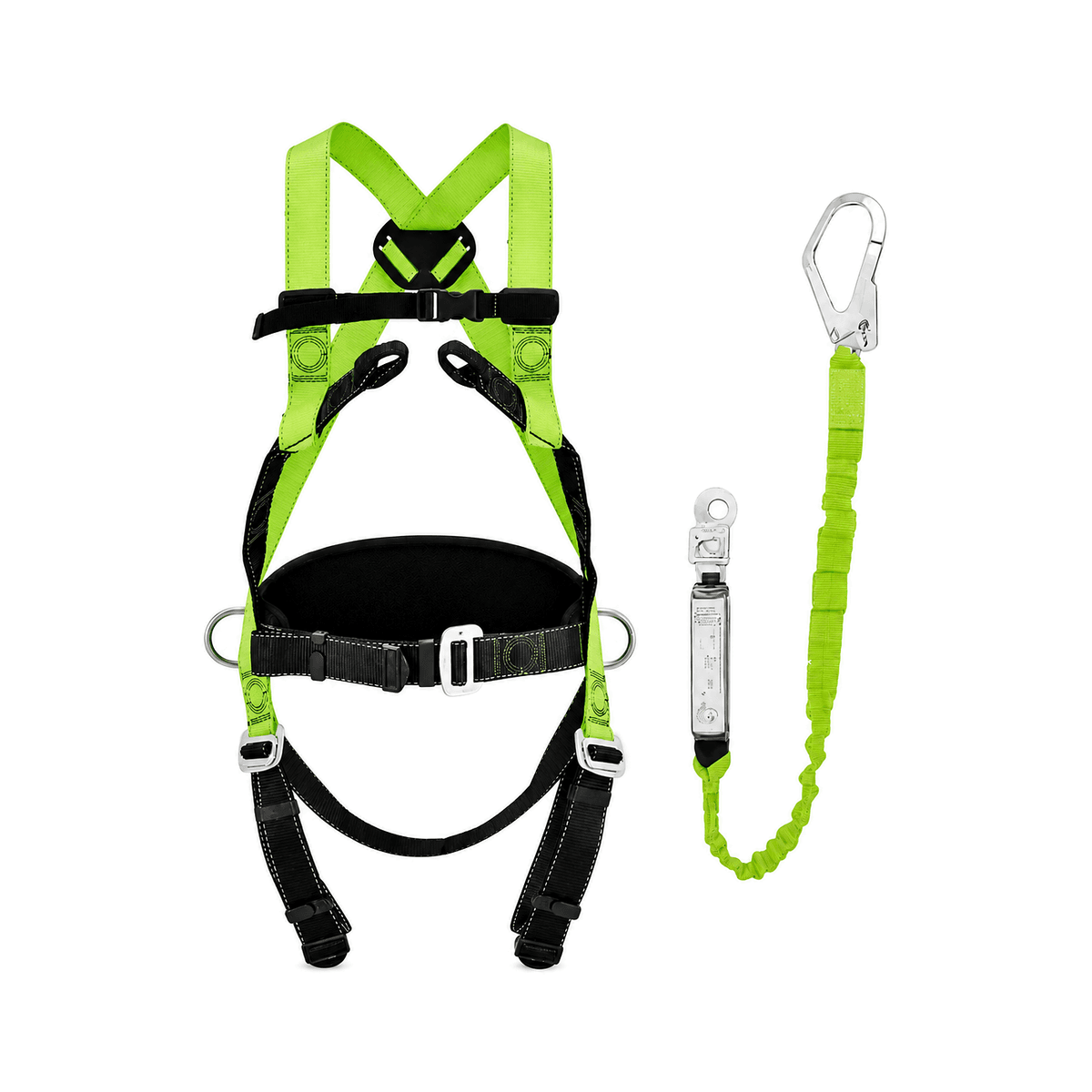
EN 361 sets the requirements for full body harnesses. It is the only body holding device permitted in a fall arrest system — a work positioning belt (EN 358) or a sit harness (EN 813) cannot fill that role.
Fall arrest attachment points
Fall arrest points on the harness are marked with a capital A. There are two positions:
- A (ზურგზე)
- Dorsal D-ring between the shoulder blades — the primary point; after a fall the body hangs upright, tilted slightly forward
- A (გულმკერდზე)
- Sternal loops or a chest D-ring — used on ladders and in confined spaces
- A/2
- Two half-points that must only be used together, joined by a connector
Correct fitting
A badly fitted harness causes serious injury in a fall. Leg straps must be snug — two fingers between strap and leg, no more. The chest strap sits across the sternum, not at the throat. The dorsal D-ring belongs between the shoulder blades.
Suspension trauma
Once a fall has been arrested the worker hangs motionless. The leg straps restrict venous return, and unconsciousness — and even death — can follow within 10 to 20 minutes. A rescue plan must therefore exist before work starts, and recovery must be achievable in minutes, not hours.
After arresting a fall the harness must be withdrawn from service even if it looks undamaged — internal fibre damage is not visible.