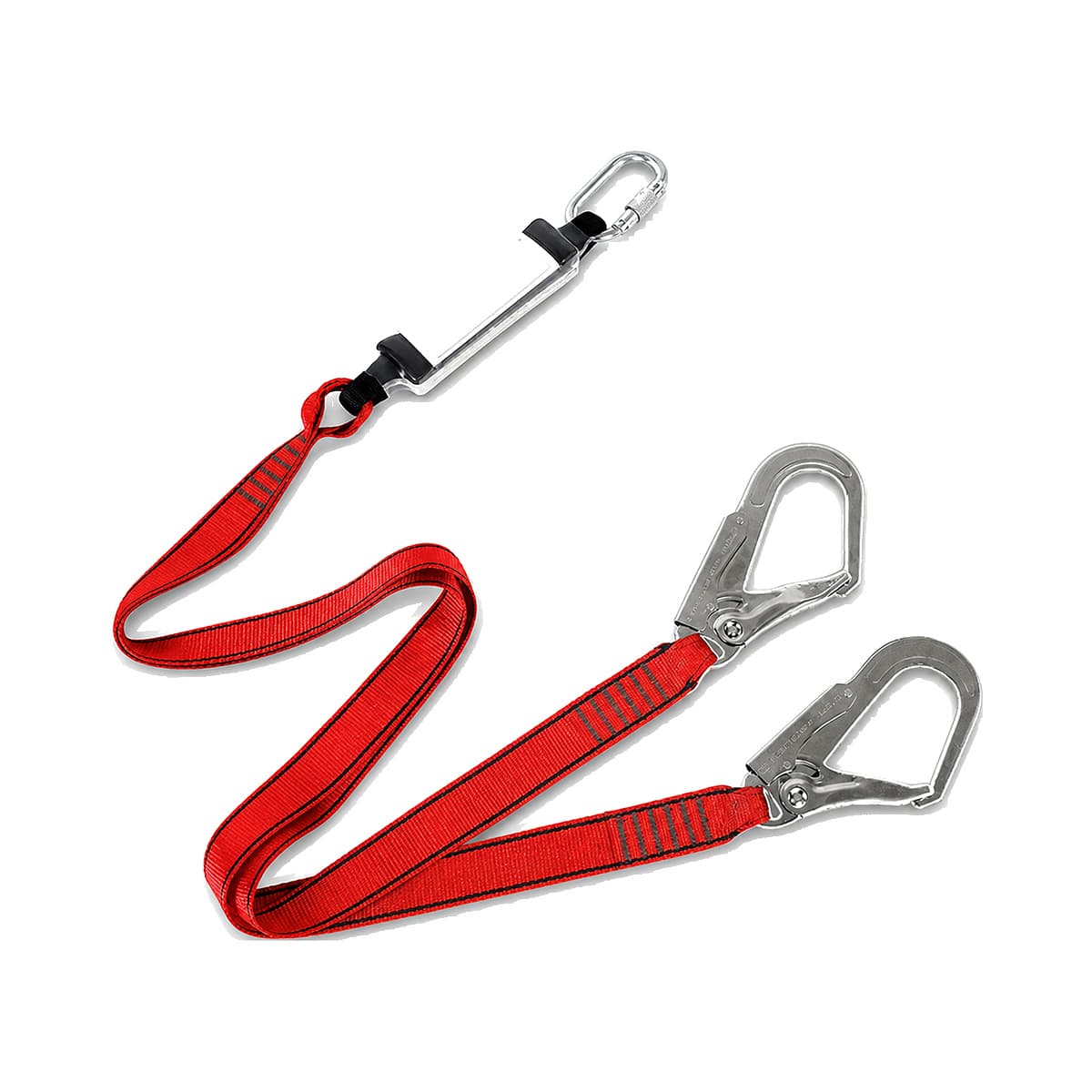
EN 355 sets the requirements for energy absorbers. The purpose is simple and critical: to bring the force generated when a fall is arrested down to a level the human body can survive.
Why 6 kN
Without an absorber a two-metre free fall generates 12–15 kN — enough to cause severe spinal, rib and internal injury. The absorber keeps that force below 6 kN, the level medical research treats as survivable.
How it works
The most common design is a folded, stitched webbing pack: under load the stitching tears progressively and absorbs the energy. Other designs use friction or deforming metal.
Deployment distance: the critical calculation
The absorber extends by up to 1.75 m when deployed. The clearance needed below is calculated as: lanyard length (2 m) + absorber deployment (1.75 m) + the worker's height from D-ring to feet (1.5 m) + a safety margin (1 m) — roughly 6.25 m in total.
That means an ordinary lanyard with absorber is unsuitable at four metres — the worker will reach the ground before the system does its job. There a retractable type fall arrester (EN 360) is needed, stopping the fall within a few tens of centimetres.