
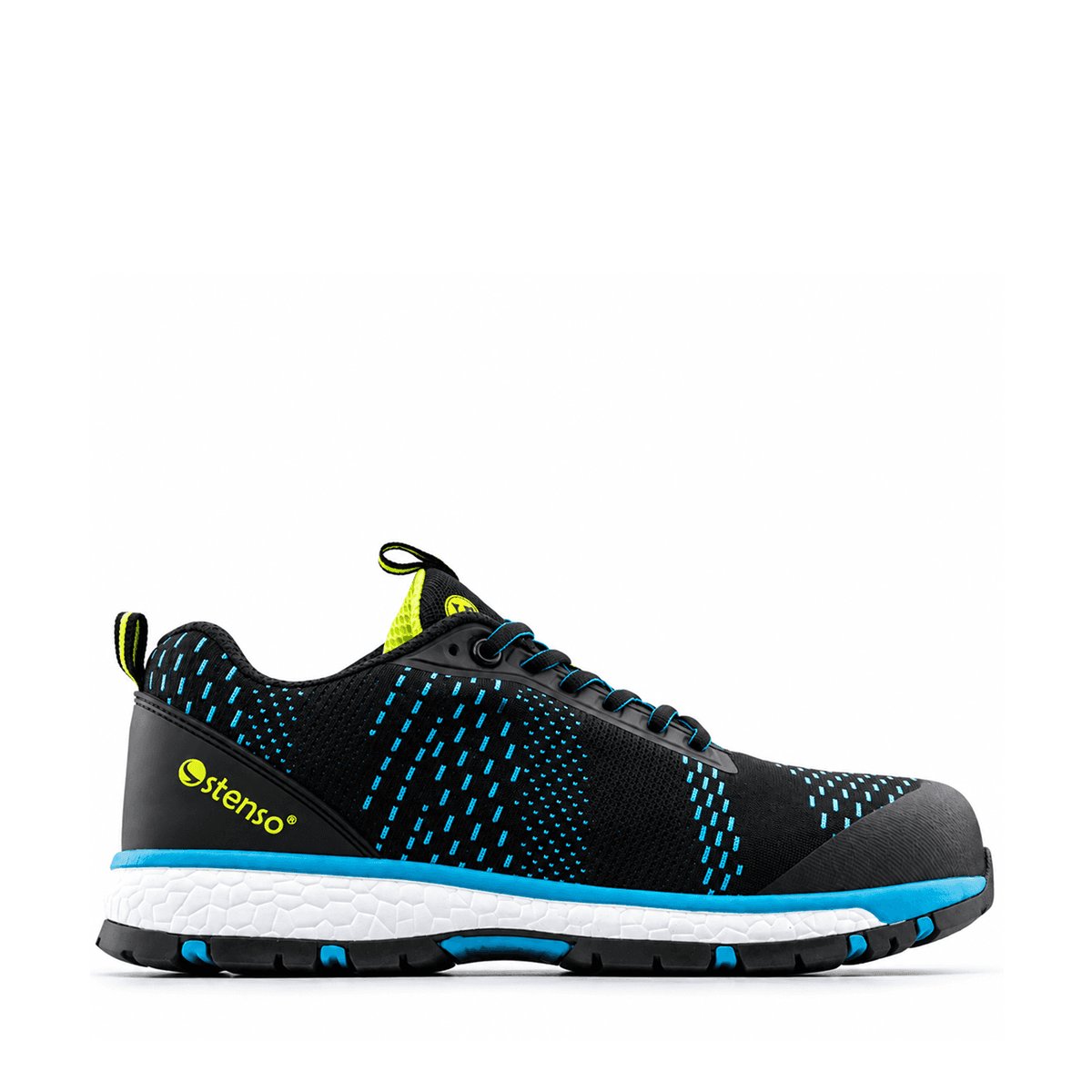
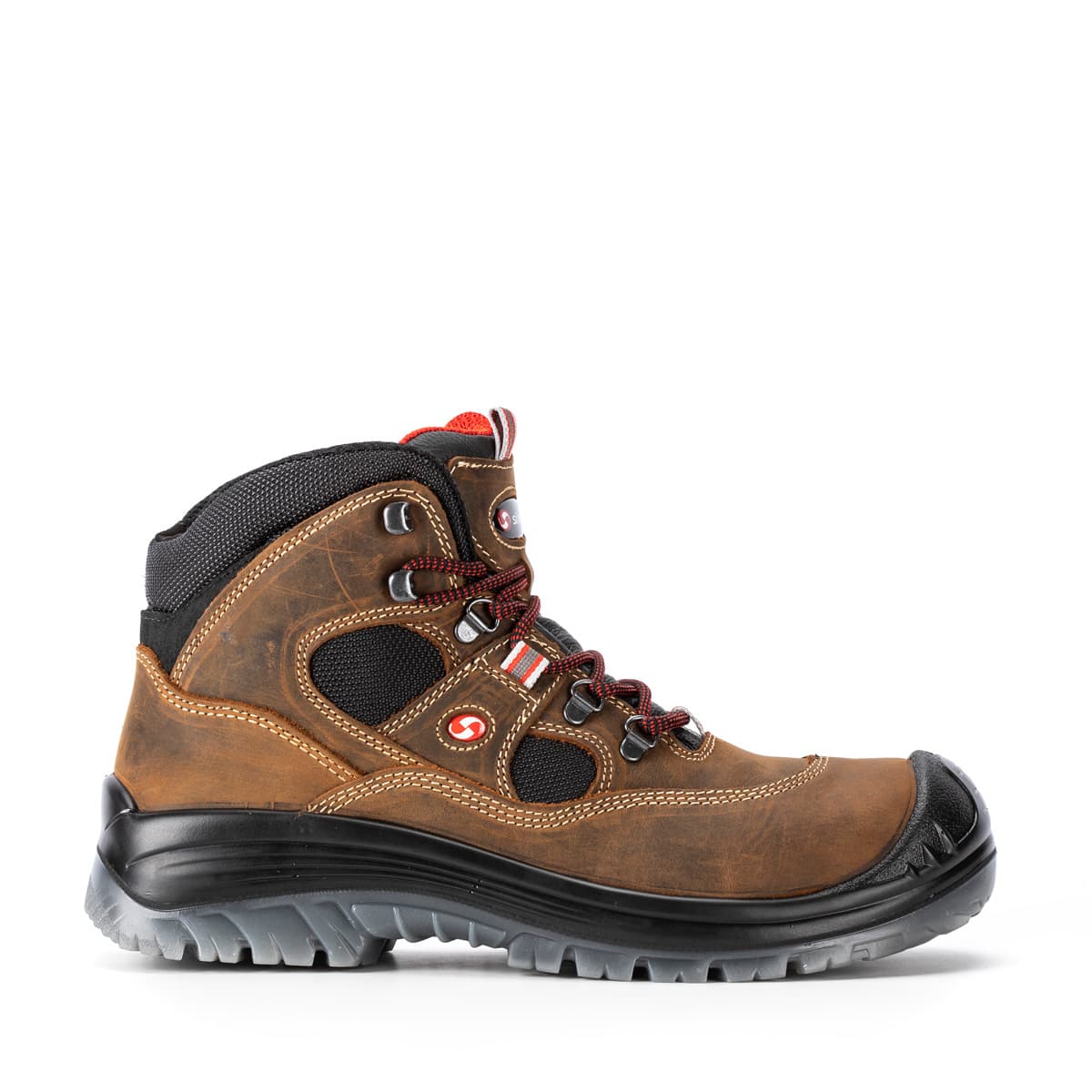
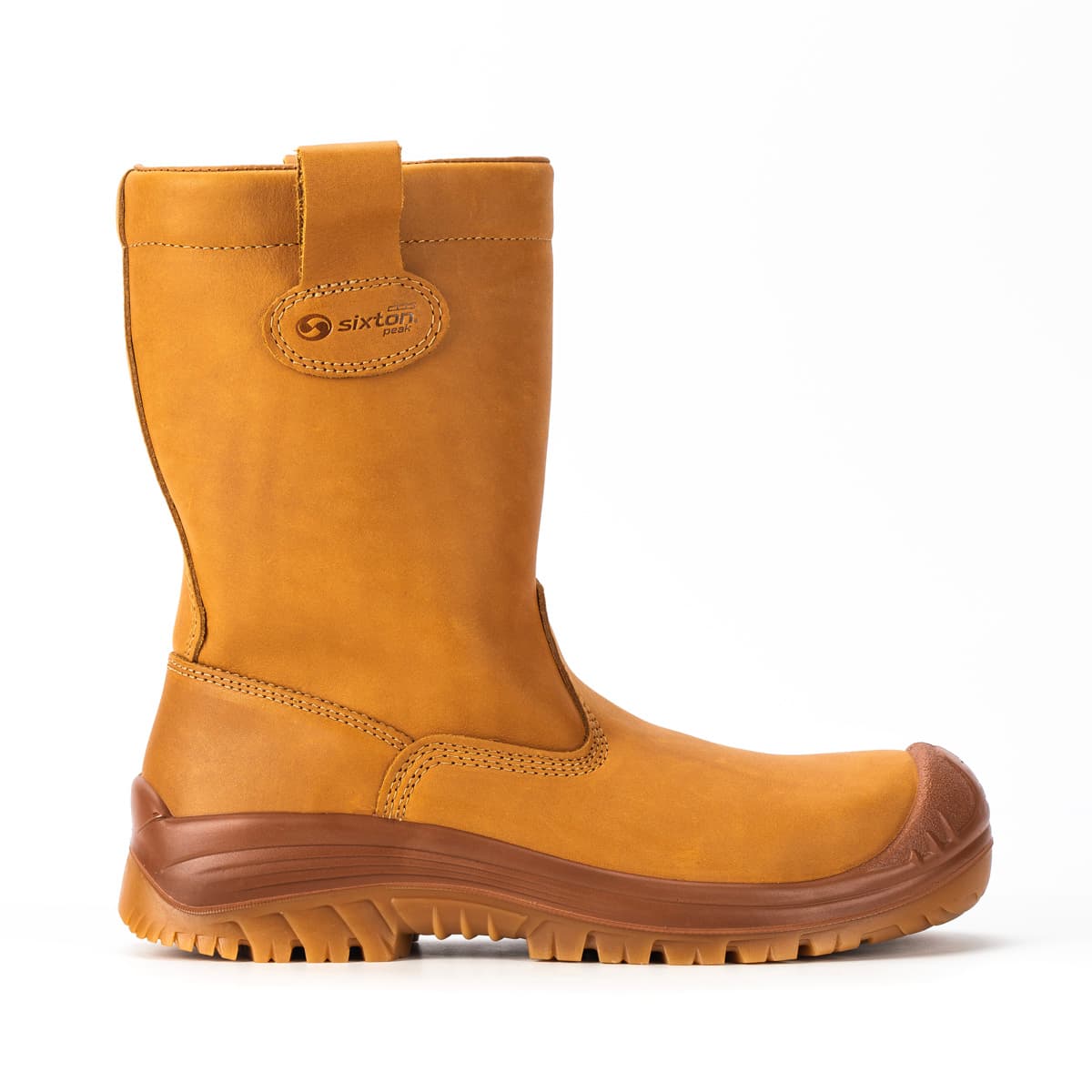
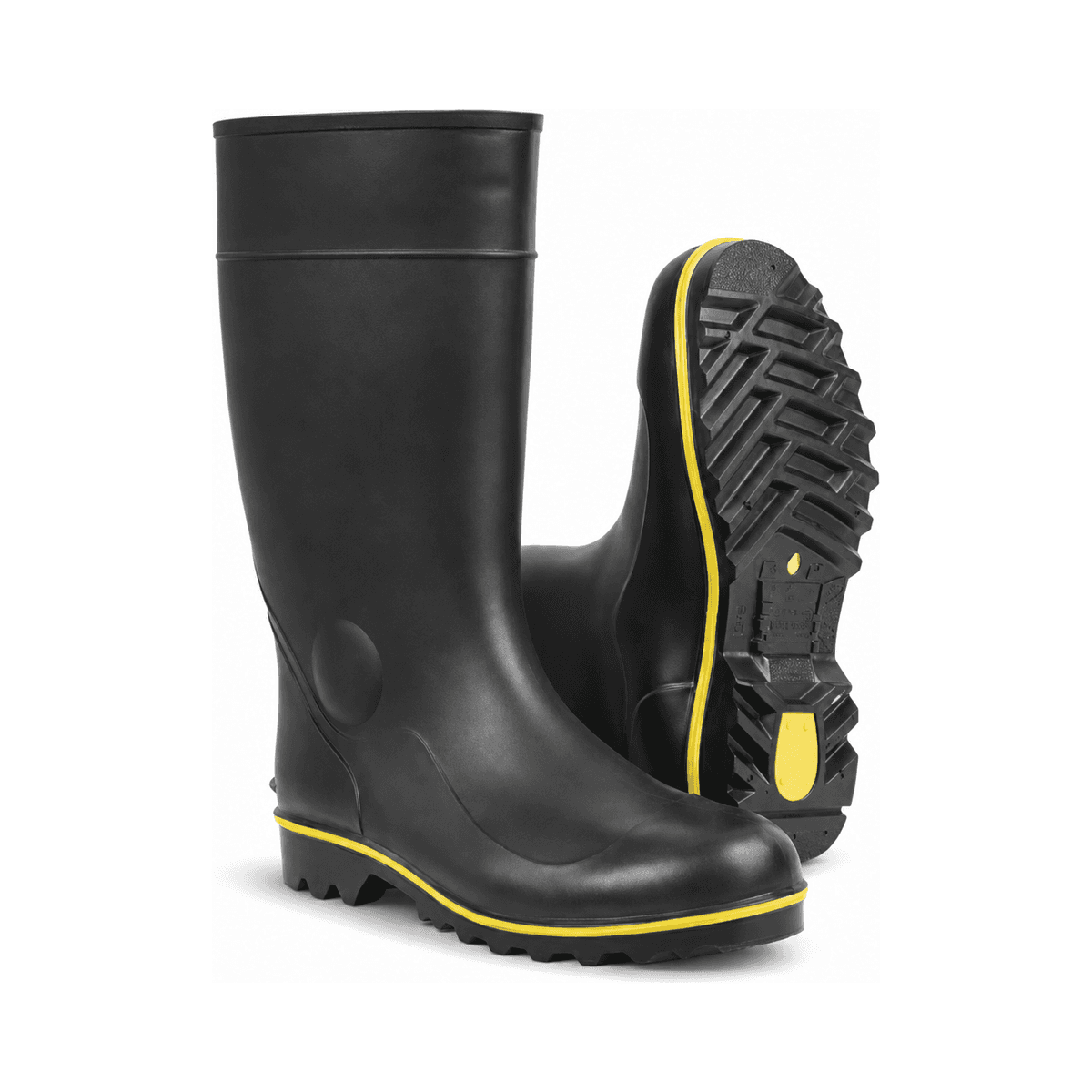
EN 15090 sets the requirements for firefighters' footwear. It combines the mechanical protection of safety footwear with thermal and chemical requirements, and accounts for specifics such as rapid donning and ladder work.
The three types
- Type 1
- Light rescue and wildland fire — light and flexible, with basic thermal protection
- Type 2
- Structural firefighting — full thermal protection, waterproof, penetration resistant
- Type 3
- Chemical and hazardous-materials response — Type 2 plus chemical resistance
Additional markings
- F
- Firefighting use
- A
- Antistatic
- P
- Penetration resistance
- C
- Conductive
- I
- Electrically insulating
- HI3
- Heat insulation — the highest sole grade
- CI
- Cold insulation
- M
- Metatarsal protection
- AN
- Ankle protection
- CR
- Cut resistance of the upper
A practical detail: a firefighter's boot has to be pulled on in seconds, often in the dark. That is why moulded rubber boots with a wide opening are traditional, though modern leather models give better support and dexterity on long incidents.