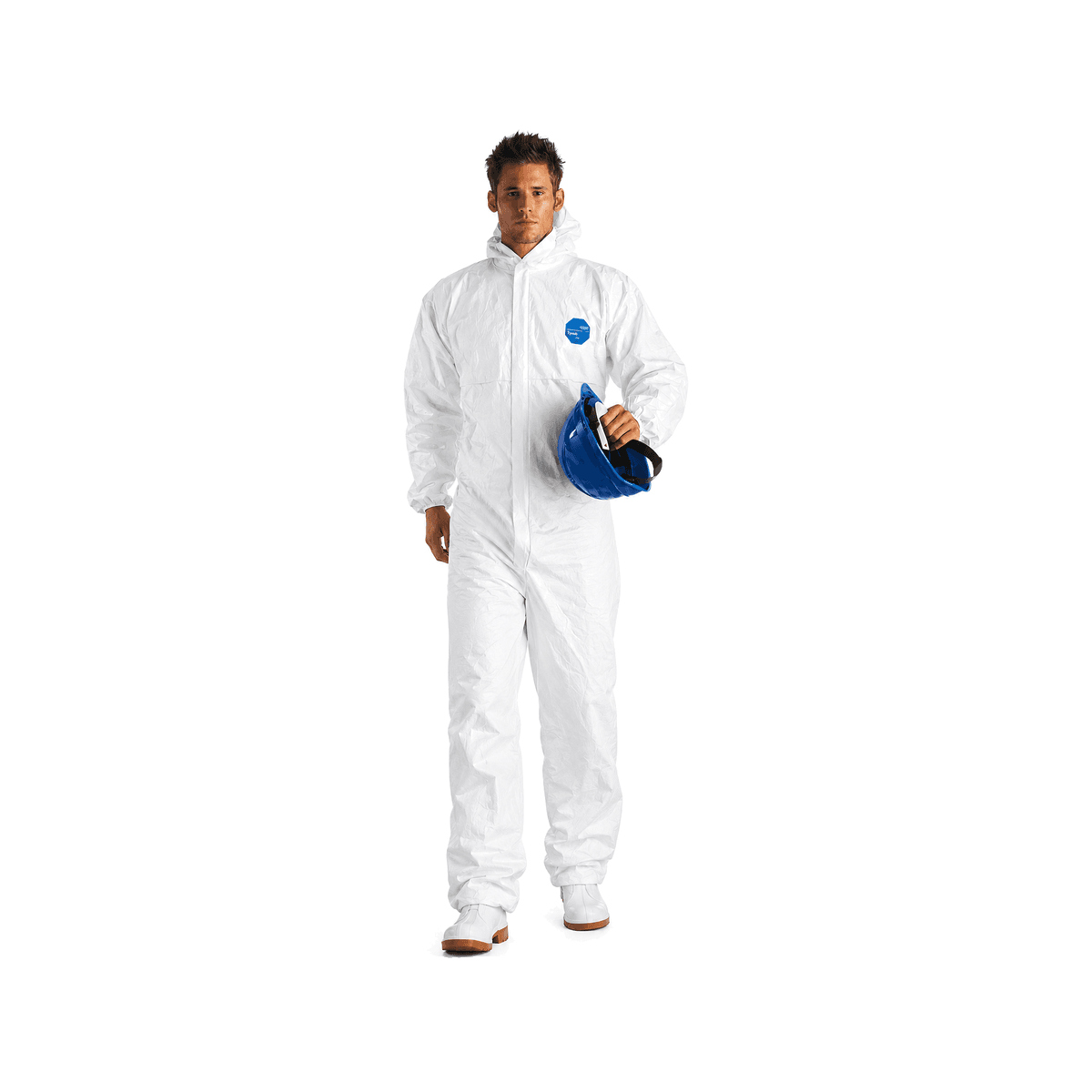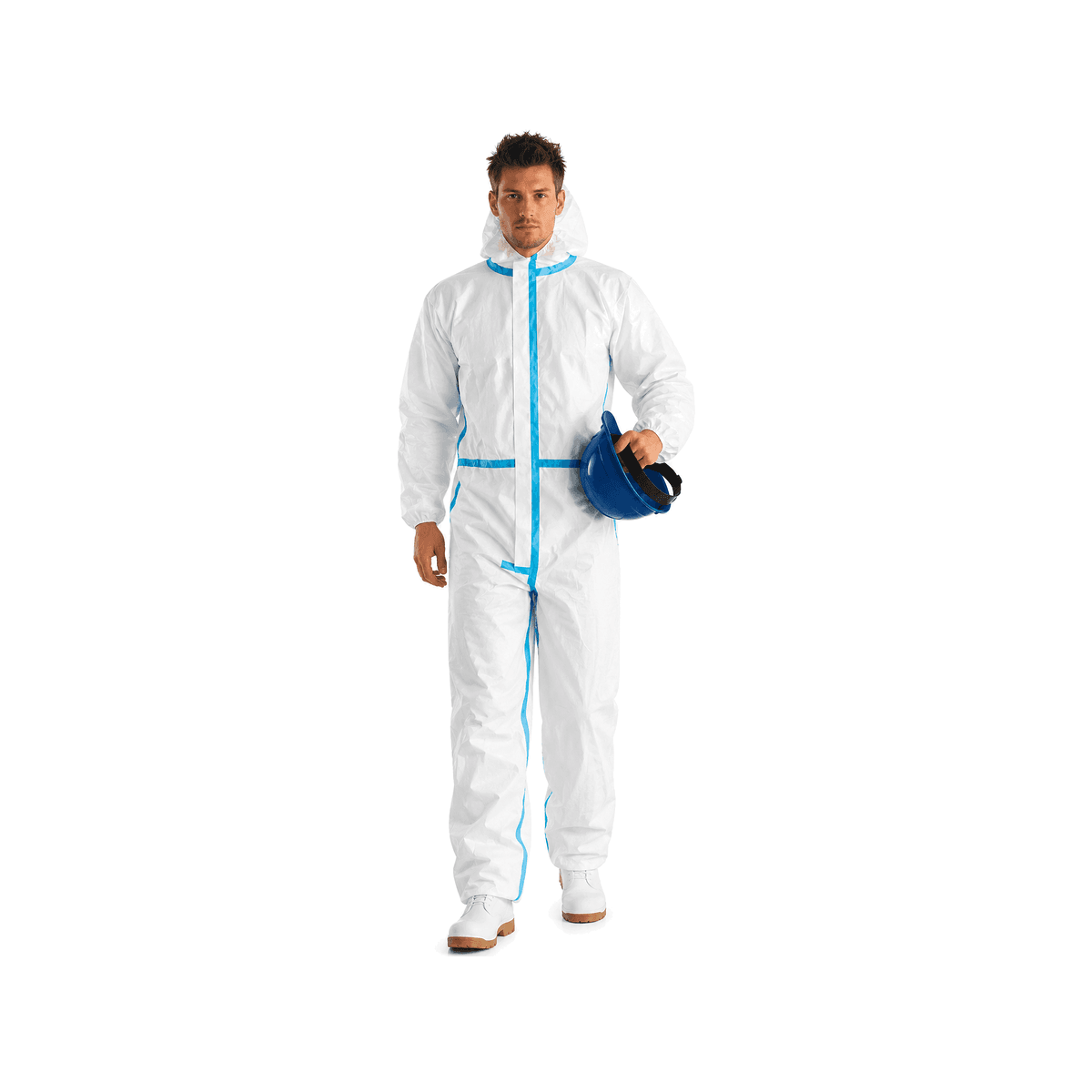
EN 14605 sets the requirements for Type 3 and Type 4 chemical protective clothing. Both have sealed seams and offer far higher protection than Type 6.
The two types
| Type | Test | Protection |
|---|---|---|
| Type 3 | Jet test — a directed jet under pressure | Liquid-tight; suitable for spills and pressurised liquid |
| Type 4 | Spray test — a saturated aerosol environment | Spray-tight; suitable for dense aerosol |
Partial body protection: PB
The standard also covers partial-body items: aprons, sleeves and jackets. These are marked PB [3] or PB [4] for partial body. They do not cover the whole body and are only appropriate where the risk is localised.
What to check when choosing
- Permeation of the fabric by the specific chemical — the manufacturer should hold data to EN ISO 6529.
- Seam type — welded or taped; a plain stitched seam breaks the barrier.
- Compatibility with the rest of the PPE: suit, gloves, boots and mask must be joined by tape or cuffs.
- The doffing procedure — removing a contaminated suit is the highest-risk moment for exposure.