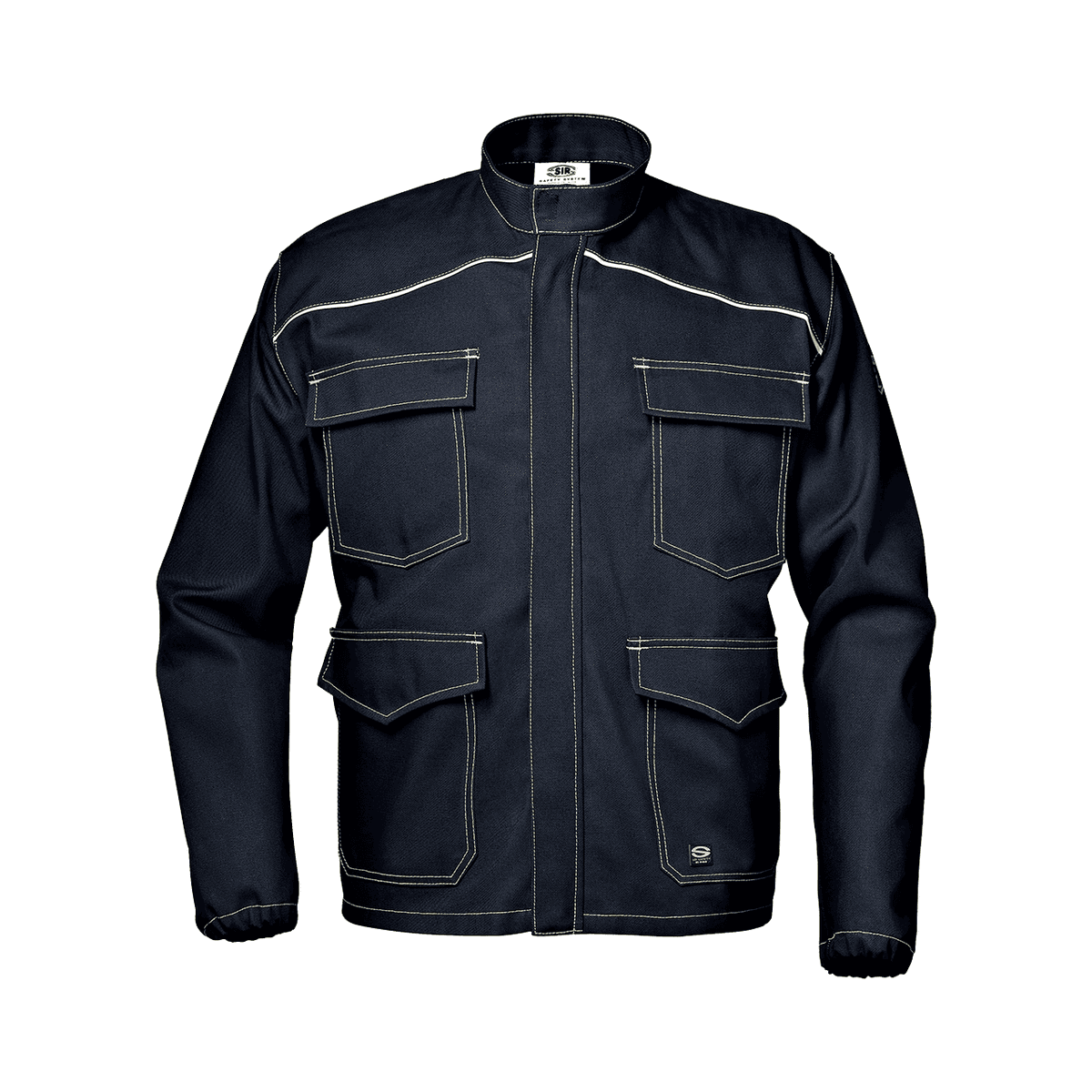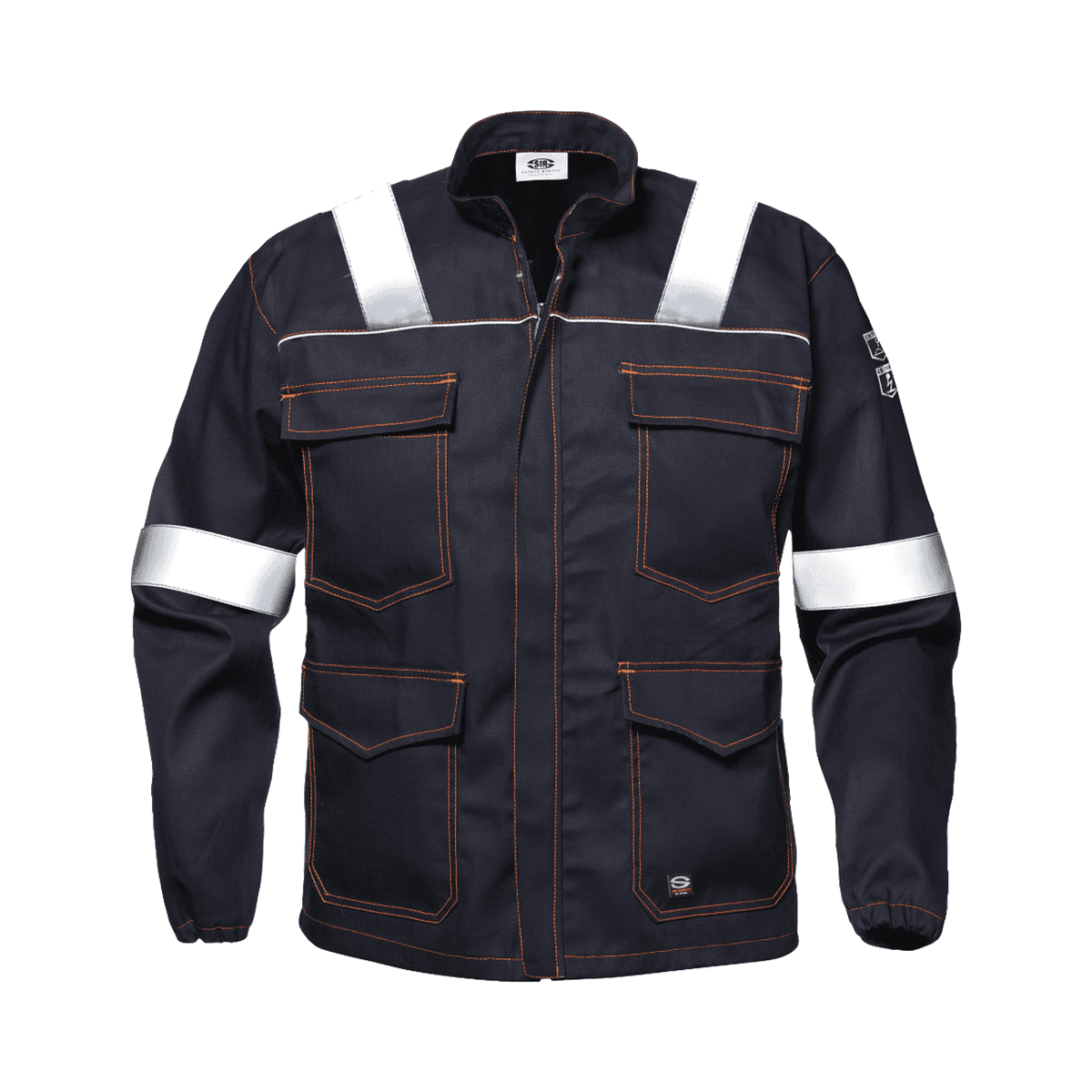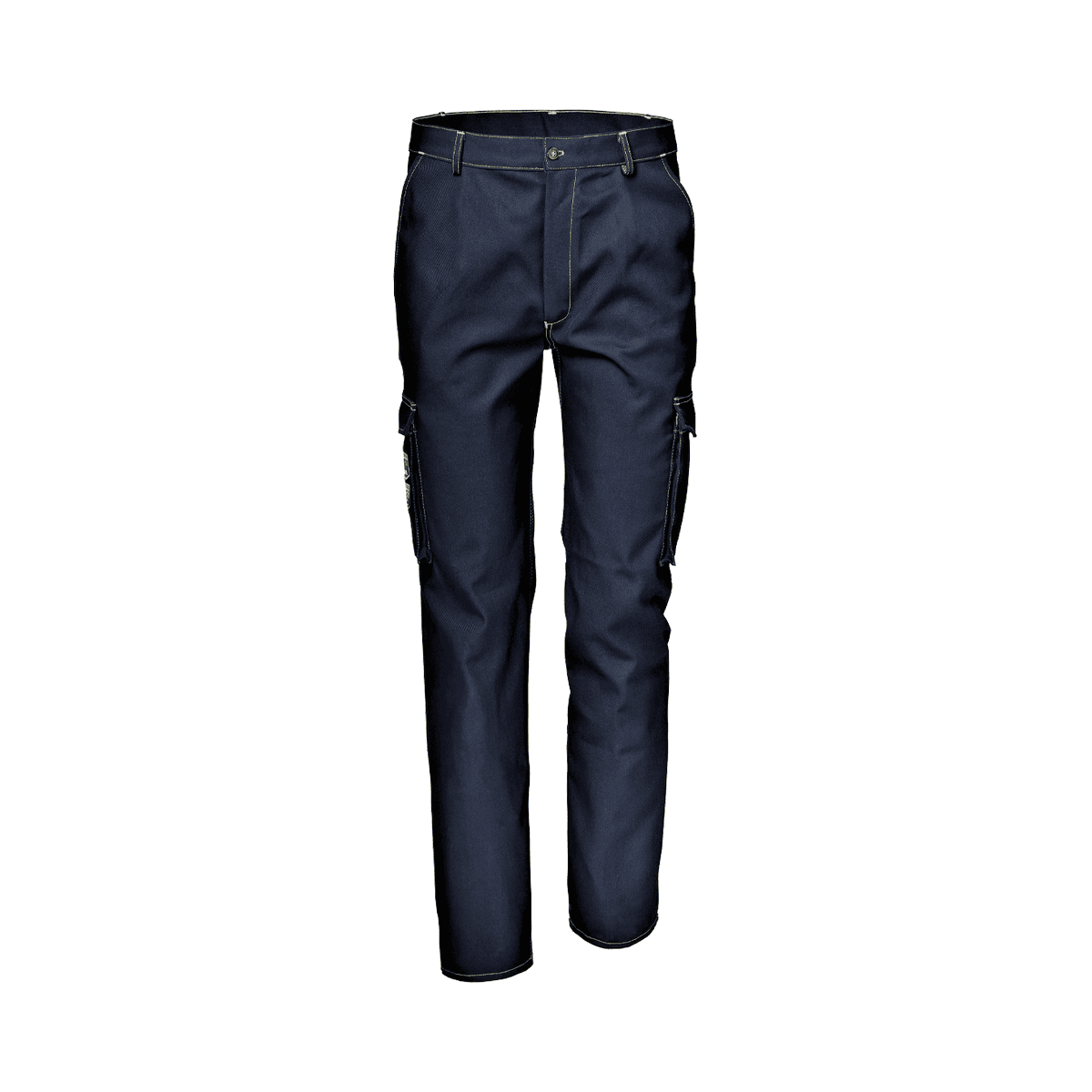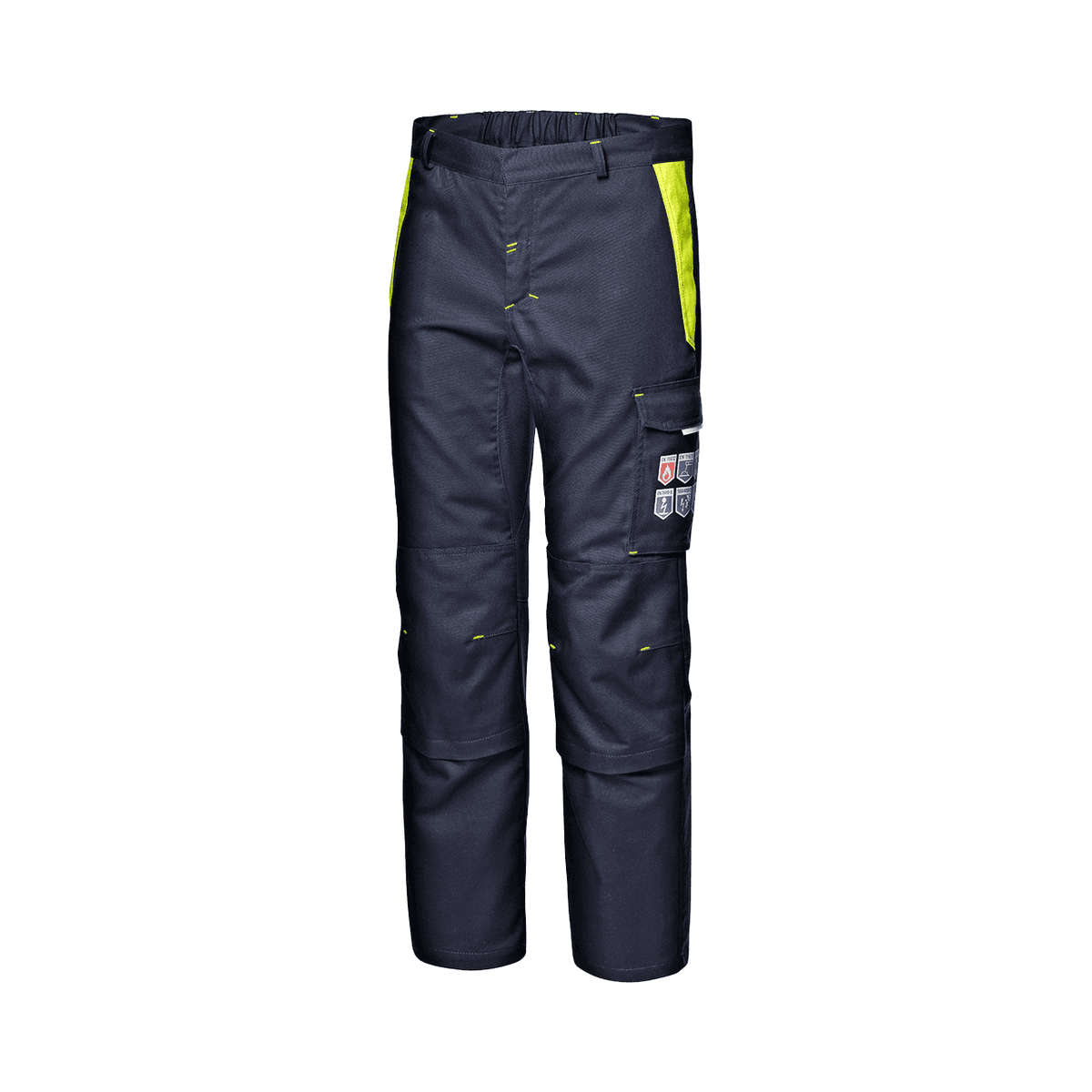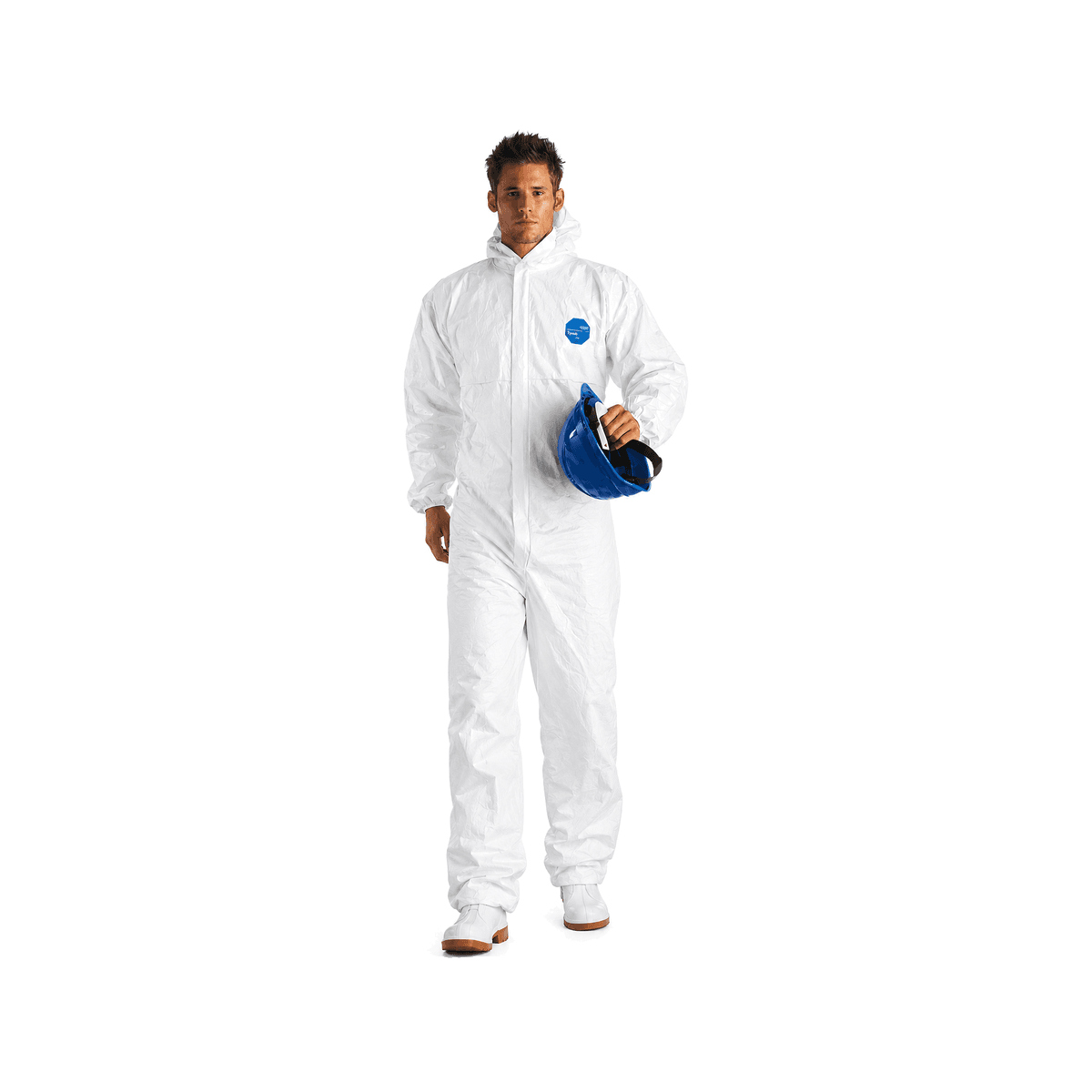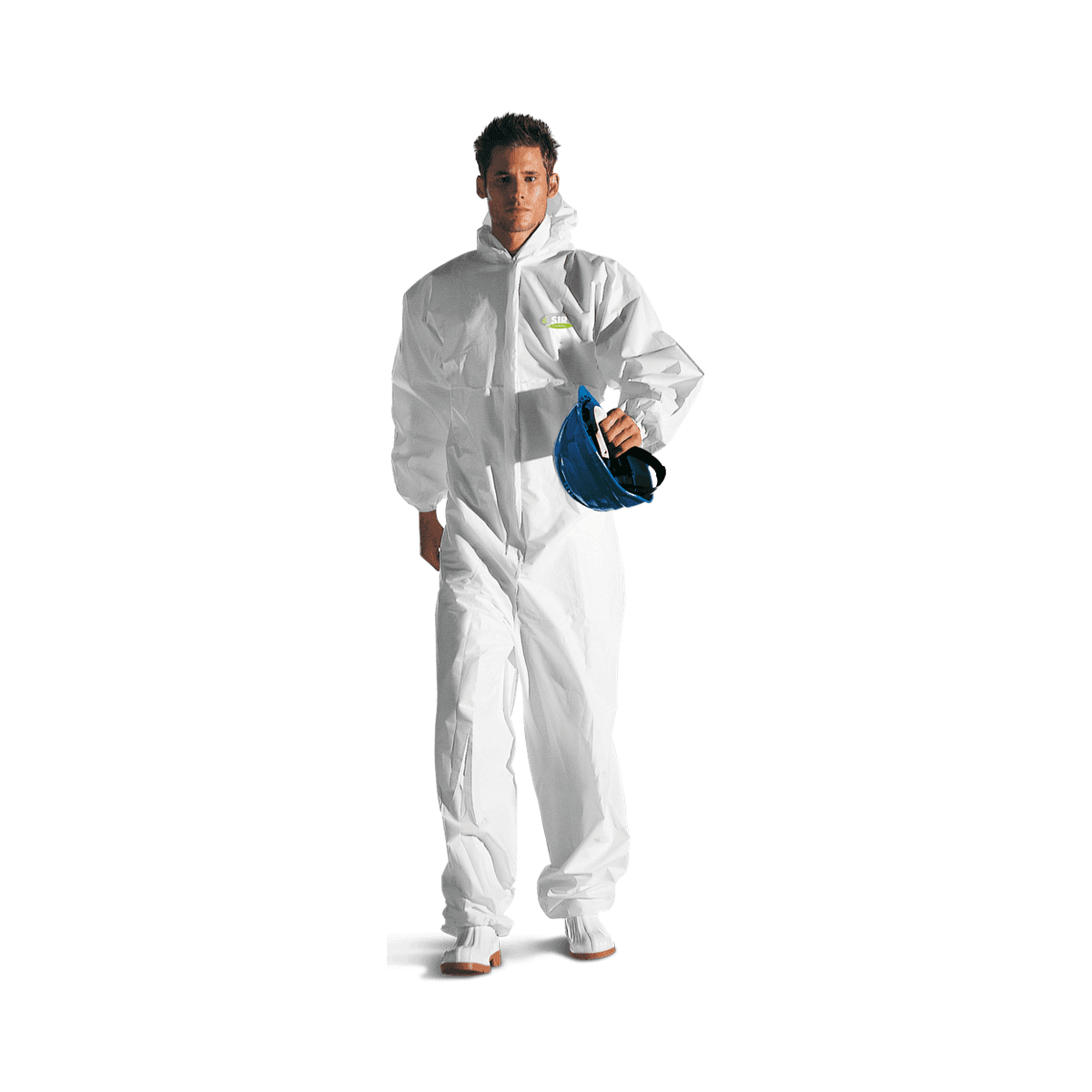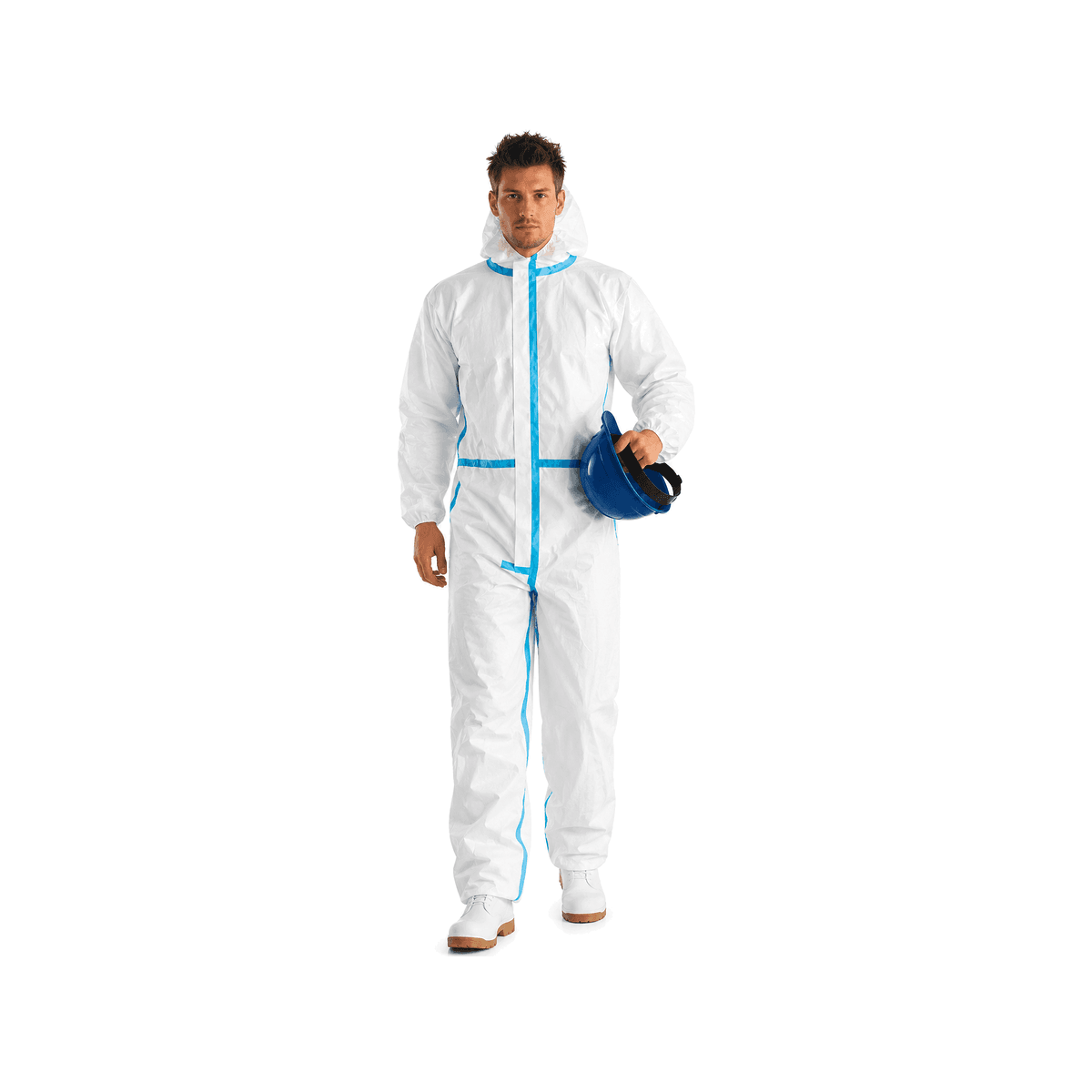
EN 13034 sets the requirements for Type 6 chemical protective clothing. This is the lightest level: the garment is intended for situations where a small quantity of chemical might accidentally land on it and the wearer has time to remove it.
The chemical protection types: the full system
| Type | Protection | Standard |
|---|---|---|
| Type 1 | Gas-tight suit | EN 943-1 / EN 943-2 |
| Type 2 | Non-gas-tight, positive-pressure suit | EN 943-1 |
| Type 3 | Liquid-tight against a pressurised jet | EN 14605 |
| Type 4 | Spray-tight | EN 14605 |
| Type 5 | Protection against airborne solid particulates | EN ISO 13982-1 |
| Type 6 | Limited splash and aerosol | EN 13034 |
What Type 6 is tested for
The key test is the reduced spray test: a manikin dressed in the garment over an absorbent coverall is sprayed with a dyed chemical solution. The total area of stains that penetrate to the inner layer is limited.
The fabric is additionally tested for repellency and penetration against at least one of four standard liquids: sulphuric acid 30%, sodium hydroxide 10%, o-xylene and butan-1-ol.
Where it is used
- Agriculture — spraying diluted pesticide solutions.
- Cleaning and disinfection work.
- Handling paints and solvents where the splash risk is low.
- Laboratory work with non-aggressive substances.
An important limitation: Type 6 gives no protection against a pressurised jet, a large spill, gases or concentrated acids. Where significant contact with a chemical is possible, Type 3 or 4 is required.