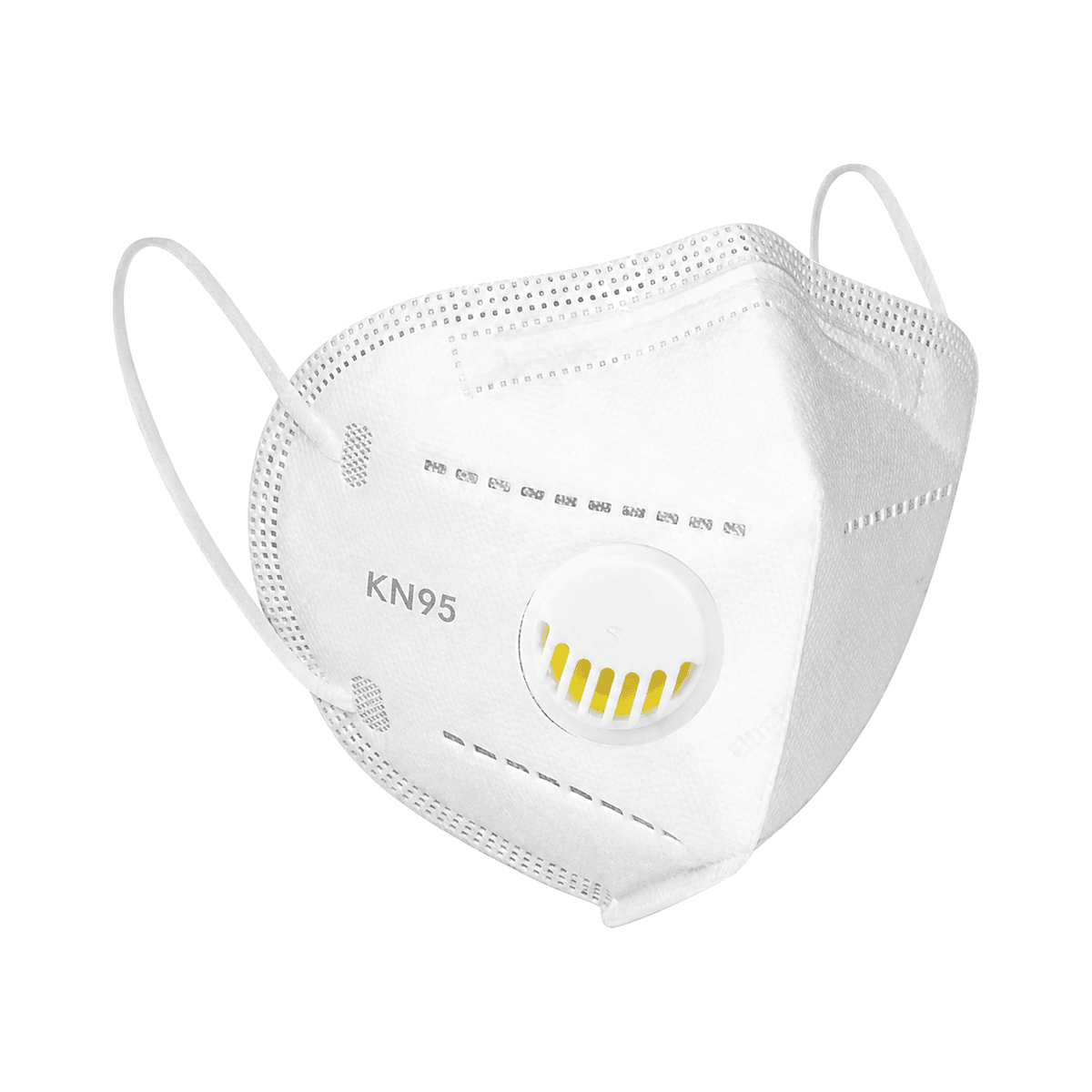
EN 149 is the most widely used respiratory protection standard. It covers disposable and limited-reuse filtering half masks protecting against solid and liquid aerosol particles — dust, fume and mist.
Protection classes
| Class | Filtration | Total inward leakage | Assigned protection factor |
|---|---|---|---|
| FFP1 | ≥80% | ≤22% | 4× |
| FFP2 | ≥94% | ≤8% | 10× |
| FFP3 | ≥99% | ≤2% | 20× |
The assigned protection factor tells you how far the respirator reduces the concentration of the contaminant. FFP3 (20×) may be used where the concentration is up to twenty times the exposure limit — but no further.
Additional marking
- NR
- Non-reusable — for a single shift only
- R
- Reusable — may be used for more than one shift after cleaning
- D
- Dolomite clogging test passed; breathing stays easier over a long wear period
What it does not protect against
An FFP respirator gives no protection against gases and vapours — those need a gas filter to EN 14387. Nor is it suitable in an oxygen-deficient atmosphere (<17%) or where the concentration is unknown; those conditions require supplied-air apparatus.
Fit
Effectiveness depends entirely on a tight seal to the face. A beard, sideburns or even a day's stubble break that seal and largely cancel the protection. A fit check — cupping the mask in both hands and exhaling — should follow every donning.