
Which class do I need
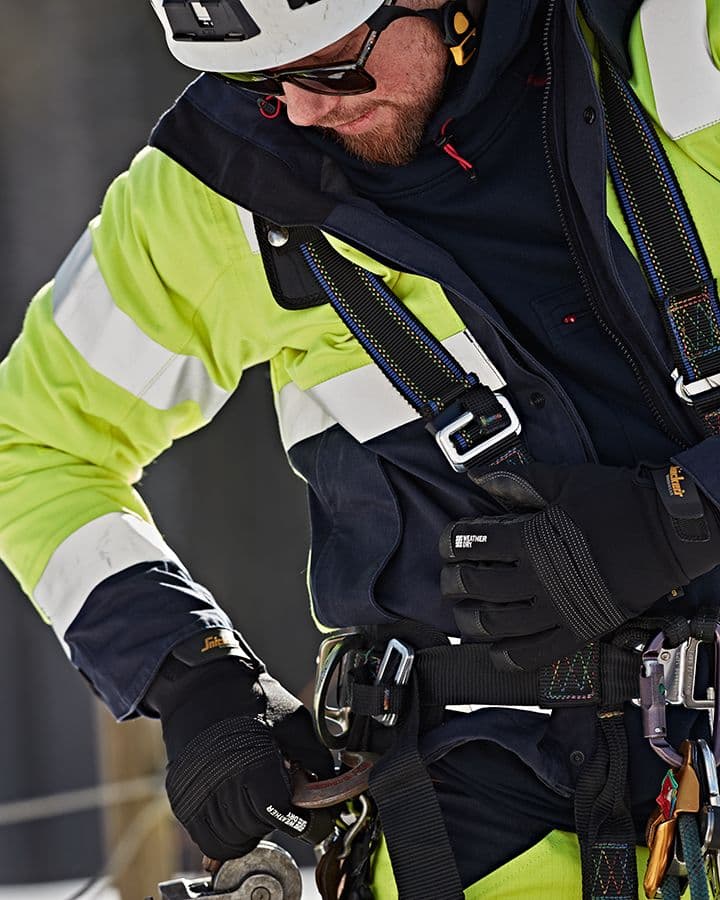
Hi-vis class is set by how much fluorescent background and retroreflective material a garment carries, and the class you need follows the traffic the wearer is exposed to rather than the trade they work in.
- Class 1
- Class 2
- Class 3
A waistcoat cannot be class 3
Class 3 needs sleeves. It is normally a long-sleeved jacket, or a declared combination: a class 2 waistcoat worn with class 1 trousers reaches class 3, but only when both are worn together and the label declares that combination. A class 2 waistcoat on its own stays class 2 whatever it is worn over.
Washing is part of the certification
Fluorescent material fades and retroreflective tape degrades. The garment label states a maximum number of wash cycles, and past that the garment no longer performs to the class it is marked with, even though it still looks the part. Treat the wash count as an expiry, and replace against it rather than against visible wear.
Colour is not a free choice
The standard recognises fluorescent yellow, orange-red and red. It does not recognise the darker shades sold as hi-vis for fashion, and a garment in one of those cannot be certified whatever tape it carries.