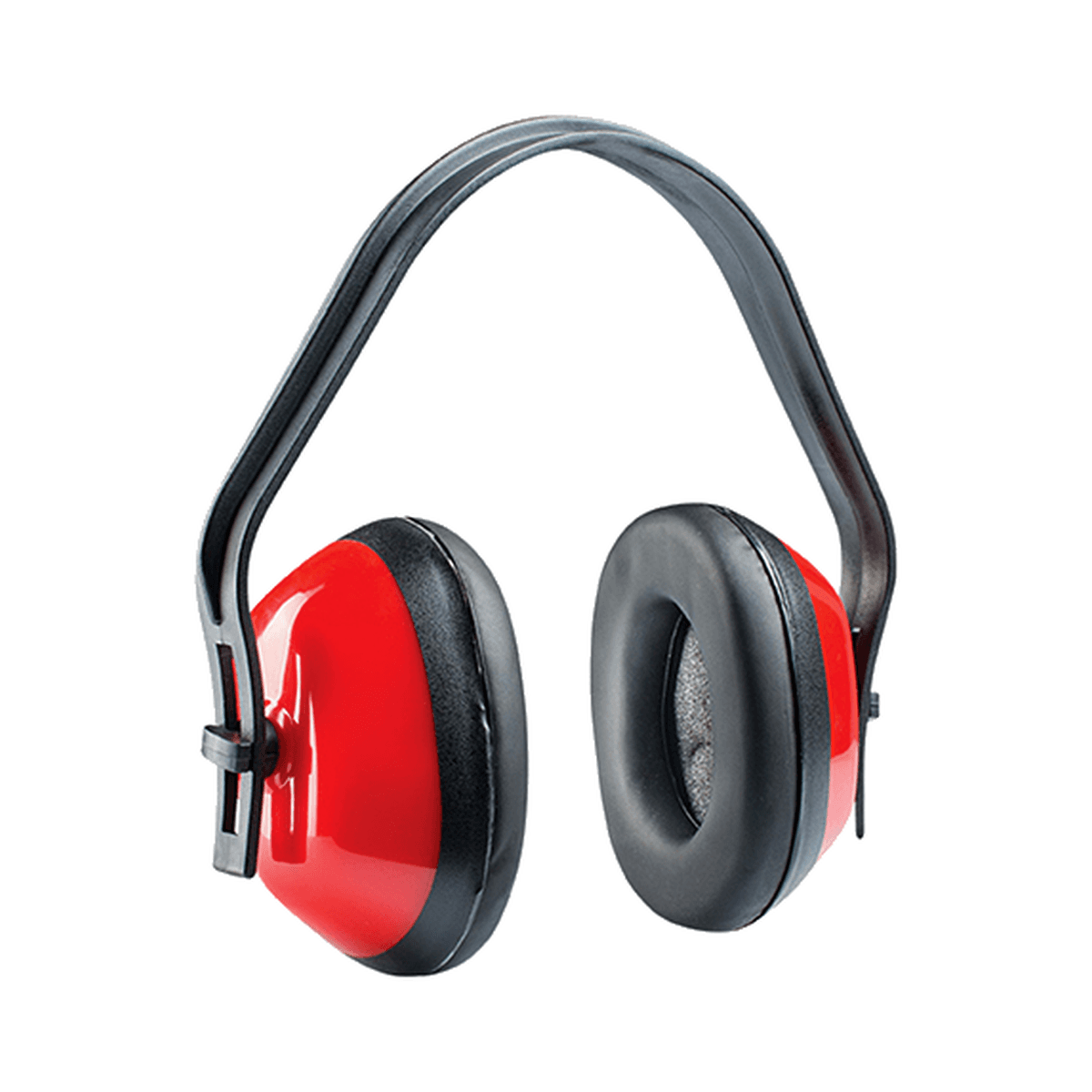
EN 352-1 sets the requirements for ear-muffs: construction, headband force, innocuousness of materials and the method for measuring attenuation. It also requires the attenuation data to be supplied to the user in a usable form.
Reading the attenuation figures
Every ear-muff comes with two kinds of data. SNR (Single Number Rating) is a single figure in decibels giving a rough estimate of the reduction. H/M/L gives three figures for high, medium and low frequencies — far more accurate when the noise spectrum is known.
| Figure | Frequency | Typical noise |
|---|---|---|
| H | High (>2 kHz) | Saws, angle grinders, compressed air |
| M | Medium (1–2 kHz) | General factory noise |
| L | Low (<1 kHz) | Engines, compressors, tractors |
Over-protection is a real problem
Choosing the highest SNR available is a common mistake. If the level at the ear falls below about 70 dB the wearer loses contact with the environment — warnings, signals, an approaching vehicle — and often simply takes the muffs off. The target range is 70–80 dB(A) at the ear.
Attenuation drops sharply if anything comes between the cushion and the head: a spectacle temple, hair, the edge of a cap. A poorly seated muff can lose 10–15 dB against its declared figure.